Some travel experiences stay with you long after the journey ends — and a great flower festival is one of them.
From petal-carpeted streets in Italy to pink-blizzard hillsides in Japan, the world's most beautiful blooms are worth crossing continents for.
This guide covers the most breathtaking flower festivals across the globe, drawing on twenty years of first-hand botanical wandering. Each destination on this list was chosen for its scale, cultural significance, and sheer visual impact.
Whether you are a professional photographer or a weekend gardener from the Cotswolds, there is something here for every kind of traveler. The specific details, insider secrets, and seasonal timing you need are all waiting below.
And if you find yourself inspired to bring the magic of these blooms into your own home, flower delivery Crawley services from MyGlobalFlowers make it easy to enjoy fresh, festival-quality flowers without leaving your doorstep.
Where to Go for Flower Festival: Prettiest Spots You Need to See
Source: Unsplash.
The RHS Chelsea Flower Show serves as the peak of British gardening
The RHS Chelsea Flower Show attracts the elite of the horticultural world to London every May. The Royal Horticultural Society organizes this event on the grounds of the Royal Hospital Chelsea.
Designers spend months constructing elaborate “Show Gardens” that push the boundaries of architecture and ecology. I once spoke with a designer who spent three years sourcing the perfect weathered oak tree for his display. This level of dedication makes Chelsea the most prestigious event in the gardening calendar.
The show recently shifted its focus toward sustainability and “wild” gardening. You will see fewer manicured lawns and more drought-tolerant perennials. The Great Pavilion remains the heart of the show.
This structure covers nearly three acres and houses the world’s best nurseries. Growers display perfect specimens of delphiniums, roses, and exotic orchids.
I recommend you visit the Pavilion during the early morning to avoid the largest crowds. The sheer density of oxygen and perfume inside the tent creates a natural high that lasts all day.
The Royal Horticultural Society limits daily attendance to prevent overcrowding.
Visitors must book tickets months in advance to secure a spot.
Local businesses in Chelsea decorate their shopfronts for the “Chelsea in Bloom” competition.
Designers sell many of the plants at a discount on the final afternoon of the show.
Source: Depositphotos.
Keukenhof and the Bloemencorso Bollenstreek showcase Dutch floral mastery
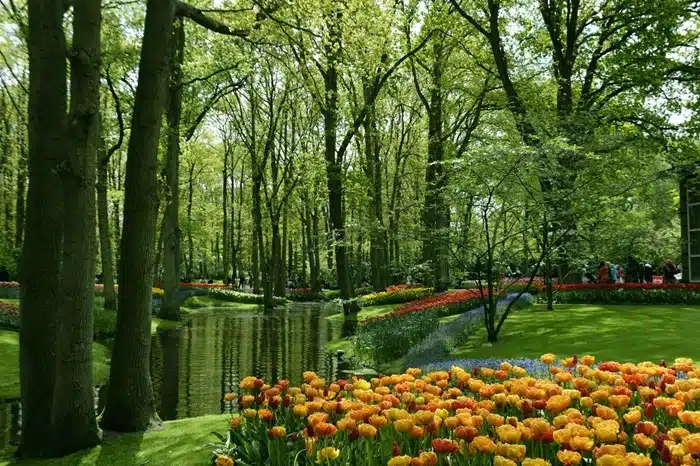
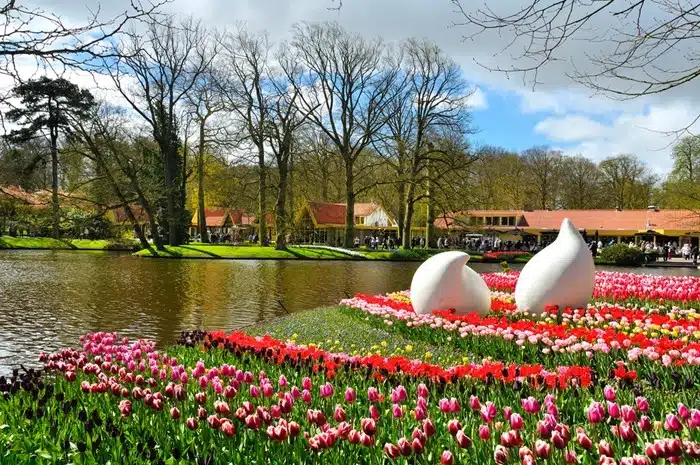
Keukenhof represents the largest bulb garden on the planet. This park covers 32 hectares in the town of Lisse, Netherlands.
Gardeners plant 7 million flower bulbs by hand every autumn to prepare for the spring opening.
I remember the first time I saw the “river of muscari.” This winding path of blue grape hyacinths mimics a flowing stream between groves of ancient trees. The park opens only from late March to mid-May, making the timing of your visit crucial.
The Bloemencorso Bollenstreek adds a dynamic element to the Dutch tulip season. This floral parade travels 42 kilometers from Noordwijk to Haarlem.
Volunteers decorate massive floats with hyacinths, daffodils, and tulips. The fragrance of millions of crushed hyacinths follows the parade like a physical cloud. I suggest you find a spot in the village of Sassenheim.
The floats park there for a short time, allowing you to photograph the intricate details of the petal-work up close. While Keukenhof offers a curated garden experience, the Bloemencorso provides a high-energy celebration of Dutch heritage.
The Corso Zundert offers a different kind of Dutch spectacle. This parade occurs in September and uses only dahlias. The floats in Zundert reach the height of three-story houses.
Local hamlets compete to build the most creative and technologically advanced structures. These floats often feature moving parts and complex storytelling. Zundert is the birthplace of Vincent van Gogh, and the local passion for color clearly flows through the veins of every resident.
Source: Depositphotos.
The Madeira Flower Festival transforms Funchal into a botanical paradise
The Madeira Flower Festival celebrates the subtropical climate of this Portuguese island every spring.
Funchal fills with the scent of jasmine and hibiscus two weeks after Easter. I once watched a local grandmother teach her granddaughter how to weave a crown of strelitzia, the “Bird of Paradise” flower that grows wild across the island. The festival honors the relationship between the islanders and their volcanic soil.
The Wall of Hope serves as the emotional center of the event. Thousands of children carry a single flower to the Praça do Município. They place these blooms into a giant green wall to symbolize a wish for world peace.
This tradition creates a stunning, multi-colored tapestry of fresh petals. The Main Parade takes place on Sunday afternoon.
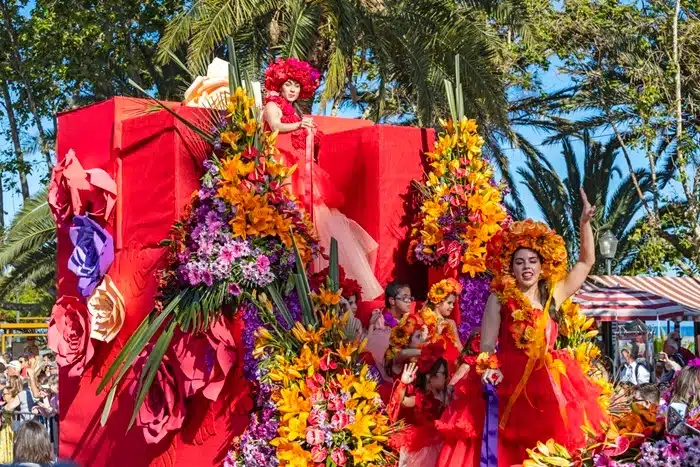
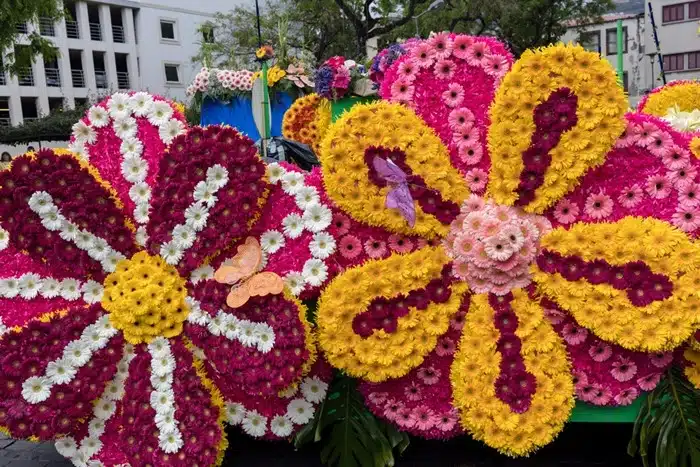
Dozens of floats covered in native blooms roll through the streets accompanied by hundreds of dancers in floral costumes. The rhythm of the music and the sight of the Atlantic Ocean in the background make this festival unique.
Funchal artisans create intricate flower carpets on the central walkways of Avenida Arriaga.
Tropical nurseries display rare Protea and orchids in the central pavilion.
Local bakeries sell “honey cake” topped with edible floral decorations during the festivities.
Travelers should stay in the Old Town to experience the morning flower markets.
Source: Depositphotos.
The Genzano Infiorata covers Italian streets in sacred petal carpets
The Genzano Infiorata takes place in June to celebrate the feast of Corpus Christi. Artists in this town near Rome turn the Via Italo Belardi into a massive floral canvas.
These artists do not use paint; they use millions of petals from carnations, broom, and roses. I remember the concentrated silence of the artists as they worked through the night. They use seeds, beans, and wood shavings to create outlines before filling the shapes with vibrant flower colors.
The Infiorata designs often replicate famous Renaissance paintings or religious icons. The scent of wood shavings and fermenting petals creates an earthy, sweet aroma that lingers in the narrow Italian streets.
The festival reaches its climax when children run down the street at the end of the event. This “spallata” intentionally destroys the flower carpets, reminding everyone of the fleeting nature of beauty. This local tradition offers a raw, authentic experience far removed from the polished commercialism of larger shows.
Source: Depositphotos.
Hanami and cherry blossom festivals celebrate the fleeting beauty of Japan
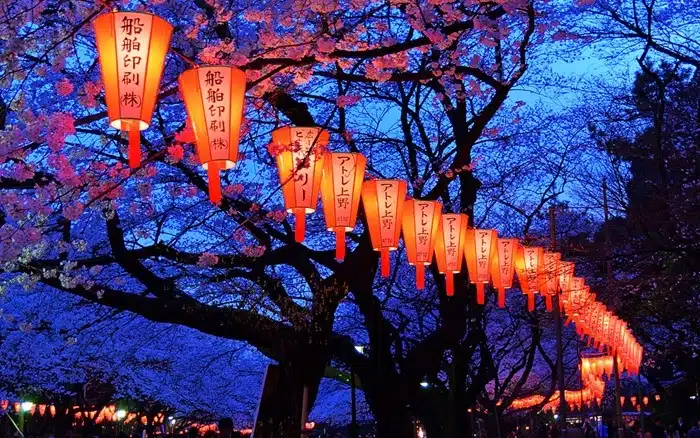
Hanami refers to the Japanese tradition of “flower viewing,” specifically the cherry blossom or sakura. This season begins in late March and travels north across the archipelago.
While Tokyo and Kyoto offer famous spots, Yoshino-yama provides the most breathtaking sight. Over 30,000 cherry trees cover the slopes of Mount Yoshino. I hiked these trails five years ago and felt like I was walking through a pink cloud.
The Japanese philosophy of mono no aware guides this festival. This concept describes a bittersweet awareness of the impermanence of things.
Families gather under the trees for picnics and sake. They wait for a sakura-fubuki or cherry blossom blizzard. This happens when the wind blows the petals off the trees, creating a flurry of pink snow.
I recommend visiting the Hirosaki Castle Park in Aomori Prefecture for a late-season experience. The castle moat fills completely with fallen petals, turning the water into a solid pink surface. This sight remains one of the most photographed moments in the Japanese spring.
Japan also hosts the Ashikaga Flower Park Wisteria Festival. Wisteria vines at this park are over 150 years old.
The purple tunnels of flowers hang down like heavy curtains. The fragrance of wisteria is much sweeter and more musky than the delicate scent of cherry blossoms.
At night, the park uses LED lights to illuminate the hanging clusters, creating a dreamlike atmosphere that feels like a scene from a fantasy film.
Source: Depositphotos.
The Chiang Mai Flower Festival brings tropical color to Northern Thailand
The Chiang Mai Flower Festival occurs during the first weekend of February when the tropical blooms are at their peak.
This festival showcases the Damask rose, a flower known for its deep red color and intense perfume. I remember the heat of the Thai sun mixing with the cooling mist of the water sprayers on the floats.
The Suan Buak Haak Park transforms into an open-air museum of chrysanthemums and miniature orchids.
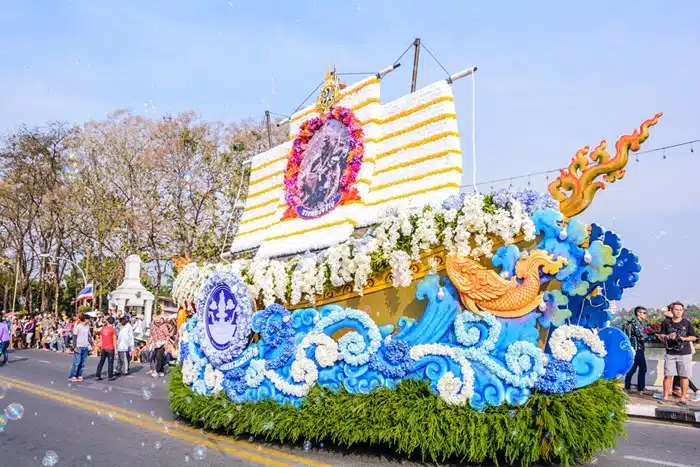
The Flower Queen competition highlights the cultural side of the festival. Local women wear traditional silk dresses and carry intricate floral offerings. The parade moves slowly through the Old City, allowing you to see the craftsmanship of the floats.
Thai artisans use a technique of pinning individual flower heads onto Styrofoam or wood structures to create 3D sculptures of dragons and temples.
A local in Chiang Mai once told me that the secret to the roses there is the mountain mist. The cooler temperatures of the northern highlands allow these delicate flowers to thrive in a tropical climate.
Source: Depositphotos.
The Indira Gandhi Memorial Tulip Festival blooms in the shadows of the Himalayas
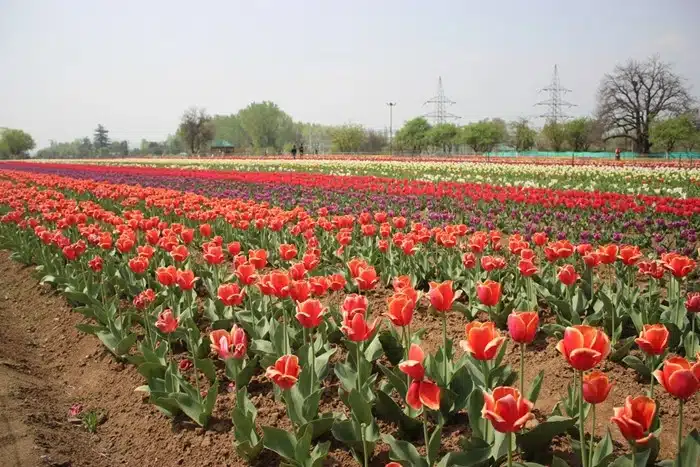
The Indira Gandhi Memorial Tulip Festival takes place in Srinagar, Kashmir, during the month of April. This garden is the largest of its kind in Asia.
The Zabarwan Mountain Range provides a dramatic, snow-capped backdrop for the seven terraces of tulips. I found the contrast between the sharp mountain peaks and the soft, rounded tulip heads to be incredibly moving.
The garden overlooks the famous Dal Lake, adding a sense of serenity to the experience.
Growers in Srinagar cultivate over 60 varieties of tulips. The “Queen of Night” tulip, with its almost black petals, stands out against the bright yellow and red rows.
The Kashmiri people celebrate the festival with traditional music and folk dances. This event marks the end of the harsh winter in the valley.
The air in Srinagar during the festival feels crisp and clean, carrying the faint scent of Himalayan cedar and fresh earth. Travelers should take a shikara (wooden boat) across Dal Lake to reach the gardens for the most scenic approach.
Source: Depositphotos.
The Feria de las Flores honors the flower heritage of Medellín
The Feria de las Flores serves as the most important cultural event in Medellín, Colombia. This festival lasts for ten days in August and celebrates the region's flower-growing industry.
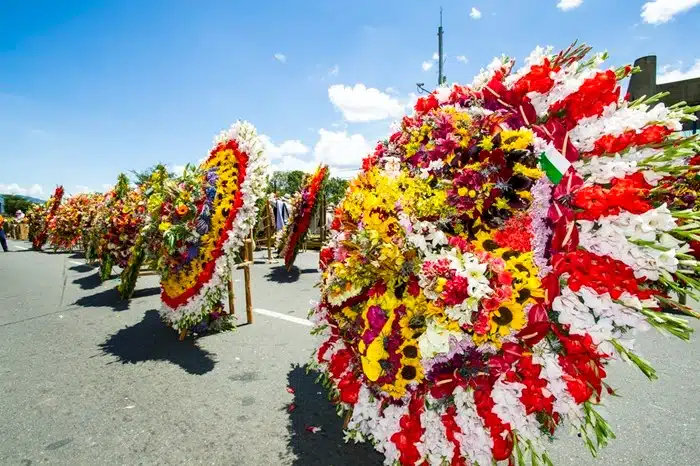
The Desfile de Silleteros (Parade of the Flower Carriers) acts as the centerpiece. Farmers from the nearby village of Santa Elena create large floral arrangements called silletas on wooden frames. These farmers carry the frames on their backs through the city streets.
The silletas can weigh up to 70 kilograms and measure two meters in diameter. I watched an elderly man navigate the parade route with a massive display of sunflowers, lilies, and carnations on his shoulders.
The crowd cheers “Vivan los Silleteros!” as the carriers pass. This festival is loud, colorful, and deeply emotional. It represents the transition of Medellín from a troubled past to a “City of Eternal Spring.”
The sheer physical effort of the Silleteros turns gardening into a feat of athletic endurance and artistic pride.
Source: Depositphotos.
The Rose Parade in California blends Hollywood glamour with organic art
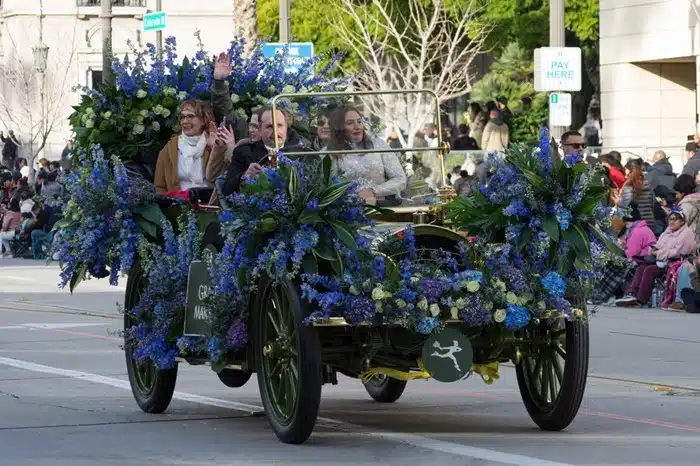
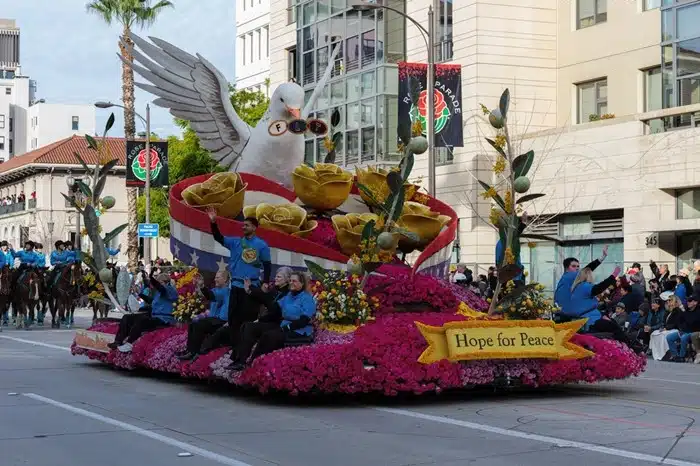
The Rose Parade takes place in Pasadena every New Year’s Day. This event precedes the Rose Bowl college football game.
While many parades use plastic or fabric, the Rose Parade mandates that every inch of every float must be covered in organic material.
I visited the “float barns” a few days before the parade. Hundreds of volunteers were busy gluing individual seeds, coffee beans, and petals to the structures.
A float might use gray poppy seeds to mimic the skin of an elephant or crushed walnut shells for a mountain path. The fragrance in the barns is overwhelming—a mix of dry spices and fresh-cut roses.
The Rose Parade represents the American “bigger is better” spirit. Some floats stretch over 50 feet long and feature complex animatronics. Despite the high-tech machinery, the requirement for natural materials keeps the festival grounded in the beauty of the botanical world.
Volunteers use tens of thousands of roses for a single float.
Spectators often camp out on the sidewalks of Colorado Boulevard the night before the parade.
The Post-Parade showcase allows visitors to walk right up to the floats to see the seed-work.
The Royal Court, led by the Rose Queen, represents the local community.
Source: Depositphotos.
Floriade brings a million blooms to the heart of Australia
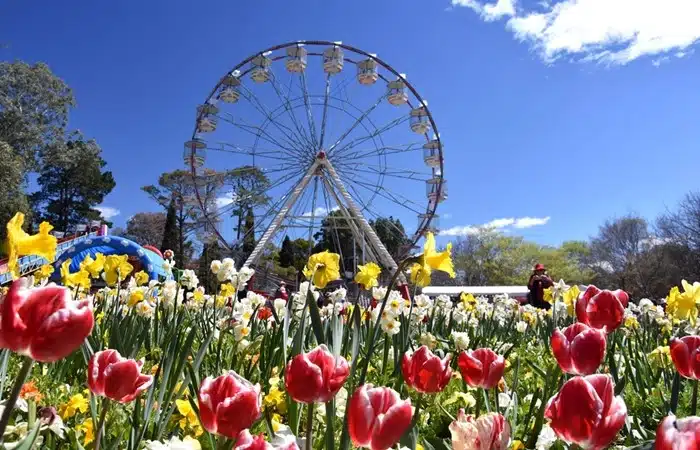
Floriade serves as Australia’s largest celebration of spring in Canberra. The festival runs from mid-September to mid-October in Commonwealth Park.
I visited during a particularly warm spring and found the display of over one million bulbs to be staggering. The designers create giant patterns in the flower beds that you can only fully appreciate from the top of the Ferris wheel. These patterns often tell stories about Australian history or environmental conservation.
NightFest adds a nocturnal dimension to Floriade. The park opens after dark with elaborate light installations that illuminate the tulip beds.
Musicians and comedians perform among the flowers. The atmosphere feels more like a summer garden party than a formal flower show.
The Australian sun is intense, so the NightFest provides a cooler, more relaxed way to enjoy the blooms. I recommend looking for the native wildflower sections, which showcase the unique flora of the Australian bush alongside the traditional European bulbs.
Source: Depositphotos.
Insider travel tips for flower lovers
Planning a trip around a flower festival requires careful timing. Nature does not always follow a calendar.
I have learned that “peak bloom” can shift by a week or two depending on the winter temperatures. You should always check local “bloom trackers” online before you fly. For example, the Japanese weather services provide daily updates on the “Sakura Front” as it moves across the country.
Photography at these festivals presents specific challenges. The midday sun creates harsh shadows on delicate petals.
I always aim to arrive at the gates the moment they open. The “Golden Hour”—the first hour of light—provides a soft, warm glow that makes floral colors pop. A macro lens is an essential piece of kit for capturing the dew on a rose or the intricate pattern of a lily's throat.
Best times to book and visit global flower festivals
Source: Depositphotos.
Festival Name
Location
Best Month to Visit
Booking Lead Time
RHS Chelsea
London, UK
May
6-8 Months
Keukenhof
Lisse, Netherlands
April
3-4 Months
Madeira Flower Festival
Funchal, Portugal
May
4-5 Months
Hanami (Sakura)
Kyoto/Tokyo, Japan
Late March / Early April
8-12 Months
Feria de las Flores
Medellín, Colombia
August
4 Months
Your “Photographer’s Kit Essentials” should include more than just a camera.
Bring a small piece of white card to use as a reflector for shadows. Carry a spray bottle of water to create “artificial dew” for close-up shots.
A circular polarizer filter helps to reduce the glare on shiny leaves and deepens the blue of the sky. Most importantly, wear comfortable, waterproof shoes. You will walk several miles a day on grass, gravel, and cobblestones.
FAQs
Source: Depositphotos.
Which flower festival is the largest in the world?
The Bloemencorso Zundert in the Netherlands holds the title for the world's largest flower parade in terms of float volume and dahlia usage.
However, Keukenhof is the largest permanent-style spring bulb garden, covering 32 hectares. Both offer a scale of floral display that you cannot find anywhere else.
When is the best time to visit Keukenhof?
The middle of April usually provides the best chance to see the tulips in full bloom.
Early April features crocuses and daffodils, while May sees the late-blooming tulips and indoor lily shows.
I suggest checking the Keukenhof website for the weekly bloom reports starting in March.
Are there any hidden flower festivals in the UK besides Chelsea?
The RHS Hampton Court Palace Garden Festival in July offers a more relaxed, “festival” vibe with more space and a beautiful waterside setting.
The Harrogate Flower Show in Yorkshire provides a fantastic look at northern gardening traditions, including the famous giant vegetable competition.
For something wilder, visit the bluebell woods in the Chilterns during late April.
What is the best way to avoid crowds at these events?
Most tourists arrive between 10:00 AM and 2:00 PM. I always suggest visiting on a weekday rather than a weekend.
Many festivals also offer “preview” evenings or “after-hours” tickets. These options cost more but provide a much quieter environment for photography and reflection.
Conclusion
Source: Depositphotos.
The world blooms in ways that no photograph can fully capture — and that is exactly why these festivals deserve a spot on your travel list. There is something about standing inside a living, breathing landscape of petals that changes the way you see the world.
From the sculpted gardens of Keukenhof to the sweat and pride of Medellín's Silleteros, these must-visit flower festivals remind us that beauty is deeply tied to culture, tradition, and the people who tend the earth. Each one offers a different experience, but all of them leave a lasting impression.
Timing is everything when it comes to floral travel. Use the booking guide and bloom trackers mentioned above to make sure you arrive at peak season — nature waits for no one.
Pack your camera, wear comfortable shoes, and leave room in your itinerary for the unexpected. The most memorable moments at these festivals are rarely the ones you planned for.
Disclaimer:
This post may contain affiliate links. I receive a small commission at no cost to you when you make a purchase using my link.