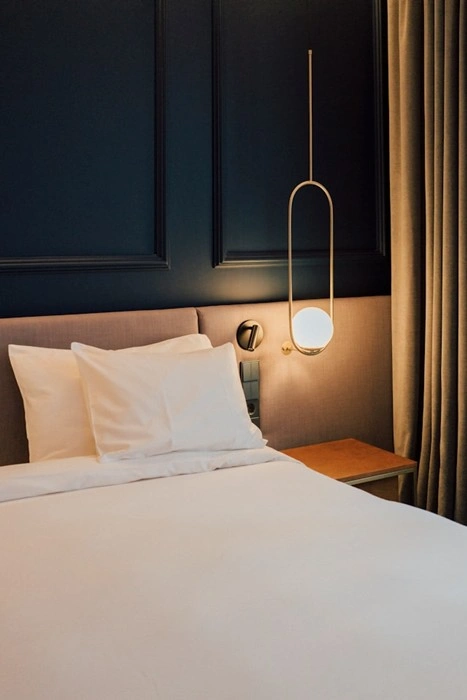
Darkness is more thorough than you probably manage at home. The temperature is lower, the surfaces are clear, and nothing in the room is asking you to do anything.
The linens, the layering, the mattress underneath you — none of it is accidental. Hotels spend carefully on sleep because a guest who slept badly does not come back.
This post breaks down exactly what they get right and how to bring it home without a renovation budget.
How to Get That Hotel Bedroom at Home Feel Every Night
Source: Unsplash.
Darkness and a Cooler Room
Start with the room itself, because hotels treat darkness as non-negotiable.
Heavy curtains or proper blackout blinds remove the streetlight glow and the early summer dawn that pull you towards waking before you are ready. Pair that with a cooler room than you probably keep at home.
Most hotels run their bedrooms several degrees below the temperature people default to, and a cooler environment helps the body settle into deeper sleep rather than tossing through the small hours.
The detail people miss is how thorough hotels are about stray light. There is no standby glow from a television, no phone charging face-up on the nightstand, no thin gap at the edge of the curtain throwing a stripe across the ceiling.
At home those small sources add up, and the body reads them as signals to stay alert. Taping over the worst offenders and moving chargers out of sight sounds fussy, but it removes the low hum of light that keeps a bedroom feeling like a place you are passing through rather than resting in.
Source: Unsplash.
The Clean-Slate Effect
Then there is the sensory blankness.
A hotel room holds none of your unfinished tasks, no laundry pile, no charging cables snaking across the floor, no half-read post on the bedside table. The clutter you stop noticing at home still registers somewhere, and removing it changes how a room feels to lie down in.
Stripping a bedroom back to the essentials and keeping screens out of it recreates a surprising amount of that clean-slate calm.
Part of why the hotel room works is that it carries no history. There is no reminder of the argument you had in the kitchen, no pile of work that followed you upstairs, nothing that pulls the mind back to the day just finished.
You cannot fully strip your own bedroom of memory, but you can stop it doubling as an office, a laundry room and a dumping ground. A space reserved as far as possible for rest starts to feel like one, and the brain learns to slow down the moment you walk in.
Crisp Linens and Smart Layering
Source: Unsplash.
The linens matter more than people expect. Hotels lean on crisp cotton with a high thread count, laundered to a smoothness that is hard to fake at home, and there is a reason the bed feels like an event rather than a habit.
Decent sheets, washed regularly and ironed if you have the patience, close a lot of the gap. So does the layering trick: a lighter duvet with the option of an extra blanket lets you adjust through the night instead of fighting one heavy tog rating in every season.
The made bed plays a part too. Hotels turn the bed down so it almost invites you in, the covers smoothed and the pillows arranged rather than left where they landed that morning.
Making the bed properly each day is a small ritual with an outsized effect, because climbing into a neat, cool, well-dressed bed feels nothing like crawling under a tangle. The sense of occasion is half of what makes hotel sleep feel like a treat.
Where Hotels Quietly Spend
Source: Unsplash.
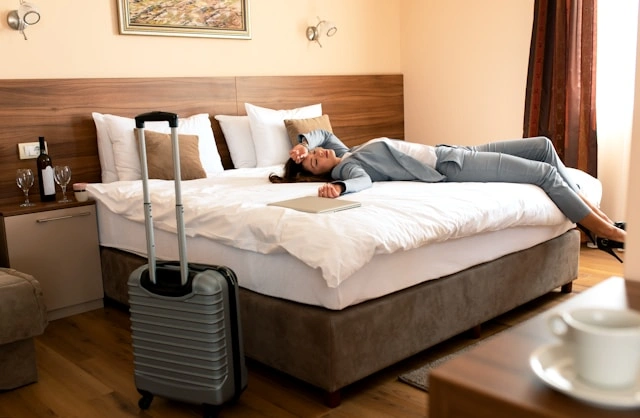
None of it fully lands, though, if the thing underneath you is worn out. The bed is where hotels quietly spend, because a tired guest who slept badly does not return.
If your own mattress sags in the middle or leaves you aching, the curtains and the cotton can only do so much, and choosing a mattress to recreate that hotel-bed feeling tends to be the upgrade that finally makes the rest of the effort count.
The right support and a surface that stays cool overnight turn a bedroom that looks like a hotel into one that feels like one.
It helps to know what you are actually responding to in a hotel bed. The good ones combine real support, so the spine stays in line whatever position you sleep in, with a surface that does not trap heat and leave you throwing the covers off at two in the morning.
That balance of support and temperature control is what separates a bed you sink into gratefully from one you simply tolerate, and it is the part of the room you take home with you for years rather than a night.
Conclusion
Source: Unsplash.
Most people spend years tolerating sleep that is fine without realizing how much closer great could be. The gap between your bedroom and a good hotel room is mostly a matter of intention.
Understanding why you sleep better in hotels gives you a practical checklist rather than a vague wish. Darkness, temperature, surface calm, good linen, and the right mattress — each one is fixable.
You do not need to do all of it at once. Start with the quickest wins, the light sources and the room temperature, and notice what shifts.
The bed is worth saving up for if yours is past its best. It is the piece that makes everything else count.
If this has given you a clearer picture of where to start, share it with someone whose sleep could use the same reset.
Disclaimer:
This post may contain affiliate links. I receive a small commission at no cost to you when you make a purchase using my link.