“Living rough” in Australia is often misunderstood. It does not automatically mean homelessness in an urban sense, and it does not always match the romantic idea of remote freedom either.
In practical terms, it usually means operating outside standard housing for a period of time, often in regional or remote areas, with limited infrastructure and a heavy reliance on self-sufficiency.
The experience varies depending on location, season, and access to basic resources. Australia’s scale alone changes the definition. Distances are large, services are unevenly distributed, and conditions shift quickly between coastal, inland, and desert regions.
Understanding what it actually means requires looking at how people live day to day in those environments, not just where they sleep.
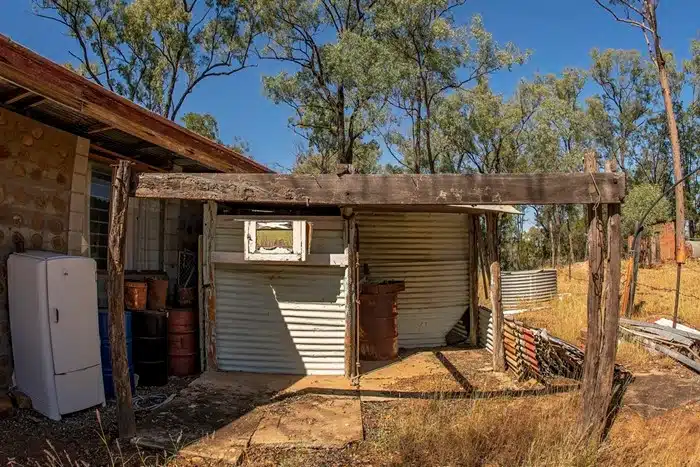
Sheds Near Perth and the Reality of Off-Grid Living
Source: Depositphotos.
The Basics: Water, Shelter, and Distance
Before anything else, living rough comes down to three things: access to water, a form of shelter, and the ability to manage distance.
Water is the constant constraint. In many parts of Australia, especially inland, there are long stretches without reliable sources.
People either carry large reserves or rely on mapped locations like roadhouses and community taps. Running out is not an inconvenience, it is a risk.
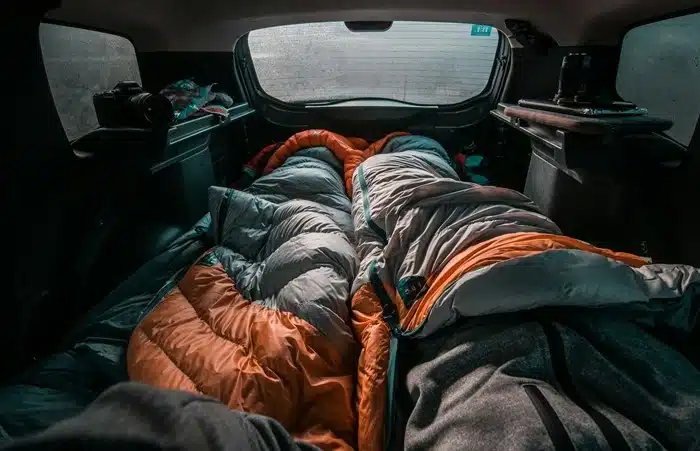
Shelter is rarely what people imagine. It can be a tent, a vehicle setup, or a fixed structure on private land.
What matters is protection from sun, wind, and sudden temperature drops at night. Even coastal areas can swing from heat during the day to cold after sunset.
Distance shapes everything else. A basic grocery run can mean driving over an hour. Fuel planning becomes part of routine life. If something breaks, it is not always fixable the same day.
These are the fundamentals. Everything else builds on top of them.
Months Spent Outside Perth: A Different Kind of Routine
Spending a few weeks in rough conditions is one thing. Staying for months changes how you operate completely.
The base in this case was set outside Perth, moving inland toward areas like Toodyay. It is not deep outback, but it is far enough removed that services thin out and the environment starts to take over.
The setup was not a campsite in the usual sense. It was a rented patch of land with a basic structure, something closer to a working shed than a house.
That decision came after a few weeks of moving around, realizing that constant relocation burns time, fuel, and energy.
Having a fixed base changes everything. It gives you a place to store water, tools, and supplies, and it removes the need to rebuild your setup every few days.
Source: Unsplash.
The Shed and What It Becomes
The shed is where the reality of living rough becomes clear.
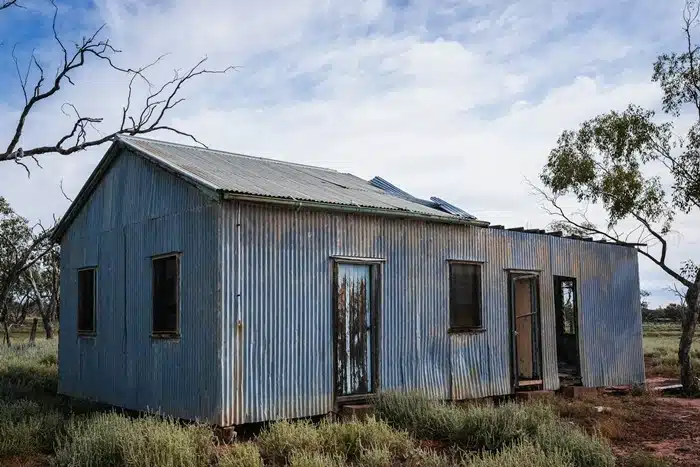
It is not a finished living space. It is a shell that you adapt. Metal walls, wide doors, and minimal insulation. During the day, it heats up quickly. At night, it cools down just as fast.
Inside, it becomes a mix of storage and shelter. One corner for sleeping, usually elevated off the ground to avoid dust and insects.
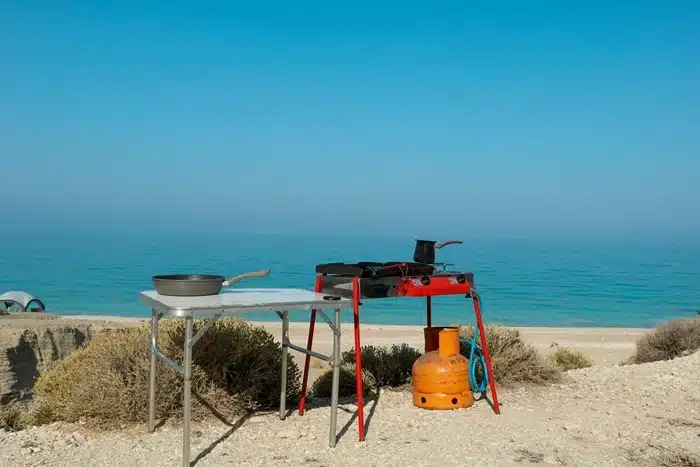
Another for cooking, often with a portable gas setup. Tools and supplies line the walls, because organization matters more when everything is exposed to the elements.
Over time, the shed starts to function like a small system. You learn where to place things so heat is manageable. You figure out airflow by opening or blocking certain sections. You adjust based on weather rather than comfort.
Structures like these are common across rural Australia, built more for utility than living, but adaptable when needed. If you look at how sheds Perth are designed, you can see how they are intended to handle both climate and storage requirements.
Living in one is not about turning it into a house. It is about making it usable.
Daily Work Becomes Physical and Planned
Source: Unsplash.
Living rough removes automation from daily life.
Water needs to be refilled, not turned on. Food needs to be stored carefully because refrigeration is limited or absent. Waste has to be managed manually, often with designated disposal runs.
Even simple tasks take longer. Cooking is not just preparing food, it includes setting up equipment, managing fuel, and cleaning without running water.
Work becomes physical by default. Moving supplies, maintaining the shelter, checking equipment, and dealing with weather exposure all require effort.
Planning becomes essential. You do not wait until something runs out. You anticipate it days in advance.
This is where most people underestimate the experience. It is not the isolation that defines it, it is the constant need to manage resources.
Wildlife and Environment Are Constant Factors
Australia’s environment is not passive.
In rural areas around Western Australia, you encounter a mix of insects, reptiles, and small mammals regularly.
Flies are persistent during warmer months. Ants find food quickly if it is not sealed. Snakes are not common in every area, but they are present enough to require awareness.
The land itself also shapes behavior. Dust is constant in dry conditions. Wind can shift quickly and affect anything not secured properly.
Then there is fire risk. During hotter periods, fire warnings are part of daily information. Open flames are controlled carefully, and some days they are not used at all.
These are not occasional concerns. They are part of the routine.
Communication and Isolation Work Differently
Source: Unsplash.
Living rough does not always mean being disconnected, but it changes how communication works.
Mobile signal varies significantly. In some areas, it is stable. In others, it drops completely. People rely on downloaded maps, offline resources, and sometimes radio communication if they are further out.
Isolation is not just about distance from people. It is about reduced access to immediate help.
If something goes wrong, response time is longer. That affects how you approach risk. You avoid unnecessary hazards because the margin for error is smaller.
At the same time, there is a level of independence that comes with it. You handle problems directly because there is no quick alternative.
Food and Supply Chains Look Different
Food access depends heavily on planning.
In areas outside Perth, you still have access to regional stores, but they are not always nearby, and prices can be higher due to transport costs.
Fresh produce is available, but not always consistently. Non-perishable items become the backbone of meals.
Storage is a constraint. Without full refrigeration, you rely on dry goods, canned items, and limited fresh supplies that are used quickly.
Water again plays a role here. Cooking methods are chosen based on how much water they require and how easy cleanup is afterward.
This is where routine simplifies. Meals become repetitive, not out of preference, but because consistency reduces effort.
Why It Is Not What People Expect
Source: Unsplash.
Living rough in Australia is often imagined as either extreme hardship or complete freedom. In reality, it sits somewhere in between.
It is structured by necessity. You build systems around water, shelter, and supplies. You adjust to the environment rather than control it.
The experience becomes less about where you are and more about how you operate.
After a few weeks, the novelty wears off. What remains is a practical way of living that depends on planning, physical effort, and adaptation.
Conclusion
Source: Unsplash.
The main takeaway is not a dramatic change in perspective, it is a clear understanding of what is required to maintain basic living conditions without infrastructure.
You learn how much water you actually use. You understand how shelter performs under different conditions. You see how distance affects everything from food to fuel.
These are not abstract ideas. They are measurable, daily realities.
Living rough in Australia is not defined by isolation or scenery. It is defined by how you manage resources, space, and time in an environment that does not adjust to you.
Once you understand that, the experience becomes easier to navigate, even if it never becomes easy.
Disclaimer:
This post may contain affiliate links. I receive a small commission at no cost to you when you make a purchase using my link.