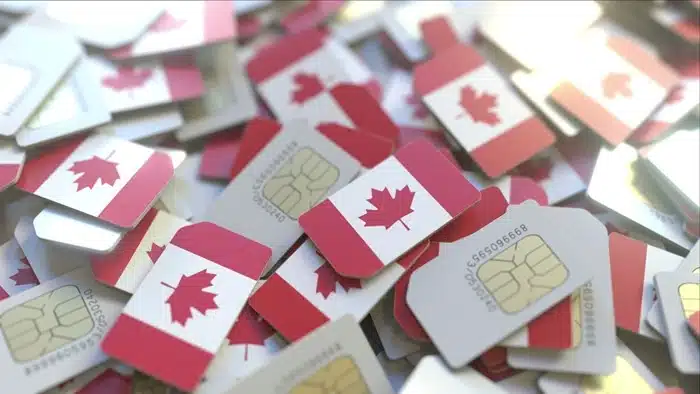
Planning a trip to Canada involves more than booking flights and hotels. Knowing how to get a Canadian phone number from abroad is one of those practical steps that makes everything else easier once you land.
A local number means rental companies call you back, booking platforms accept your details, and local hosts can reach you without hesitation. Without one, small problems have a way of becoming bigger ones.
This guide covers who actually needs a Canadian number, which cities to consider, what to expect on the road and in winter, and why setting things up before you travel saves time and stress.
Services like eSIM Plus Canada virtual phone number let you get a real Canadian number before you fly. No queues, no carrier stores, no surprise on arrival.
Canada is a big country. Even a short trip usually covers two or three cities, and each one comes with its own hosts, rental companies, and local contacts.
Most of them communicate by phone, and many Canadian apps and booking platforms won’t accept foreign numbers. The booking just doesn’t go through.
Roaming is expensive here. Canadian carriers like Bell, Rogers, and Telus don’t offer cheap short-term deals for foreign visitors. A week is manageable, but anything longer costs real money – usually more than a local plan for the same time.
There’s also the practical side. If your bag gets delayed, if your accommodation has a problem, if a tour gets canceled because of weather, you can handle these things over the phone.
Canadian services call back local numbers. Foreign ones often just don’t get a response.
What a Virtual Canadian Number Is?
Source: Magnific.
A Canadian virtual number is a real +1 that works over the internet. There is no need for a SIM card or any physical things. Calls and texts come through to your phone, tablet, or laptop wherever you have internet.
You can pick a number from a specific city. For example, Toronto uses 426 and 647. Vancouver uses 604 and 778. Montreal uses 514 and 438. Calgary uses 403 and 587. To anyone calling you, it looks like a normal local number from that city.
At the same time, your regular SIM stays in the phone and keeps working. So both numbers work simultaneously on the same device. When the trip ends, you can cancel it. If you come back to Canada later, you keep the same number and your contacts don't need to save a new one.
Who Needs Canada Virtual Number?
Source: Magnific.
People on working holidays use it most. Canada is popular for working holiday visas. Countries like the UK, Australia, Ireland, and France have agreements with Canada.
When you’re sending job applications or looking for housing, a Canadian number gets more responses. Landlords and employers are more likely to call back a number they recognize. Some job platforms also require a local number just to complete a profile.
Long trips also make more financial sense with a local number. A month of roaming costs more than a monthly virtual number plan.
Business travelers find it useful when meeting Canadian clients. There are no international codes, no confusion about whether a call will connect.
If someone needs to reach you during a meeting, they can text a number that looks normal to them.
People who visit Canada regularly keep a virtual number active between trips. Same number every time, no explaining why it changed.
Special Case in Quebec
Source: Magnific.
This catches many visitors off guard. Quebec, especially outside Montreal, runs mostly in French. This language comes first, especially in phone calls, automated systems and service staff.
In Montreal, people usually switch to English when asked, but in smaller towns that’s less reliable.
A local Montreal number means business will actually call you back.
Getting them to call in the first place is the main difficulty. Local numbers get answered, when foreign ones often don’t. For anyone who speaks some French, a Montreal code makes the whole interaction go more smoothly from the start.
Road Trips and Coverage
Many Canadian trips involve driving. And the main problem is that stretches of these roads go through areas with no mobile signal at all.
Canadian cities have solid coverage. Cities like Toronto, Vancouver, Montreal and Calgary have good connections without any issues. But away from the main highways, things change quickly.
Rural British Columbia, northern Ontario, and most of Quebec outside the cities can go long stretches without any signal from any carrier.
Since the virtual number works over the internet, it follows the same rules. Where there’s connection, it works. Where it is not, it doesn’t.
Before heading somewhere remote, it’s worth downloading offline maps and saving any numbers or addresses you might need. That way a dead zone doesn’t turn into a bigger problem than it needs to be.
Winter Travel
Source: Unsplash.
Canada draws a lot of visitors from November through March to places like Whistler, Banff, and Mont-Tremblant.
Weather in the mountains changes fast, and ski schools, operators, and accommodation all use phone and text when conditions shift, or plans change.
A local number means you get those messages. A foreign number might not receive them, or the operator might not send international texts at all.
In winter, this matters more than in summer because things change quickly and you need to know fast.
Conclusion
Source: Depositphotos.
Canada trips come with more moving parts than most people expect. Hosts, rental companies, booking platforms, and local services all work better when they can reach you on a number they recognize.
A local Canadian number removes that friction before it starts. It's one setup step that pays off across the entire trip, from the first booking confirmation to the last day on the road.
Winter travelers, working holiday visitors, and anyone driving outside the cities will feel the difference most. But even a short city trip runs more smoothly when your contacts can reach you without complications.
The setup takes a few minutes and works on the device you already have. No new SIM, no carrier store, no waiting until you land.
If you're heading to Canada, get your number sorted before you go. Check out eSIM Plus to find a Canadian number that fits your trip.
Disclaimer:
This post may contain affiliate links. I receive a small commission at no cost to you when you make a purchase using my link.