Anyone who's spent a night camped a few hours from the nearest town knows the feeling. Something cracks, tears or starts leaking right when you least need it, and there's no hardware store for cover.
After enough trips patching up torn annexe walls and cracked tail lights with whatever was in the glovebox, you learn fast that having emergency tape for camping on hand solves more problems than a whole toolbox of specialty gear. It won't fix everything, but it'll buy you enough time to get through the night, or the drive home.
Below, we've rounded up the real-world repairs it handles best, from split hoses and cracked panels to torn tents and loose trim. A few tricks for making the fix actually hold once you're back on corrugated roads are in there too.
That's really the case for keeping a roll of heavy-duty, weather-resistant tape in every vehicle, caravan and camping kit you own, not just for emergencies but for the small stuff that would otherwise nag at you for the rest of the trip.
Why Tape Deserves a Permanent Spot in Your Camping Kit
Source: Depositphotos.
A lot of blokes carry cable ties and a multitool and figure that covers them. It doesn't, not for the repairs that actually happen out bush.
Tape works on wet surfaces, dusty surfaces, curved panels and torn fabric, which is most of what fails on a camping trip. The trick is choosing one that's built for outdoor conditions rather than a bargain-bin roll that peels off after one hot afternoon.
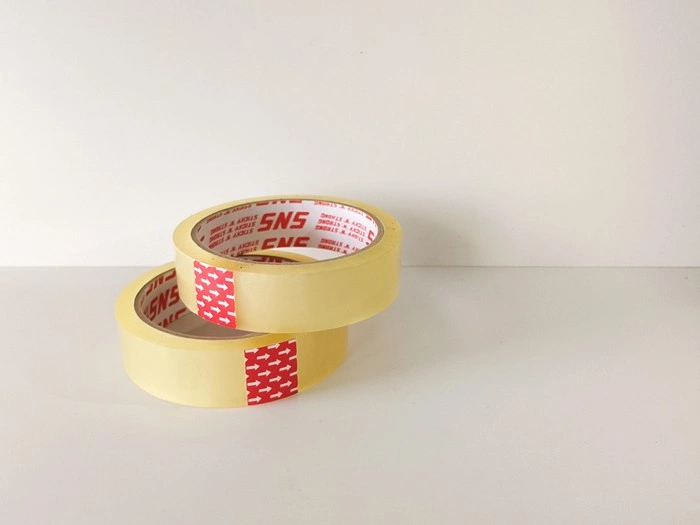
A double-thick, weatherproof tape holds its grip through rain, dust and temperature swings, and you can tear it by hand, which matters when your knife's packed at the bottom of the trailer.
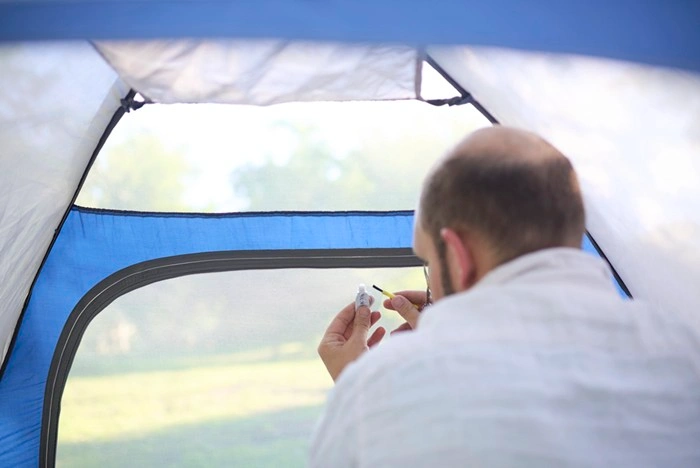
Torn Tents, Awnings and Annex Walls
Source: Depositphotos.
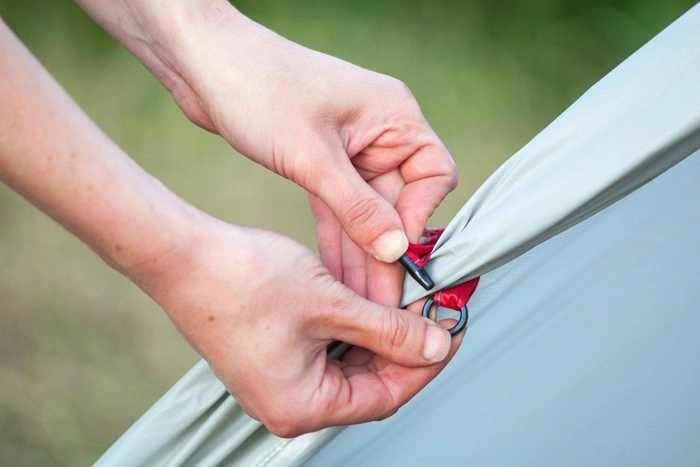
Ripstop fabric rips more easily than the name suggests, usually right where a guy rope pulls tight or a zip meets the wall.
Clean the area, dry it off as best you can, then run tape over both sides of the tear so it's sandwiched rather than just patched on top. That double-sided approach spreads the load and stops the tear extending further when the wind picks up overnight.
Source: Unsplash.
It's not a pretty fix, but it'll get you through the rest of the trip and often outlasts a proper repair kit patch anyway.
Worth keeping in mind that a small nick caught early takes thirty seconds to tape over, whereas the same tear ignored for a day can turn into a metre-long flap by the next storm.
Cracked Caravan Panels and Trim
Source: Depositphotos.
Fiberglass panels crack from stone strikes, and ABS trim pops loose from vibration on corrugated roads more often than people expect.
For a hairline crack, tape across the outside stops water getting in and stops the crack spreading while you're driving, which is really what you're managing until you can get proper panel repair done at home.
For loose trim or a cracked wheel arch flare, tape it down flush rather than leaving it flapping, because a piece of trim that's already loose will tear itself off completely at highway speed if you don't secure it.
This is a temporary fix, not a permanent one, and anyone who tells you otherwise hasn't seen what six months of UV does to a taped panel. But it buys you the time to get home and do it properly.
Split Hoses, Cracked Tanks and Leaking Eskies
Source: Depositphotos.
A split in a low-pressure water hose, a hairline crack in a grey water tank, or a corner leak in an old esky are all jobs where tape genuinely earns its keep.
Dry the surface, wrap several tight layers well past either side of the split, and you've usually got a fix that holds for days, not minutes.
For an esky, a strip along the internal seam stops the slow drip that ruins your ice supply by day two. This isn't a fix for anything under real pressure, so don't try it on a fuel line or a brake hose.
Fuel and hydraulic lines need a proper mechanical repair, full stop, and no tape on the market is rated for that job.
Broken Tail Lights, Mirrors and Loose Cargo
Source: Depositphotos.
A cracked tail light lens is a genuine safety and legal issue, not just a cosmetic one, and taping the crack seals out moisture while keeping the light visible until you can replace the lens.
A wing mirror that's come loose on corrugations can usually be stabilized with a few wraps around the housing and mount, enough to stop it vibrating off completely. And for gear rattling around in the tray or trailer, taping down straps, tarps or loose panels stops small movement turning into a bigger problem over a few hundred kilometers of dirt road.
Unsurprisingly, most of these fixes take under five minutes once you've actually got the tape in hand, which is the whole point of carrying it.
Conclusion
Source: Unsplash.
It's worth being honest here. Tape is brilliant for holding things together, sealing out weather, and buying time, but it's not a structural repair and it's not a substitute for proper maintenance once you're home.
Chassis cracks, brake and fuel lines, and anything load-bearing needs a mechanic or a proper repairer, not a roll of tape and good intentions. Treat every tape fix as a stopgap with a use-by date, and you'll avoid the trap of driving around for months on a “temporary” repair that was never meant to last that long.
Pack one roll and you'll find yourself reaching for it more than you expect, not because your gear is falling apart, but because small failures happen constantly when you're using your camping equipment hard in rough conditions.
Chuck it in the glovebox or the camping tub before your next trip, and you'll spend less time worrying about the next crack or tear and more time actually enjoying being away.
Disclaimer:
This post may contain affiliate links. I receive a small commission at no cost to you when you make a purchase using my link.