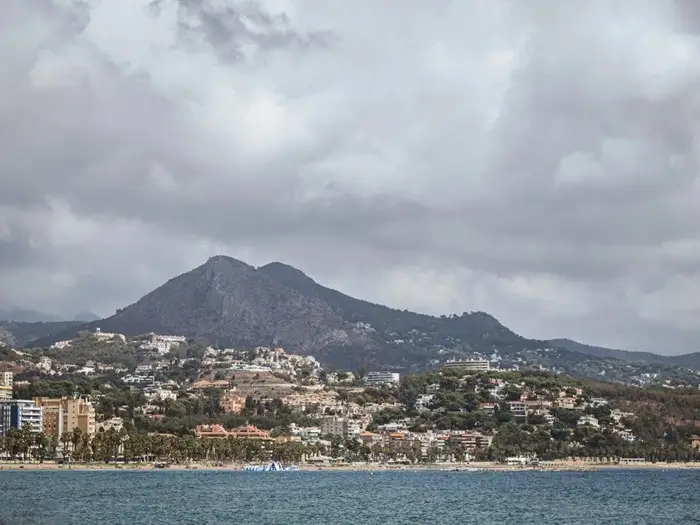
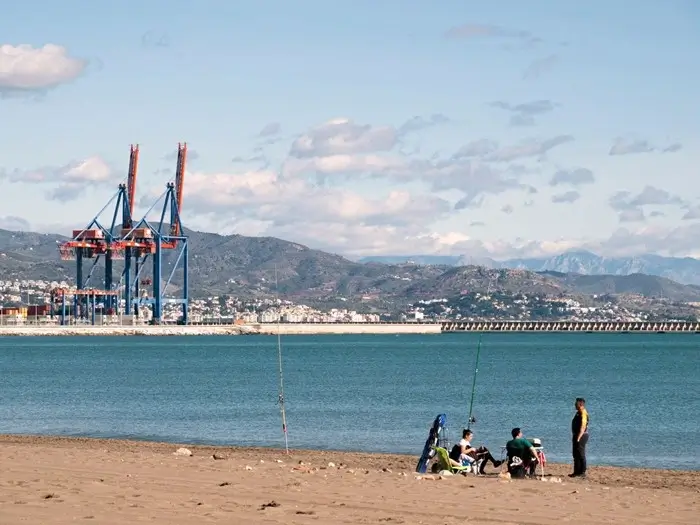
Pedregalejo and El Palo in Malaga are seaside neighborhoods where the waterfront belongs as much to restaurant tables and fishing boats as it does to beach towels.
These are working coastal districts in Southern Spain with their own history, not simply a stretch of sand added to a city break.
This guide covers what to see and eat along the seafront, from the espeto cooked beside a wood fire to the traditional jábega boats still kept in view at Astilleros Nereo.
It also explains why the low-rise former fishermen's homes behind the shore give this part of Malaga a character the center doesn't have.
The walk between the two districts is the point, with tables along the way and no need for another museum booking to decide the afternoon. Read on for where to stop, what to order, and how far east to go.
Malaga Travel Destination: Pedregalejo and El Palo by the Sea
Source: Depositphotos.
Along Pedregalejo’s seafront
Among Malaga’s oldest traditional fishing neighborhoods, Pedregalejo has a promenade lined with fish and shellfish restaurants. Breakwaters divide the waterfront into smaller beach sections, giving the walk a different feel from one uninterrupted sweep of sand.
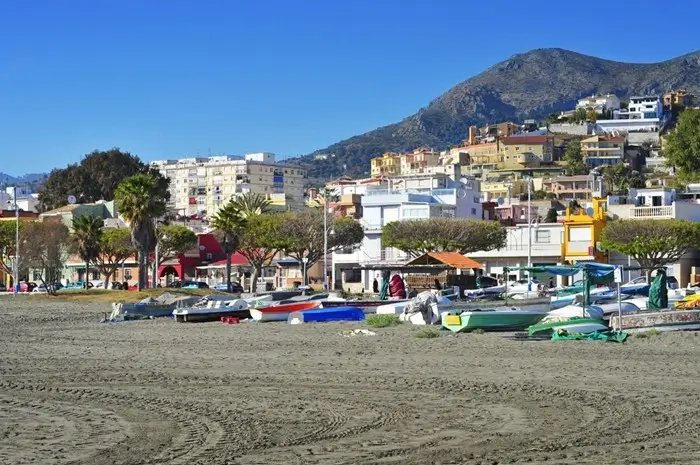
Behind the shore, low-rise former fishermen’s homes share the neighborhood with restaurants and leisure terraces. The houses are worth noticing between the menus: they help explain why this part of Malaga feels different from the center.
A walk before lunch leaves time to decide between a full meal and something smaller. For anyone arriving with luggage, hotel storage or somewhere to store your bags in Malaga is easier than fitting a suitcase around a restaurant table.
The waterfront is the attraction here, so there is little reason to rush between named stops. One beach section leads to another, with tables along the way and the boats providing a reminder of the neighborhood’s older occupation.
Source: Depositphotos.
Sardines beside a wood fire
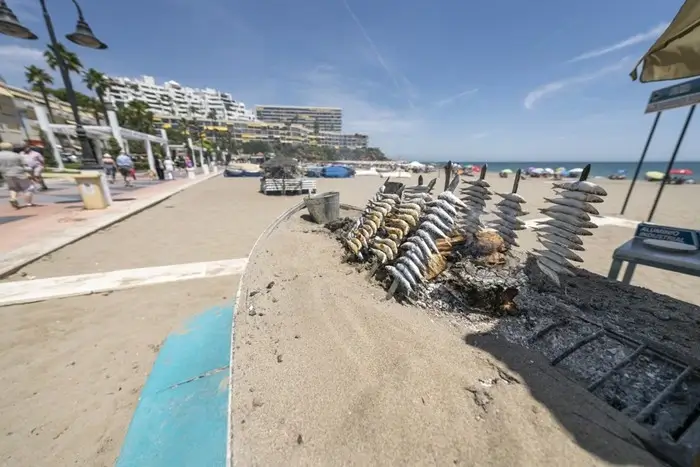
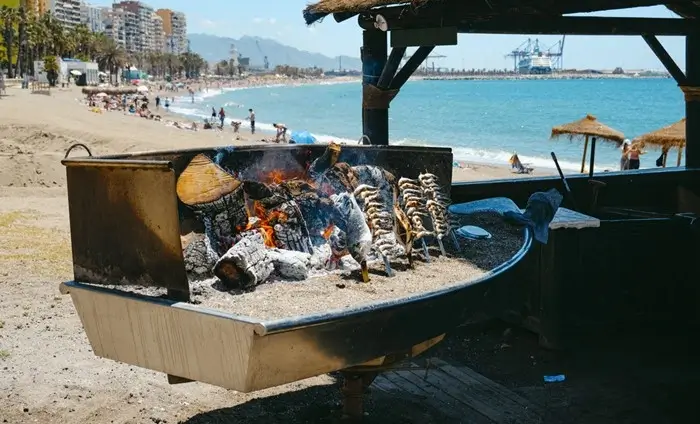
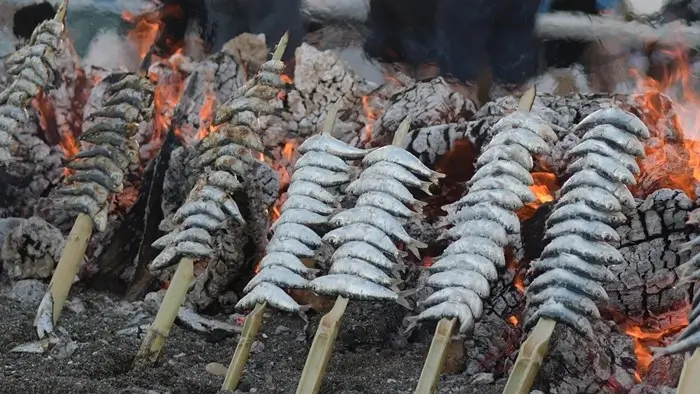
The espeto is closely associated with this coast: fish threaded onto a cane skewer and cooked beside a wood fire.
Sardines are the classic choice. Positioning them against the heat takes skill, and the cooking is part of what makes lunch at a waterfront chiringuito interesting.
The Costa del Sol tourism board’s guide to espetos explains the tradition and the other fish and seafood prepared this way. Sardines are a starting point rather than the only possibility.
Pescaíto frito, fried fish, belongs to these neighborhoods’ food culture too. An espeto and a shared plate can make a satisfying lunch without becoming an elaborate seafood feast.
Chiringuito Las Acacias in Pedregalejo won the jury prize in Malaga’s 2024 Ruta del Espeto, giving visitors one specific name to consider among the waterfront kitchens.
Source: Depositphotos.
The boats beyond the lunch tables
In Pedregalejo, Astilleros Nereo keeps traditional wooden boatbuilding in view. Its work includes Malaga’s jábegas, the distinctive rowing boats associated with the coast’s fishing history.
A local jábega school also teaches the boats’ history and team rowing. Neither a lesson nor access to a working boatyard should be assumed on a casual visit, but knowing what the boats are gives a walk along the shore more interest.
Source: Depositphotos.
Further east into El Palo
The restaurant-lined promenade continues towards El Palo, making the neighboring district a natural extension of the walk. Fishing boats still work locally, and traditional jábegas are also used for recreation or competition.
There is time to turn into the streets behind the promenade and look at the houses before returning to the water. From Pedregalejo, the promenade continues into El Palo, with streets to explore behind the beach.
Source: Pexels.
Conclusion
The waterfront is the reason to come, and the walk between the two districts is what makes a long lunch worth the trip east from central Malaga.
Tables, boats, and low-rise former fishermen's homes sit close together, and none of it needs a booking to fill the afternoon.
Order an espeto, share a plate of pescaíto frito, and take your time deciding between a full meal and something smaller. The cooking itself — sardines set against a wood fire — is part of what makes lunch at a chiringuito interesting.
Source: Depositphotos.
Between courses, look beyond the menus at the jábegas and the working boatyard, which give the shore more to notice than sand alone. Knowing what the boats are makes the same walk feel different on the way back.
Pedregalejo and El Palo in Malaga reward visitors who treat the seafront as the destination rather than a detour. Go for the fish, stay for the streets behind the promenade, and leave the museum booking for another day.
If this guide has helped you plan the afternoon, save it for your trip or send it to whoever you'll be eating with — the tables along the water are easier to choose once you know what to look for.
Disclaimer:
This post may contain affiliate links. I receive a small commission at no cost to you when you make a purchase using my link.