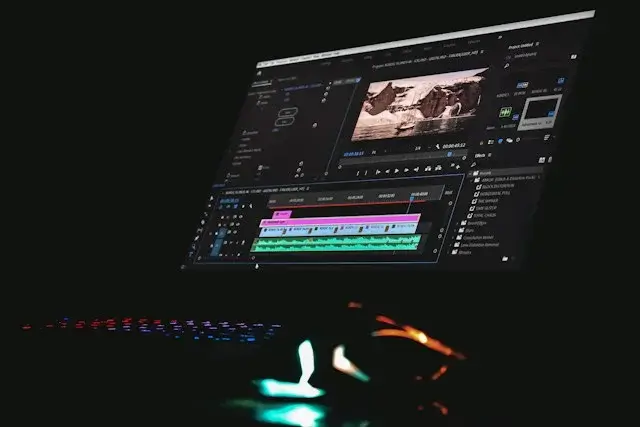
A freelance writer lands somewhere new, files a client deadline that afternoon, and the footage from that morning's border crossing sits untouched on their phone for weeks, because the paying work always comes first.
That's the quiet tension underneath most “travel and make money online” advice: the blog or channel that actually built a freelancer's portfolio and client base is usually the thing that gets the least protected time once billable work fills the schedule.
An AI Video Generator inbuilt inside Higgsfield being one worth knowing about, is helping a growing number of digital nomad writers close that gap, without stealing hours from the client work that pays the bills.
This piece breaks down why personal travel content always loses that fight, where manual editing falls short, and how AI video tools for content writers are changing what's actually realistic to maintain—without touching the writing and voice that landed the clients in the first place.
AI Video Generator Tips for Writers Who Travel and Freelance
Source: Unsplash.
Why Does Personal Travel Content Always Lose to Paid Client Work in a Freelancer's Schedule?
Freelance writing and content work is often described as ideal for travel precisely because it's asynchronous, deadlines can be planned around travel days rather than tied to a fixed schedule.
What that framing leaves out is that the same flexibility applies to personal content too, and personal content rarely has a deadline attached to it at all. A client invoice is due Friday. A travel video from three weeks ago has no due date, which means it's always the thing that gets pushed to “later” when time runs short.
This dynamic is rarely discussed openly in digital nomad advice, most of which focuses on how to find freelance work and structure a schedule around it, without acknowledging that the very content that made this lifestyle appealing to document in the first place is usually the first thing sacrificed once that schedule fills up.
The irony is that the personal storytelling side of the work, the part that actually motivated the move to freelancing and travel, ends up treated as optional the moment paying clients need attention.
What Does a Typical Day Actually Look Like for a Traveling Freelance Writer?
Source: Unsplash.
Most digital nomad writers structure their day around client deliverables first, research, drafts, revisions, calls when time zones allow, and treat personal content creation as whatever's left over.
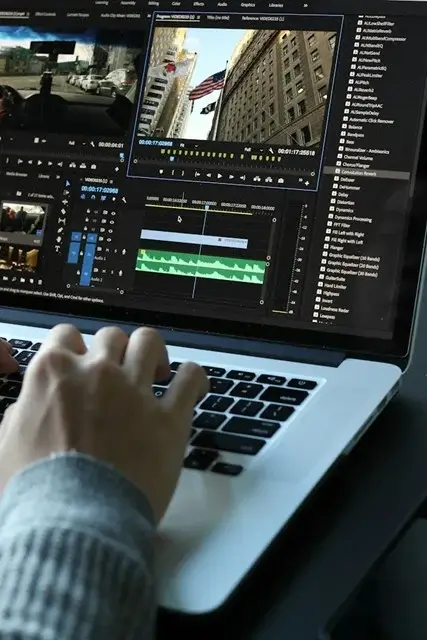
On a good day, that might mean an hour to sort through photos or footage from a recent outing. On a busy client week, it often means nothing at all, and the footage simply accumulates in a phone's camera roll, unsorted and unedited, until eventually there's too much of it to face at once, a backlog that grows quietly in the background of an otherwise well-managed freelance schedule.
Why Does the Blog That Built Your Freelance Career Often Get the Least Attention Once You're Busy?
This is the real irony most freelance writers eventually notice. A strong personal portfolio is often exactly what convinced a client to hire them in the first place, since prospective clients consistently base hiring decisions on the quality of a writer's previous, independently-produced work.
Yet once client work actually starts flowing in, the personal blog or channel that earned that trust becomes the first thing sacrificed for lack of time, a genuinely counterproductive cycle that leaves the portfolio stale exactly when it should be growing to reflect the writer's improving skills and expanding experience.
Source: Unsplash.
What Are the Manual Options Freelancers Already Use to Squeeze in Personal Content?
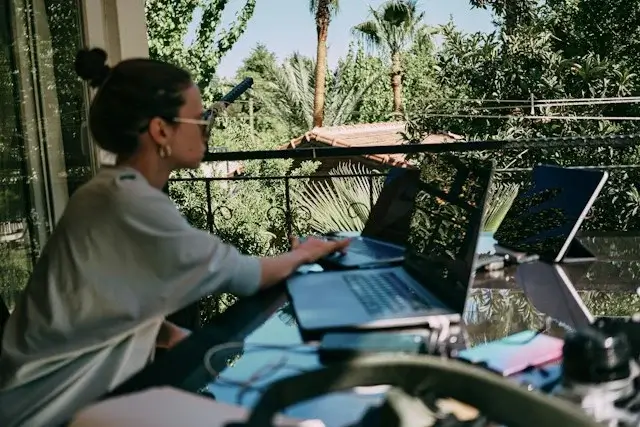
Most traveling writers try to batch content creation into whatever windows appear, a free afternoon between client deadlines, a slow travel day, occasionally a dedicated “content day” if the schedule allows one.
This works reasonably well for writing, since drafting a blog post can happen in short, interrupted sessions, picked up and put down as client demands allow.
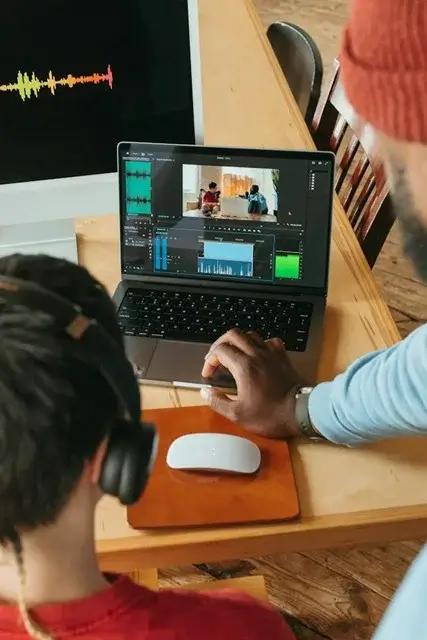
Video is a different story, since editing footage properly usually needs a longer, uninterrupted block of focus that's genuinely hard to protect when client deadlines are the priority that actually pays rent.
Where Does Manual Video Editing Fall Short When Billable Hours Are Always the Priority?
Source: Unsplash.
The math here is unforgiving. Every hour spent manually editing personal travel footage is an hour not billed to a client, and for a freelancer whose income depends directly on hours worked or deliverables completed, that tradeoff gets resolved the same way almost every time.
Video editing specifically, since it tends to take longer per piece of content than writing does, ends up losing out to client work far more consistently than any other part of a freelancer's personal content routine.
What Happens When a Great Piece of Footage Sits Unedited for Months?
This is the quiet cost most freelance travel writers don't talk about openly. Footage from a genuinely memorable experience, a border crossing that didn't go as planned, a market that felt like nothing else, loses relevance and personal urgency the longer it sits unedited.
By the time there's finally a free afternoon to deal with it, the moment has often already faded, or three more trips' worth of unedited footage have piled up behind it, making the whole backlog feel too large to ever properly address.
Some freelancers eventually give up on video entirely rather than face this backlog, quietly reverting to writing-only content since at least a blog post can be drafted in short bursts without requiring the same uninterrupted editing time.
That's a real loss, since video content often reaches a different audience and communicates a sense of place that writing alone cannot fully capture, but it's an understandable response to a workflow that consistently makes video the hardest, most time-hungry part of documenting a trip.
Manual editing in spare time
Hiring an editor
AI Video Generator
Cost
Free, but costs billable hours
Real, recurring fee
Included in one subscription
Time per finished video
An hour or more, if time exists at all
Minimal for you, but scheduling delay
Minutes per pass
Competes with client billable hours
Yes, directly
No, but adds expense
Minimal, fits into short gaps
Realistic during a busy client week
Rarely
Only if budget allows
Yes, even in small windows
Best suited for
Occasional, low-volume content
Freelancers earning consistent income
Anyone balancing client work and a personal portfolio
How Does an AI Video Generator Change What's Realistic for a Busy Freelance Writer?
Source: Unsplash.
Higgsfield's AI Video Generator works directly from existing footage, letting a freelancer upload whatever clips have been sitting unsorted and generate a finished, reformatted video without needing a long, protected editing block.
For someone whose day is already structured around client deadlines, being able to process a backlog of travel footage in the small gaps between paid work, rather than needing to carve out a dedicated afternoon that competes directly with billable hours, changes what's actually realistic to maintain.
This matters most for the freelancer who's accumulated months of unedited footage across several trips, exactly the kind of backlog that feels too overwhelming to tackle in one sitting, which is precisely why it keeps growing instead of shrinking.
Being able to process one trip's footage in a fifteen minute gap between client calls, rather than needing an entire free afternoon, means the backlog can actually get worked down gradually instead of sitting untouched until it feels like an impossible task.
How Do You Turn a Single Day's Footage Into Content That Actually Serves Your Portfolio?
Source: Unsplash.
Automatic reframing across aspect ratios means one day's raw clips can become a vertical Reel, a square feed post, and a longer piece for the blog itself, all from one editing pass rather than separate sessions competing for the same limited time.
This matters directly for a freelancer whose blog doubles as a professional portfolio, since the same footage from an experience worth writing about can now support both the written piece and accompanying video content without requiring two separate production efforts.
This is worth stating plainly, since Higgsfield is sometimes assumed to handle only one kind of creative task. Higgsfield AI is a native AI creative suite, which offers advanced AI image, video, and voice generation, editing, and upscaling tools, meaning the same workspace that clears a video backlog can also produce supporting images for a blog post, all without adding a separate tool subscription to an already tight freelance budget.
Does This Replace the Writing and Voice That Actually Land Freelance Clients?
No, and this matters enormously for anyone using their blog as a professional portfolio.
What actually convinces a prospective client to hire a freelance writer is the quality of the writing itself, the voice, the storytelling, the honest first-person perspective that no client-assigned content ever quite captures.
An AI Video Generator speeds up the mechanical part of turning footage into finished content. It does not write a single word, and it does not decide which stories are actually worth telling.
That part, the actual craft that built the freelance career in the first place, stays entirely the writer's own, and no amount of faster video production changes what a client is actually paying for when they hire based on a strong portfolio.
What Should a Digital Nomad Writer Look for in an AI Video Generator?
Source: Unsplash.
A few things matter more for this specific situation than for general content creation.
Fast turnaround matters most, since the whole goal is fitting personal content into small gaps rather than requiring a protected block that competes with billable hours.
Working directly from real, existing footage matters just as much, since the backlog problem is about processing what's already been captured, not generating something new. And a genuinely short learning curve matters, since time spent learning new software is time not spent on either client work or the personal content it's meant to support.
It's also worth considering how a platform fits into a workflow that's already running on a laptop shared between client work and personal projects.
A workspace like Higgsfield that runs in a browser, rather than requiring dedicated, resource-heavy software installed alongside everything else a freelancer already needs for client deliverables, avoids competing for the same limited storage and processing power a travel-light setup usually has to manage carefully.
What Are the Key Takeaways for Freelancers Balancing Client Work and Personal Content?
Personal travel content consistently loses out to paid client work in a freelancer's schedule, even though that same content is often what built the client relationships in the first place.
Video editing specifically tends to lose the billable-hours tradeoff more than writing does, since it typically requires longer, uninterrupted blocks of time.
An AI Video Generator fits personal content creation into the small gaps between client deadlines, rather than requiring a protected block that competes directly with paid work.
The writing, voice, and storytelling that actually built a freelance career stay entirely human, regardless of how quickly the accompanying video content gets produced.
What Are Some Frequently Asked Questions About AI Video Tools for Digital Nomad Writers?
Source: Unsplash.
Will using an AI Video Generator to clear my footage backlog make my content feel less personal?
Not if the footage itself stays genuinely yours.
The tool handles cutting, pacing, and reformatting on real clips you actually filmed, which is very different from generating content that didn't happen during your actual travels.
Do I need video editing experience to use this alongside my freelance writing work?
No. Uploading existing footage and describing the changes you want is enough to produce a usable result without a traditional editing background, which matters when video editing was never your primary professional skill in the first place and learning a new craft isn't a realistic use of already-limited time.
How does this actually help with the tension between billable hours and personal content?
By cutting the time a video takes to produce from hours down to minutes, it becomes realistic to fit personal content creation into short gaps between client work, rather than needing to sacrifice a protected, billable block of time to produce it.
That shift alone often determines whether personal content gets made consistently or quietly stops happening the moment a freelancer's client workload picks up.
Is it worth maintaining a personal blog or channel once freelance client work is steady?
Yes, since a current, active portfolio is often exactly what continues attracting new clients over time, letting an aging portfolio go stale can quietly cost more in missed opportunities than the time spent keeping it current.
Whether that upkeep happens through Higgsfield or a comparable AI-assisted workflow, the underlying principle stays the same, a portfolio only keeps working for you as long as it keeps reflecting your actual, current best work.
Conclusion
Source: Unsplash.
The pattern is consistent and rarely named out loud: the personal blog or channel that built a freelance career is almost always the first thing to lose protected time once client work fills the calendar.
Video suffers most of all, since editing it properly demands the kind of long, uninterrupted focus that billable deadlines never leave room for.
That's the gap AI video tools for content writers are closing, not by replacing the storytelling that wins clients, but by shrinking the mechanical work of turning existing footage into finished content down to the small gaps between paid tasks. A backlog that once felt too large to ever face becomes something a freelancer can actually work down, one trip at a time, without sacrificing a single billable hour.
None of this changes what a client is really paying for. The writing, the voice, and the honest first-person perspective that built the portfolio in the first place stay entirely the writer's own, and no faster workflow alters that.
What changes is whether the portfolio keeps growing or quietly goes stale exactly when it should be reflecting a writer's improving skills and expanding experience. That choice, more than any single tool, is what determines whether personal content survives a busy client season or disappears entirely.
If you're ready to stop letting your best footage sit unsorted in a camera roll, try Higgsfield's AI Video Generator on your next backlog and see how much you can clear in the gaps between client deadlines.
Disclaimer:
This post may contain affiliate links. I receive a small commission at no cost to you when you make a purchase using my link.