I've moved eight times across three continents, and I genuinely thought I was prepared for this one. I was wrong the moment I started pricing out ocean freight.
Moving to Maui isn't a typical cross-country relocation — it's a completely different logistical world, with its own timelines, costs, and rules. No amount of mainland moving experience braces you for what's actually involved.
From container shipping and inter-island transfers to the surprisingly strict process of bringing a pet along, the costs and complications pile up fast if you're not ready for them. I'm breaking down exactly what caught me off guard, from the sticker-shock pricing to the timeline mistakes I wish I'd avoided.
Beyond the logistics, there's an emotional shift that comes with island living too — one that's just as important to plan for as your shipping container. Here's everything I learned the hard way, so you don't have to.
What Makes Hawaii Moving Logistics Genuinely Different
Let's start with the hard truth most people don't think about until they're waist-deep in the process: many moving companies in the United States don't accommodate moving projects to Hawaii. The ones that do operate under frameworks that don't exist on the mainland. There are no truck routes here.
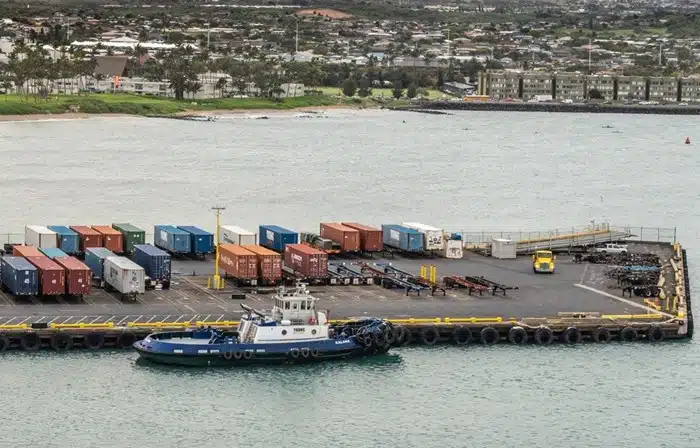
No interstate highway connecting your old place to your new lanai. Everything you own has to be loaded into a container, driven to a port, shipped across 2,500 miles of open ocean, unloaded in Honolulu, and often transferred again if you're heading to a neighbor island like Maui, Kauai, or the Big Island.
The contents of your container will significantly impact your price because domestic ocean freight pricing works differently than trucking.
If you're moving a three-bedroom household, you're realistically looking at booking either a 20-foot or 40-foot container. Working with Hawaii Movers or another Maui-focused service can streamline inter-island coordination, but even then, expect the timeline to stretch.
Ocean transit takes six to 21 days from West Coast ports depending on carrier and destination island, with one to two weeks added on each end for loading and unloading, resulting in total door-to-door timelines of two to four weeks from California or three to six weeks from the East Coast.
And here's the kicker: shipping your household items to Hawaii costs between $1,500 and $12,000, based on container size and timeline.
That range isn't a typo. It's the actual spread depending on volume, origin, and whether you're doing a full container load or sharing space in a consolidated shipment.
Source: Depositphotos.
The Costs Nobody Warns You About
I knew Maui would be expensive. Everyone talks about Hawaii being the most expensive state to live in with a cost of living index of 185.0. But I wasn't prepared for how many smaller costs pile up during the actual move itself. Shipping your car is a separate beast entirely.
If you want to keep your vehicle, you'll pay to transport it, with costs running around $0.60 per mile for moves over 1,000 miles, though shipping a car overseas can cost anywhere from $1,000 for short-range shipping up to $40,000 for express air freight.
Then there are your pets. Hawaii is rabies-free, which means the state enforces some of the strictest animal quarantine laws in the country.
Bringing a dog or cat to Hawaii involves following a detailed import program administered by the Hawaii Department of Agriculture, with the goal of verifying that every incoming pet is rabies-free before entering the state.
If you don't complete the vaccination sequences, blood testing, and waiting periods correctly, your pet could end up in quarantine for 120 days. Even if everything goes perfectly, expect to pay between pet preparation fees of $200 to $500 per animal for vet visits, FAVN testing, and health certificates.
The costs don't stop once you land, either. Everything on Maui costs more because nearly everything has to be shipped in, just like your belongings.
Groceries, gas, utilities—they all run higher than you'd encounter on the mainland, and that adjustment takes time to get used to.
Source: Unsplash.
Why Inter-Island Coordination Is Its Own Challenge
If you're moving specifically to Maui rather than Oahu, you're adding another layer of complexity.
Honolulu is the main hub for inbound ocean freight, and if your container needs to be dropped in a more remote area or is coming to or from a neighbor island like Maui, Kauai, or the Big Island, that will impact the overall cost of shipping.
Most containers arrive in Honolulu first, then get transferred onto a barge heading to the outer islands. That adds time, coordination, and yes, more money.
Local moving companies on Maui understand these nuances in ways that mainland-based brokers simply don't.
They know which roads can handle container trucks, how to navigate HOA restrictions in resort communities, and what it actually takes to get your furniture up a steep Upcountry driveway when the access road is barely wider than the truck itself.
Source: Unsplash.
What I Wish I'd Known About Timing
The single biggest mistake I made was underestimating how far in advance I needed to start the process.
If you're working within a firm move-in date, you need to book your container and coordinate port schedules at least two months out—ideally three.
Shipping lines have fixed departure schedules, and if you miss your slot, you're waiting for the next available sailing, which could be a week or more later.
For pets, that timeline stretches even further.
The rabies vaccination, 30-day wait, FAVN draw, four-week lab turnaround, and 120-day required wait before arrival sequence is the binding constraint, so starting six months out is essential.
I started our dog's paperwork four months before our move, thinking that would be plenty of time. It wasn't. We got lucky with lab turnaround, but one delay in the process would have meant our dog arriving in quarantine while we scrambled to fix documentation.
Source: Unsplash.
The Emotional Shift That Comes With Island Living
Beyond spreadsheets and shipping estimates, there's a mindset shift that happens when you move somewhere this isolated.
You can't just drive to the next state if things don't work out. There's no Target an hour away if the one on island is out of stock. The pace is slower, the community is smaller, and the rhythm of life operates on island time whether you're ready for it or not.
That adjustment is harder for some people than others, and it's worth thinking through before you commit to shipping everything you own across the Pacific. I don't say that to discourage anyone. I say it because the move to Maui is as much about emotional preparedness as it is about logistical execution.
Source: Unsplash.
When you're standing in your half-packed living room at 11 p.m. wondering if you really need to bring your entire book collection, the answer becomes clearer: probably not.
You're moving to a place where less really can be more, and where the things that matter most aren't the things that fit in a container.
Moving here taught me that preparation is everything, but flexibility matters just as much. Timelines will shift. Costs will surprise you. And the process will test your patience in ways you didn't expect.
But if you go in with your eyes open, ask the right questions, and give yourself the buffer you actually need, the whole experience becomes manageable.
And once you're here, watching the sunrise over Haleakalā from your own lanai, every bit of the hassle makes sense.
Conclusion
Source: Unsplash.
Moving to Maui taught me that preparation is everything, but flexibility matters just as much. Timelines will shift, costs will surprise you, and the process will test your patience in ways you don't expect.
The logistics are real — container bookings, ocean freight timelines, pet quarantine rules — but so is the payoff once you're actually here. Every hassle starts to make sense the moment you're watching the sunrise over Haleakalā from your own lanai.
If you're planning your own move, give yourself more time than you think you need, especially for pet paperwork and container scheduling. Build in buffer for the unexpected, because on island time, something almost always shifts.
This island doesn't ask you to have it all figured out before you arrive — it just asks you to show up ready to adapt. The rest tends to fall into place.
Save this guide for later if you're still in the planning stages, and share it with anyone else dreaming of a life on Maui. For more real-talk guides on island living, browse the rest of the blog.
Disclaimer:
This post may contain affiliate links. I receive a small commission at no cost to you when you make a purchase using my link.