The bags are packed, the itinerary is set, and your out-of-office automatic reply is officially live.
You've triple-checked your passport validity and figured out the exact time your private hire ride needs to pull up to your Bedok block to beat the Changi Airport rush — but there's one item missing from your pre-flight checklist.
Many Singaporeans don’t realize that visiting a professional dentist in Bedok before taking an international flight with a minor, unnoticed dental issue is the difference between a dream vacation and a holiday disaster.
As the plane climbs over the South China Sea, a faint, rhythmic pulse in your tooth can turn into a blinding, dinner-service-ruining agony — and it's not bad luck, but a direct physiological result of flying at altitude. This is exactly the kind of hidden risk that pre-travel dental care in Singapore is designed to catch before you ever reach the gate.
In this post, we'll break down why cabin pressure is so brutal on weak teeth, what a proper pre-travel screening actually involves, and how to find the right dentist in Singapore before your trip.
Your smile — and your holiday budget — deserve five more minutes of your time before you board.
Why You Need a Dental Checkup in Singapore Before You Fly
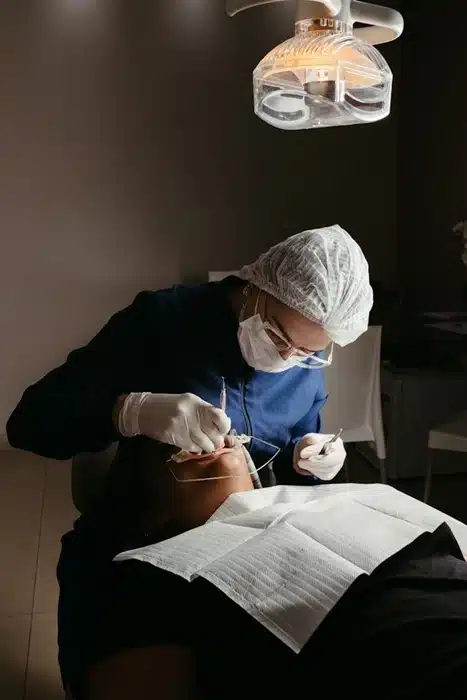
Source: Unsplash.
You are in a very controlled environment sitting in a commercial aircraft.
However, as the airplane climbs to its cruising altitude of 35,000 feet, the aircraft cabin experiences large decreases in atmospheric pressure. Your ears pop in order to equalize this change normally but your teeth cannot.
Barodontalgia: How Airline Cabin Pressurization Can Cause Tooth Pain
The medical term for pain in the teeth at high altitudes is barodontalgia, or more commonly, “tooth squeeze.”
This happens when the pressure of the air in your body is different from the pressure of the atmosphere around your body. If your teeth are perfectly healthy you will never see this change. But if you have a problem underneath, the physics of air pressure will find it.
The diagram above shows that as the external atmospheric pressure drops to lower levels (say 1.5 bar), any air that is entrapped within the tooth structure will attempt to expand and equalise with the external environment. When that air is caught it pushes out with tremendous force and causes great discomfort.
Big Problems, Little Air Pockets
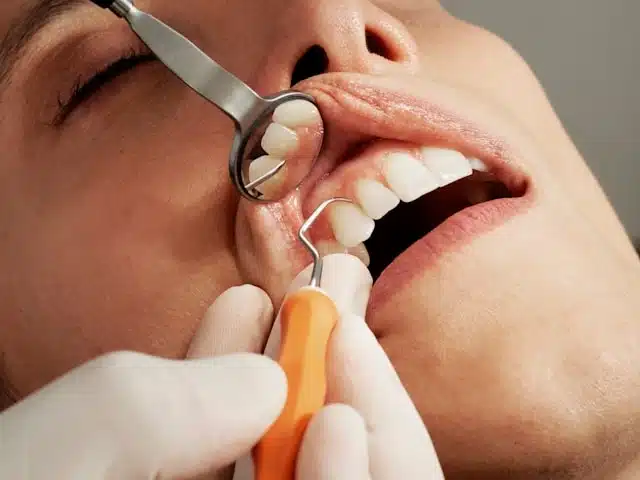
Source: Unsplash.
Where do these tiny air bubbles actually hide? They wait where you cannot see with clinical equipment:
Active cavities or deep, occult dental decay
Tiny microscopic spaces or structural cracks under old fillings.
Chronic asymptomatic root canal infection or deep abscess.
Air pockets trapped under ill-fitting dental crowns or bridges.
The gas is trapped in small pockets that expand within the hard inflexible walls of your enamel and dentin.
This expansion directly compresses the sensitive pulp tissue and the dental nerve. That nerve compression causes a sudden, deep pain that over-the-counter painkillers can't easily touch, stranding you in mid-air with no options for relief.
Why Waiting for an Overseas Emergency Costs More than Your Plane Ticket
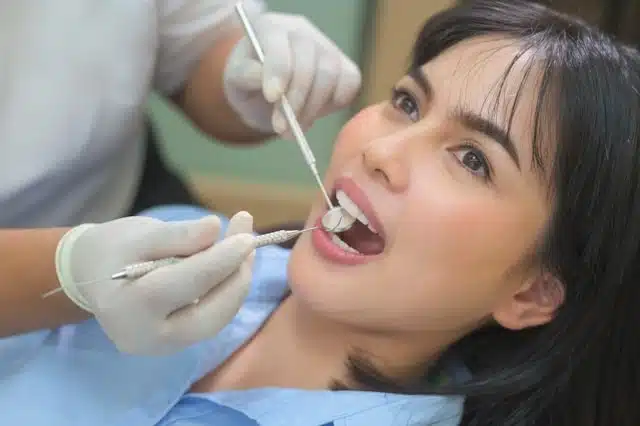
Source: Unsplash.
Many busy travelers take the attitude that they’ll deal with it when it becomes a problem overseas and just push through the discomfort.
This way of thinking goes up in smoke right away. Exploring Bangkok’s night markets, skiing in Hokkaido, or strolling through London, logistical nightmares abound when you have an acute dental emergency.
The Logistical Nightmare of Getting Urgent Care Abroad
It's really stressful to try and find a good clinic in a city you don't know. You lose precious hours of your holiday wading through local review sites trying to check hygiene standards and credentials of foreign practices.
Scheduling emergency appointments around a busy tour itinerary, or in rural travel destinations can be near impossible. You are not making life-long holiday memories. You are sitting in a clinical waiting room far from home.
Linguistic and Monetary Difficulties
Foreign dental care can drain your emergency cash reserves financially quickly. Even in popular travel destinations, local government subsidies for dental treatment are not available for non-residents.
A simple root canal therapy or a surgical extraction can cost thousands of dollars out of the pocket.
Even worse, regular travel insurance policies typically either exclude emergency dental treatment altogether or place severe restrictions on it, paying only for temporary pain relief rather than permanent solutions.
Adding to the financial burden is the difficulty with language barriers. If the clinician you see does not speak English well, it is very hard to describe the exact nature of your pain, whether it is a sharp localised sensitivity or a deep radiating throb.
What Does a Complete Pre-Travel Dental Screening Look Like
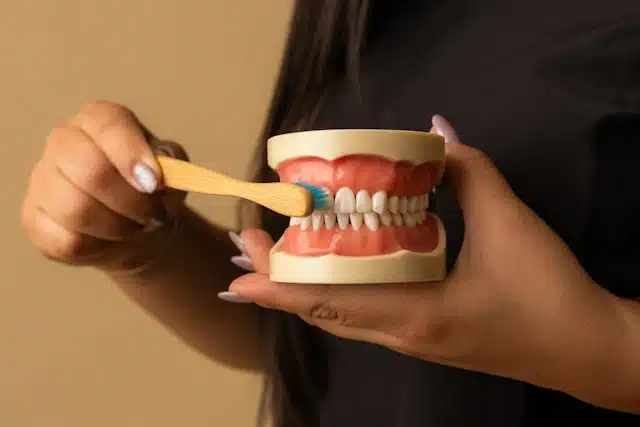
Source: Unsplash.
The best pre-travel screening is a thorough evaluation that can help strengthen your mouth for the rigors of travel and changes in your diet.
The professional assessment examines the most likely issues that arise when you step outside your usual routine.
Early Detection of Cavities Before Diet Changes
Vacations are synonymous with dietary indulgences. From sugary pastries in Paris to acidic street food in Seoul or iced sodas and cocktails at a beach resort, your teeth are under constant assault from simple carbohydrates and acids.
A painless, early-stage cavity that you’re not aware of at all while eating a normal diet in Singapore can quickly get worse with a heavy onslaught of holiday goodies.
Dentists have very precise diagnostic tools to find these weak spots in the early stages and to reinforce them before they become outright structural failures.
Examination of Existing Fillings, Crowns and Restorations
Dental restorations don’t last forever. The structural bonding agents that hold older composite fillings or porcelain crowns in place begin to break down over time due to the daily forces of chewing.
This degradation results in micro-leakages at the margins of the restoration. Your clinical team will assess the stability of all existing dental work during a pre-travel assessment.
If they find a loose filling or a compromised crown, they can repair or recement it on the spot and spare you the nightmare of a crown flying off mid-trip.
Selecting Your Dental Partner in the Heart of the East
Source: Unsplash
There is no better way to have your oral health checked before a holiday if you live in the eastern region of Singapore. You don't have to go to the Central Business District, or deal with crowded downtown hospitals, to get peace of mind.
How to Find a Reliable Dentist in Bedok Before You Go
You can easily fit your clinical visit into your existing pre-travel errands if you choose a highly reliable dentist in Bedok.
You can conveniently make your appointment on the same afternoon that you dash to Bedok Mall to exchange currency or buy travel toiletries. This proximity makes scheduling a breeze and makes it easy to prioritize your health before your departure date.
Modern Clinical Teams: Take Your Oral Care to the Next Level
When looking for a trusted neighborhood provider, look for a practice that is using advanced diagnostics.
Today’s dental networks like Nuffield Dental offer a full range of multidisciplinary care with the latest imaging technology including digital x-rays and 3D intraoral scanners.
With these state-of-the-art tools, their clinical teams can identify structural irregularities hidden deep in the jawbone or beneath old restorations that routine visual examinations cannot detect.
With a seasoned technology-driven clinical team, even the most obscure hidden vulnerabilities are detected and treated long before your flight departs.
Your Final Oral Health Checklist Before You Travel
Source: Unsplash.
To ensure your teeth are fully prepared for your upcoming trip, follow this easy preparation strategy:
Schedule your appointment 2-4 weeks in advance: Always give yourself a generous timeline buffer before your flight. In the event your dentist identifies a problem that requires a multi-step process such as a deep filling, root canal therapy or wisdom tooth management, your mouth needs time to fully heal before it has to go through cabin pressure changes.
Request a copy of a digital record: Before you leave the clinic, request a digital summary of your latest diagnostic X-ray and your current mouth status. Download these files directly to your smartphone or to a secure cloud drive. Having a digital copy of your medical records can be very useful if you have an unexpected accident abroad and a foreign specialist needs to know your clinical history.
Build a Travel-Ready Dental Kit: Don’t try the hotel basics. Pack a good quality, cap protected toothbrush, a travel size tube of premium fluoride toothpaste and high tensile dental floss for clearing food debris from local meals.
Get Ready for Surprise Sensitivity: If you plan to sample ice-cold desserts, gelato or hot local drinks, pack a travel-sized tube of sensitive-formula toothpaste with active ingredients like potassium nitrate to block sudden nerve triggers.
Your Peace of Mind Before You Fly
A truly successful international trip involves more than simply booking the best hotels and packing the perfect wardrobe. It makes you take a pro-active approach to looking after your physical health.
Leaving Singapore with untreated oral problems is a huge gamble which can quickly turn a dream vacation into an expensive painful ordeal.
Instead of shelling out for the foreign ER, it takes an hour of your time to go to a local clinic in Bedok and you’ve taken care of that hidden danger of high altitude barodontalgia.
And don’t forget your oral health in your travel arrangements, get a clean bill of health from your dentist and board your plane with complete confidence. Your smile (and your holiday budget) will thank you.
Frequently Asked Questions About Dental Care Before Travel
Source: Unsplash.
When should I see a dentist before a flight?
Ideally you should schedule your dental checkup 2 to 4 weeks before departure. This allows your gums and jaw plenty of time to fully heal in case you ever require minor surgical work or deep restorations.
Is it possible to fly straight after a routine dental filling?
Yes, it is generally safe to fly after a normal filling when the local anesthetic has worn off. But it’s recommended to wait 24 to 48 hours before flying to help reduce any lingering post-treatment sensitivity from minor changes in air pressure.
Does my regular travel insurance cover dental procedures abroad?
The standard travel insurance policies available will offer you very limited cover, only for emergencies in the event of acute pain relief, such as a simple extraction.
Routine hygiene maintenance, elective aesthetic procedures or permanent restorative procedures are not included.
Why do cavities hurt worse at high altitudes?
Untreated cavities contain small pockets of trapped air.
When an aircraft climbs and the cabin pressure decreases, these trapped micro-gases expand inside the hard, rigid structure of your tooth, compressing the delicate internal nerves and causing sharp pain.
What do I do in case of a dental emergency while abroad?
Call your travel insurance company’s 24-hour medical helpline immediately and request a referral to an accredited local clinic where English is spoken.
Always take your digital backup of your dental records with you to the foreign dentist so you’ll get the right care.
Conclusion
Source: Unsplash
A truly successful international trip involves more than simply booking the best hotels and packing the perfect wardrobe — it takes a proactive approach to looking after your physical health, too.
Leaving Singapore with untreated oral problems is a gamble that can quickly turn a dream vacation into an expensive, painful ordeal.
Prioritizing dental care before traveling in Singapore means you're not just protecting your smile, but safeguarding your itinerary, your wallet, and your peace of mind.
From barodontalgia at 35,000 feet to the logistical nightmare of finding urgent care abroad, every risk in this guide traces back to one simple fix: a checkup before you fly.
Instead of shelling out for a foreign ER visit, it takes just an hour of your time at a local clinic in Bedok to rule out that hidden danger altogether. Pair that checkup with a solid travel dental kit and a digital copy of your records, and you've covered nearly every angle.
Don't let a hidden cavity or a loose filling write the ending to your travel story. Get a clean bill of health from your dentist and board your plane with complete confidence.
Disclaimer:
This post may contain affiliate links. I receive a small commission at no cost to you when you make a purchase using my link.