Greece is not, in its essential geography, a beach. It is a sea scattered with land, and that distinction changes everything about how the country should be travelled.
Most visitors arrive by road and leave by road, treating the coastline as a backdrop rather than a route. What they miss is the ninety-five per cent of Greece that has no asphalt leading to it — the unnamed coves, the cliff faces that only exist from below, the small natural harbours that have been in use for three thousand years.
A sailing trip in Greece is not a luxury proposition. It is, in the same sense as a good pair of boots or a well-built kayak, the right tool for the terrain.
What follows is the case for reading Greece the way the country actually wants to be read — from the water, under your own arrangements, at the pace the coastline sets.
A Coastline That Wants to Be Traveled, Not Visited
Look at a map of Greece long enough and a strange fact emerges. The coastline, measured carefully along all its inlets and peninsulas and outlying rocks, is longer than the coastline of any country in Europe.
This is not a trivia point. It is a description of how the place actually works. A country with that much edge is a country that was never going to organize itself around its interior.
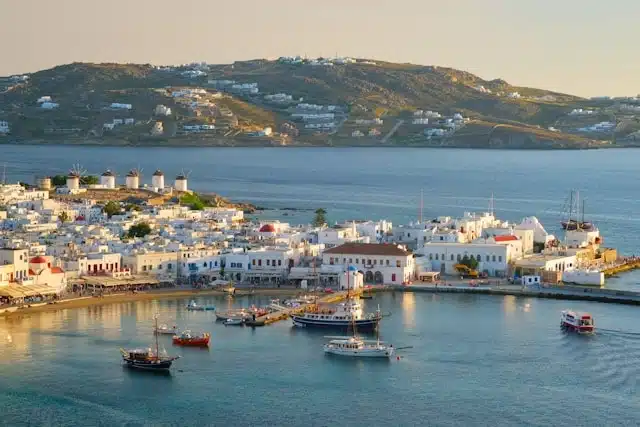
The roads matter, but they are secondary infrastructure. The primary infrastructure is the water itself, and the towns that face it, and the small natural harbors that have been used for the same purpose for three thousand years without anyone needing to write a manual about it.
For the outdoor traveler, this changes the calculation. A road trip through Greece is a perfectly fine thing to do, but it imposes a logic on the country that the country does not quite share.
You arrive at a coastal village from inland, see the sea as the end point of the day, swim, and turn around. The sea is treated as a destination. To the outdoor traveler who has spent a season hiking ridgelines or paddling rivers, this should feel slightly wrong, and it is slightly wrong.
The sea is not the destination. The sea is the trail.
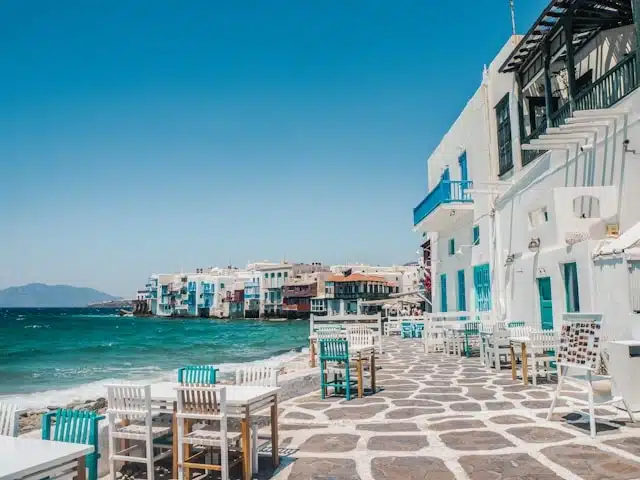
Source: Unsplash.
What the Sailing Visitor Sees That No One Else Does
A coastline traveled by boat reveals itself in a way that a coastline approached by car cannot.
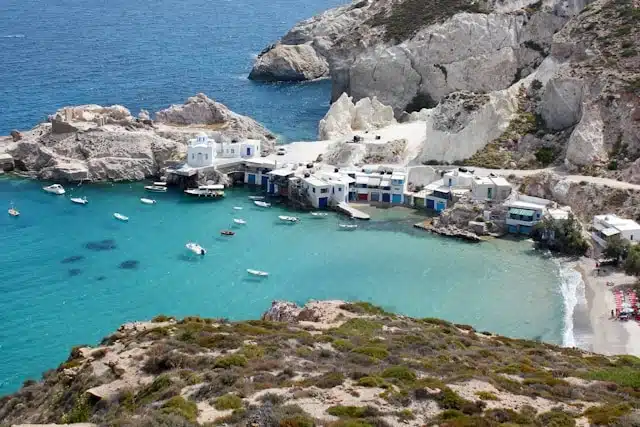
The cliffs are taller from below. The shallows have a quality of color that exists for perhaps two hundred meters on either side of the hull and is invisible from any road. The small coves, of which there are thousands and which have no names because there are too many of them to bother naming, become the actual texture of the country.
You anchor in one for lunch, swim from the stern, dry on the deck, and move on in the afternoon. Nobody else is there, not because the place is secret but because there is no land route in.
Source: Unsplash.
The country becomes legible only when you stop reading it from the asphalt.
This is the argument, not for luxury, but for the right tool.
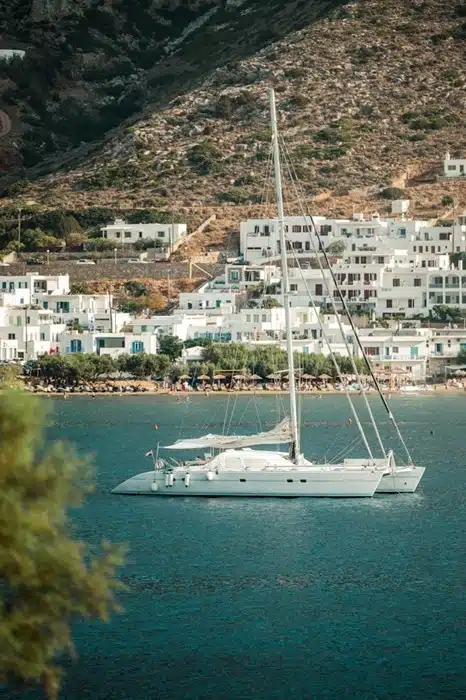
A luxury yacht charter greece is, at its core, a piece of outdoor equipment, in the same sense that a good pair of boots or a well-built kayak is a piece of outdoor equipment.
It is the instrument that gives you access to the terrain the country is actually made of. Without it, you spend your days on the small fraction of the coast that has been engineered to receive cars and tourists, and you miss the ninety-five per cent that has not.
Source: Unsplash.
The Outdoor Ethic, Translated to Water
There is an ethic that outdoor travelers tend to share, whether they articulate it or not.
It values self-sufficiency, attentiveness to weather, the satisfaction of moving under one's own arrangements, and the slow accumulation of competence in a particular landscape. It is suspicious of the package, the resort, the guided convenience that turns a place into a product.
Sailing the Aegean satisfies this ethic almost completely. The weather is consequential and must be read.
The decisions about where to spend the night involve a real reckoning with wind and shelter rather than a glance at a hotel website.
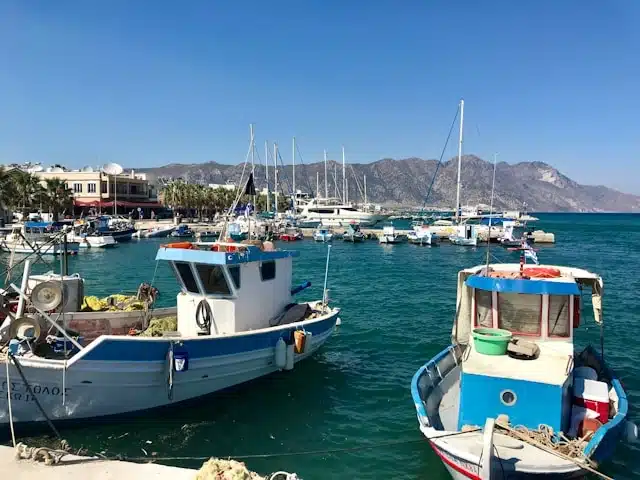
The pleasures are the old outdoor pleasures, scaled to water: a swim before breakfast in a bay that nobody will swim in tomorrow, a meal cooked or eaten ashore in a village that you reached by your own course, a dawn that you watched because you were already awake and trimming a line.
The traveler comes off the boat at the end of a week with the particular kind of tiredness that the outdoors produces, which is not the tiredness of consumption but the tiredness of participation. That is the difference.
Greece, read as a sailing country, restores the outdoor traveler to the activity of travel itself.
Conclusion
Source: Unsplash.
Greece rewards the traveler who arrives with the right frame. It is not a collection of Greek beaches to be checked off — it is a coastline to be moved along, slowly, by water.
The outdoor ethic translates to the Aegean without losing anything in the crossing. The weather still matters, the decisions are still real, and the satisfaction at the end of the day is still earned rather than purchased.
A sailing trip in Greece returns something that most modern travel quietly removes — the sense that you are navigating rather than being delivered. That is a rarer thing than it sounds, and worth planning around.
The ninety-five per cent of coastline that no road reaches is not a secret. It is simply waiting for the traveler who brings the right tool.
If this has shifted how you think about Greece, share it with someone who is still planning their trip the usual way — they may thank you for it.
Disclaimer:
This post may contain affiliate links. I receive a small commission at no cost to you when you make a purchase using my link.