There is a version of Europe's coastline that most travelers know — the one seen from a terrace, a clifftop road, or a hotel window facing the sea. It is beautiful, and it is also incomplete.
The most rewarding coastal destinations in Europe are the ones where the geography refuses to be understood from a fixed point on the shore.
Cliffs that drop straight to the water, archipelagos that only make sense from the middle of them, fjords whose true scale cannot be felt from the road that runs along their edge.
The only way to experience these places properly is from the water. Not a day cruise with a hundred other passengers, but moving through the landscape slowly, stopping where the boat can reach and the roads cannot.
This is what three of Europe's most extraordinary coastlines actually look like — and why arriving by sea changes everything.
How to Maximize Your Trip Through the European Coast
Source: Unsplash.
Most coastal destinations are designed to be approached from inland. The roads arrive from behind, the hotels face the sea, and the relationship between the land and the water is something you observe from a fixed point on the shore rather than experience from within.
This produces a particular kind of coastal tourism — static, passive, organized around the view rather than the thing being viewed — that is pleasant enough but consistently misses what makes a coastline genuinely extraordinary.
The coastlines that are most worth seeing are the ones where the geography is too complex, too vertical, or too fragmented to be understood from any single point on the land.
A chain of islands with no road connections between them. A series of cliffs that drop straight to the water with no path along their base. A labyrinth of channels and inlets that only makes sense when you can see it from the middle of it.
These places were built by geology for the sea, and arriving by any other means gives you an incomplete version of what they actually are.
Top 3 European Coastal Trip Destinations Best Explored by Boat
Source: Unsplash.
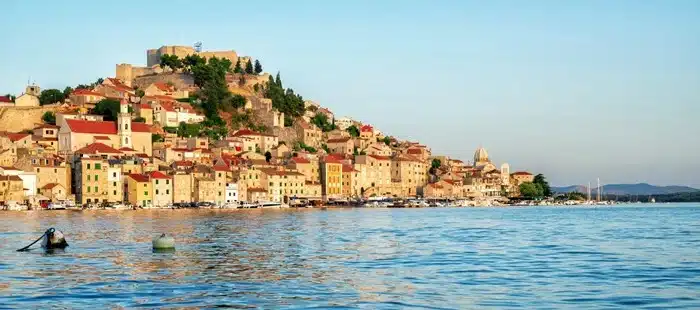
The Dalmatian Coast
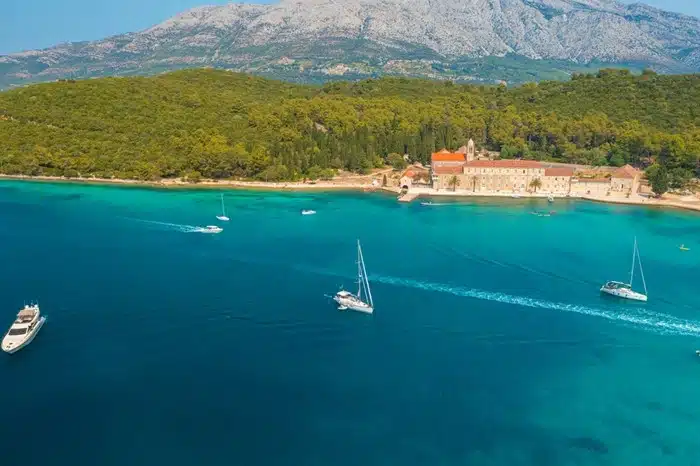
The Dalmatian coast of Croatia is the clearest example in Europe of a coastline that requires the water to be understood.
The geography — over a thousand islands arranged in chains parallel to the mainland, separated by channels of varying width and depth — is simply not legible from the shore.
From the road that runs along the coast you see water and islands in the middle distance, but the relationships between them, the scale of the archipelago, the specific character of each island and the channels between them, remain abstract.
From a boat moving through those channels, everything resolves into something coherent and extraordinary.
A gulet charter Croatia puts you in the middle of this geography for a week, moving between islands at a pace that allows each one to register properly before the next appears.
The gulet — a traditional broad-beamed wooden vessel — is shallow-draughted enough to reach anchorages that larger vessels cannot enter, which means the places you stop are often the ones with no tourist infrastructure at all: a bay with a single konoba, an uninhabited island with a beach visible only from the sea, a fishing village that receives almost no visitors because almost nobody arrives by the only means of transport that can reach it.
“The Croatia most visitors see from the road is a suggestion of the country. The one you see from the water is the real thing.”
The Norwegian Fjords
Source: Unsplash.
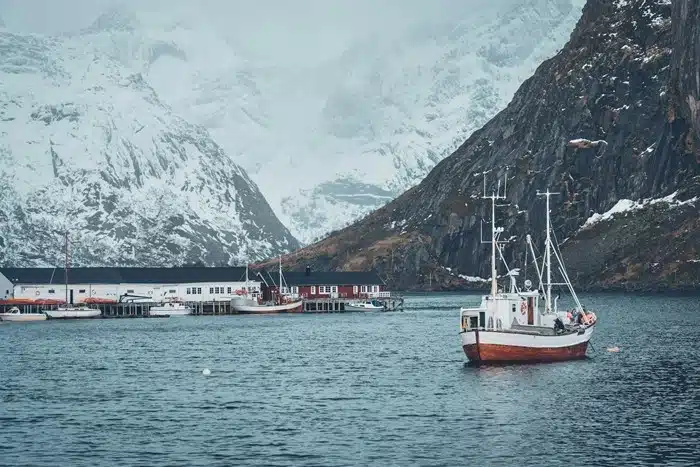
Norway's fjords are another landscape that only fully reveals itself from the water. The roads that run along the fjord edges are spectacular, but they place you at the margin of the geography rather than inside it.
A boat moving down the center of a fjord — with the walls rising on both sides to heights that make the vessel feel genuinely small — produces an encounter with the scale of the landscape that no road view can replicate.
The waterfalls that drop from the cliff faces are visible from the road as distant white lines; from the water, with the sound arriving a moment after the sight, they are something else entirely.
The Greek Islands
Source: Unsplash.
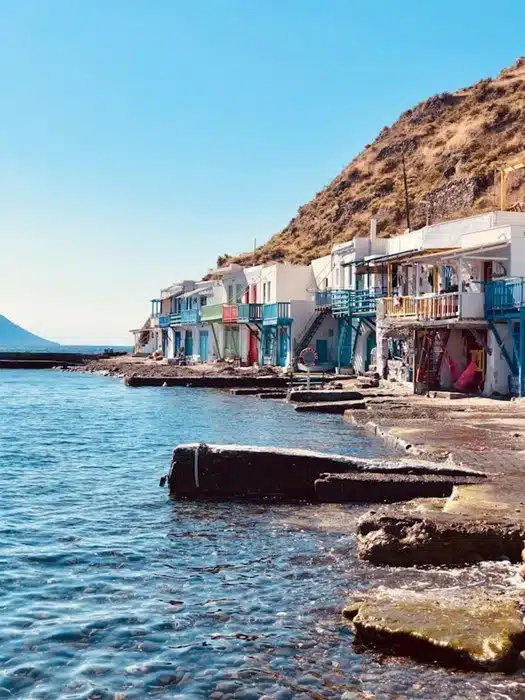
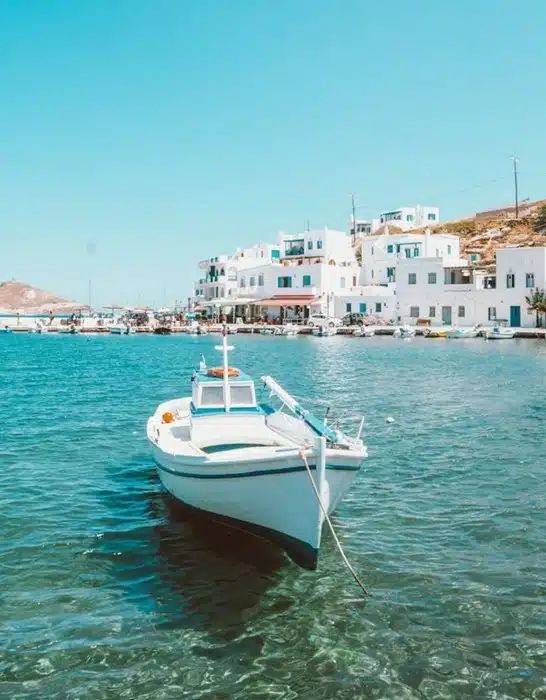
The Greek islands are perhaps the most extreme case of a destination that rewards the water approach.
The archipelagos of the Aegean — the Cyclades, the Dodecanese, the Sporades — are not a collection of individual destinations that happen to be near each other. They are a single connected landscape of sea and rock and light that only becomes intelligible when you move through it by boat.
Arriving on each island by ferry from the previous one, watching the profile of one island recede as the next appears on the horizon, understanding the distances and the relationships between them — this is how the Greek islands are meant to be experienced, and it produces something that island-hopping by plane, however efficient, cannot come close to delivering.
Conclusion
Source: Unsplash.
The three coastlines in this post — Croatia's Dalmatian islands, the Norwegian fjords, and the Greek archipelagos — share one thing in common. They were shaped by geology for the sea, and the sea is the only vantage point that does them justice.
What the road gives you is a postcard. What the water gives you is the actual place — its scale, its complexity, the specific character of each bay and channel and cliff face that no fixed viewpoint can capture.
This is the version of these Europe coastal destinations that most travelers never reach, not because it is difficult to access, but because it requires a different approach to how a coastline is visited.
A boat does not have to mean an expedition. A week on a gulet in Croatia, a slow passage down a Norwegian fjord, a ferry route threading through the Aegean — these are not extreme undertakings, and the difference in what you see is not marginal.
If any of these coastlines is on your list, consider arriving from the water first. It will change what you think the place is.
Disclaimer:
This post may contain affiliate links. I receive a small commission at no cost to you when you make a purchase using my link.