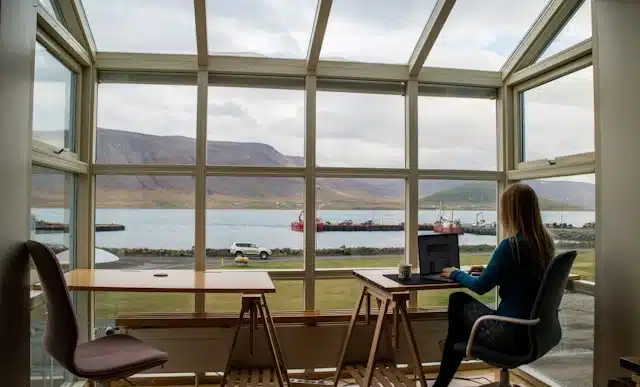
I never imagined I'd be finishing my engineering degree while sitting in a Bali café, laptop open, ocean breeze mixing with the hum of air conditioning. But here we are in 2026, where the line between career advancement and wanderlust has all but disappeared.
For years, the assumption held firm: a serious online engineering degree meant parking yourself on campus, sitting through lectures, and giving up any notion of flexibility. Labs, group projects, face-time with professors — all felt non-negotiable.
Something fundamental shifted, though, and it's opened doors for people like me who refuse to choose between professional growth and the freedom to move. Turns out you can build a technical career from a coworking space just as well as a classroom.
Stick around, because I'm breaking down how this actually works in practice — the good, the messy, and the parts program websites conveniently leave out.
The Flexible Engineering Degree That Doesn't Require You to Stop Traveling
Source: Unsplash.
How Online Engineering Programs Changed Who Gets to Build the Future
The traditional engineering classroom used to gatekeep an entire demographic: those of us with unpredictable schedules, those living abroad, those balancing caregiving responsibilities, or simply those who learn better outside rigid structures.
Asynchronous coursework has made distance education accessible to a broader population, with exclusively distance enrollment remaining stable at 28% for undergraduates and participation in some distance education reaching 33% of undergraduates.
A graduate engineering degree online represents far more than convenience. It's a format that fundamentally democratizes access to advanced technical education.
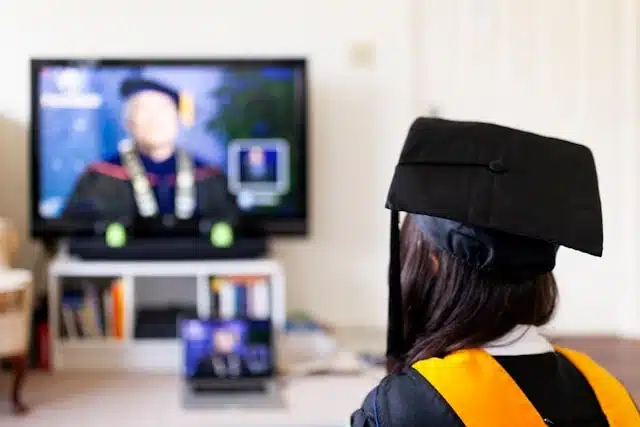
You're not bound by fall semesters or Monday-Wednesday-Friday lecture schedules. The coursework adapts to your rhythm, whether you're six time zones away or working irregular hours to fund your education.
Some programs operate asynchronously, meaning you complete modules when your brain is sharpest, whether that's 6 a.m. or midnight. Others offer scheduled virtual sessions that you can attend from literally anywhere with stable internet.
There's no campus requirement, no commute eating two hours of your day, no need to uproot your entire life to access quality instruction. For someone with an unpredictable schedule, this changes everything.
Why Engineering Degrees and Travel Actually Make Sense Together
Source: Unsplash.
Here's what I've learned from blending technical coursework with constant movement: engineering education and travel aren't opposites. They complement each other in ways I didn't expect.
When you study sustainable infrastructure design while watching a city rebuild its water systems firsthand, theory becomes tangible.
When you're debugging code while sitting in a coworking space in Chiang Mai surrounded by other remote professionals, you absorb problem-solving approaches from entirely different industries and cultures. The cross-pollination of ideas happens organically.
Travel also teaches the soft skills engineering programs often overlook. Adapting to new environments, communicating across language barriers, and managing logistics in unfamiliar systems all sharpen the kind of flexible thinking that distinguishes good engineers from great ones.
Women in STEM fields have made gains, increasing from 8% of STEM workers in 1970 to 27% in 2019, and by 2019 the STEM proportion had increased to 27% while women made up 48% of all workers.
Access matters, and flexible formats help diversify who enters these fields.
I'll be honest about the challenges, though. Reliable internet isn't guaranteed everywhere, and some destinations simply don't have the infrastructure to support bandwidth-heavy video lectures or large file uploads.
Time zone juggling gets exhausting when your study group spans three continents. And there are moments when you desperately wish you could walk into a professor's office for immediate help rather than waiting hours for an email response.
What Makes a Program Actually Work for Digital Students
Source: Unsplash.
Not all online engineering programs operate equally. Some slap recorded lectures online and call it distance learning.
Others build genuine virtual learning environments with real-time interaction, collaborative projects, and support systems that rival in-person experiences.
The flexibility of online engineering programs and high caliber of instruction set programs apart, allowing students to pursue valuable credentials in formats that fit their busy lives.
Look for programs offering asynchronous access to materials, but also structured touchpoints. The best ones provide virtual lab simulations, which matter more than you'd think for hands-on disciplines.
Some institutions partner with local facilities where distance students can complete necessary practicum hours on their own schedules.
Faculty accessibility makes or breaks the experience. Programs with dedicated online office hours, responsive discussion forums, and professors who actually understand the remote learning context create fundamentally different outcomes than those treating distance students as afterthoughts.
Also, consider engineering workforce statistics when evaluating programs. Understanding industry trends helps you choose specializations with strong employment prospects once you graduate.
The Technical Reality Nobody Mentions
Source: Unsplash.
Here's what program websites won't tell you: online engineering degrees demand fierce self-discipline.
Without physical classroom accountability, procrastination becomes dangerously easy. You need backup plans for technology failures. Your workspace matters, even if it's temporary.
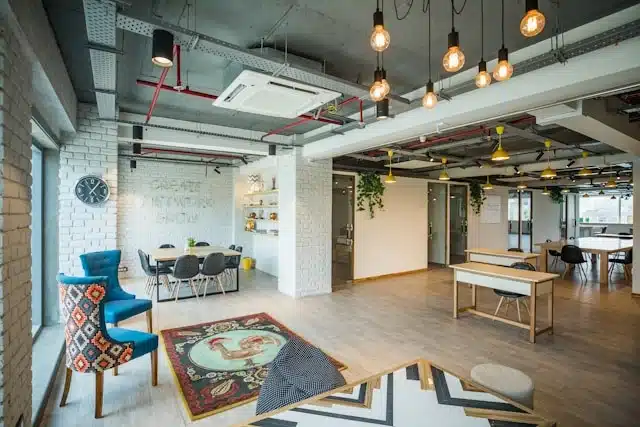
I've learned to scout coworking spaces before booking accommodations. Some cities have thriving digital nomad communities with engineering-focused groups where you can find study partners and troubleshoot complex problems together.
Higher education enrollment data shows sustained growth in distance learning formats, which means more resources and community support continue emerging.
Equipment requirements vary by specialization. Software engineering students can operate with just a laptop and cloud access.
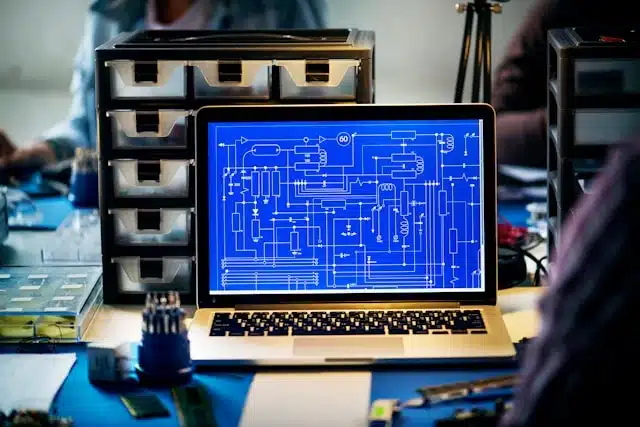
Mechanical or electrical engineering students might need specific software packages with substantial processing requirements. Budget for a solid machine and reliable cloud storage, and research whether your program provides software licenses or expects you to purchase them independently.
Financial logistics get complicated across borders. Tuition payment systems sometimes struggle with international transactions.
Student loan disbursements might not align with your travel schedule. Plan ahead, keep substantial financial buffers, and communicate proactively with your institution's financial aid office about your situation.
Building Your Future While Staying in Motion
Source: Unsplash.
The question isn't whether online engineering programs work for travelers. They do.
The question is whether you're willing to build the structures that make them work. That means creating routines even when your environment constantly changes, setting boundaries with travel companions who don't understand deadline pressure, and sometimes choosing to stay put for a few weeks when a particularly intense module requires focused attention.
It also means accepting that this path looks different from traditional routes, and that's not a deficit.
The skills you develop managing complex technical coursework while navigating unfamiliar environments prepare you for the kind of adaptable, globally-minded engineering work that companies increasingly value.
Women in engineering data reveals ongoing shifts in workforce composition, suggesting that diverse educational paths may help address representation gaps.
Some weeks you'll video conference into group project meetings from a mountain village in Peru. Other weeks you'll hunker down in a Budapest apartment to complete intensive problem sets.
The flexibility cuts both ways: you gain geographic freedom but sacrifice some of the spontaneity that makes travel magical. Finding that balance becomes its own education.
How to Make It Work Practically
Source: Unsplash.
Start by auditing your travel patterns and work style. Do you thrive with structure or need maximum flexibility? How reliable is your self-motivation when nobody's watching? Can you afford dedicated work hours every day, or do you need programs allowing week-long breaks followed by intensive study periods?
Research institution reputations thoroughly, especially for online programs.
Some programs rank among the best graduate education programs in the nation for engineering, mechanical engineering, and civil engineering, with rankings from sources like U.S. News & World Report.
Accreditation matters immensely for engineering degrees, both for licensure pathways and employer recognition.
Connect with current students before committing. Ask about faculty responsiveness, technical support quality, how group projects function remotely, and whether the program truly delivers on flexibility promises.
Some programs claiming “self-paced” learning actually have rigid module deadlines that don't accommodate the realities of travel.
Calculate total costs including hidden expenses: stable accommodation with good internet costs more than budget hostels, coworking memberships add up, and reliable equipment isn't cheap.
International students should research whether their visa situation allows full-time online enrollment from outside the country where their institution is based, as regulations vary significantly.
This path won't suit everyone, and that's fine. Some people need the energy of physical classrooms, the serendipity of campus conversations, and the structure of fixed schedules. But for those of us who've been told we must choose between technical excellence and geographic freedom, online engineering programs prove the dichotomy was always false.
We can build the future from anywhere in the world, one assignment at a time, one time zone at a time, learning as we go.
Conclusion
Source: Unsplash.
The question isn't whether an online engineering degree works for travelers — it does. The real question is whether you're willing to build the structures that make it work.
That means creating routines even when your environment constantly shifts, and setting boundaries with travel companions who don't understand deadline pressure. Sometimes it means choosing to stay put for a few weeks when an intense module demands your full focus.
Some weeks you'll video conference into group project meetings from a mountain village in Peru. Other weeks you'll hunker down in a Budapest apartment to power through problem sets.
The flexibility cuts both ways — you gain geographic freedom, but you sacrifice some of the spontaneity that makes travel magical. Finding that balance becomes its own education.
For those of us told we must choose between technical excellence and geographic freedom, this path proves the dichotomy was always false. If you're ready to see what a location-independent engineering career could look like for you, start scouting programs that actually deliver on their flexibility promises — your future self will thank you.
Disclaimer:
This post may contain affiliate links. I receive a small commission at no cost to you when you make a purchase using my link.