Colorado packs more than 60 miles of raft-ready river between Salida and Cañon City alone, and the state logged nearly half a million commercial rafting days in 2024.
The challenge isn't finding a trip—it's matching rapid class, outfitter safety record, and calendar slots to your crew's nerves and skill levels.
This guide walks you through eight practical steps for booking Colorado white water rafting that fits ages, fitness, and appetite for adrenaline.
You'll learn how to decode river ratings, compare regions, and spot the gear and credentials that separate a stellar day from a sketchy one.
Whether you're eyeing gentle riffles on the Upper Colorado or Class IV drops through the Numbers, the framework stays the same: assess your group, understand the water, and confirm every safety box before you paddle. No fluff, no generic lists—just the details that turn research into reservations.
Read on to choose a river, lock in a launch date, and step off the raft with stories your crew will repeat for years!
Start with a clear headcount of skills and comfort levels. Colorado outfitters publish specific safety cut-offs that link river class to age, weight, and swimming ability.
One Arkansas River outfitter, Echo Canyon Rafting Experience, lays out a full menu of Colorado white water rafting trips on its website, with the minimum age, weight, and swimming ability spelled out for each river section.
For example, its gentle Scenic Float covers about five miles of Class II–III water and welcomes kids as young as four who weigh at least 35 pounds, while Bighorn Sheep Canyon usually starts at age six and 50 pounds and adrenaline hits such as the Royal Gorge reserve seats for strong-swimming teens.
Using a breakdown like this to plot your own group members by age, weight, and swim comfort gives you a concrete upper limit on difficulty before you compare other outfitters.
Next, assess functional fitness. Can everyone sit upright for a couple of hours, paddle in sync, and recover from an unexpected swim? Experience matters too: first-timers usually enjoy a guide-commanded raft, while seasoned kayakers might prefer to paddle their own craft.
Write down the needs of the least-experienced or most cautious person, and treat that as the trip baseline. Reputable outfitters plan the day around that baseline so every paddler feels capable, safe, and smiling from the first splash to the take-out.
Step 2: Understand whitewater classes
Guides worldwide rely on the International Scale of River Difficulty, a I-to-VI code first published by American Whitewater, to rate rapids.
Colorado outfitters guide trips up to Class V. The list below pairs each rating with a well-known stretch so you can picture the stakes:
Class I–II (easy / novice) – Gentle riffles and small waves; self-rescue is straightforward. Example: the Upper Colorado scenic float near Kremmling.
Class III (intermediate) – Irregular waves up to about three feet that demand quick maneuvering. Browns Canyon on the Arkansas is ideal for first-timers (minimum age seven).
Class IV (advanced) – Powerful, predictable drops that call for precise paddling and comfort with a possible swim. The Numbers section of the Arkansas fits this rating (minimum age fifteen).
Class V (expert) – Long or violent rapids with unavoidable holes and few recovery eddies; rescue is challenging. Pine Creek approaches the commercial limit and, according to American Whitewater, often closes above 1,250 cubic feet per second.
Class VI (extreme) – Unpredictable, rarely guided water where mistakes can be fatal; excluded from normal commercial trips.
For most vacationers, Class II–III delivers plenty of splash without excessive risk. Step up only when everyone in your boat meets the outfitter’s published age, weight, and swimming criteria.
Step 3: Pick a region and river
Source: Depositphotos.
Match your basecamp to the river corridor:
Arkansas River Valley (Salida–Canon City). With more than sixty miles of boatable whitewater and 243,700 commercial user days in 2024, nearly half the state total, the Arkansas is Colorado’s marquee venue. Family-friendly Browns Canyon (Class III) sits minutes from Salida, while The Numbers and Pine Creek (Class IV–V) challenge expert crews upstream.
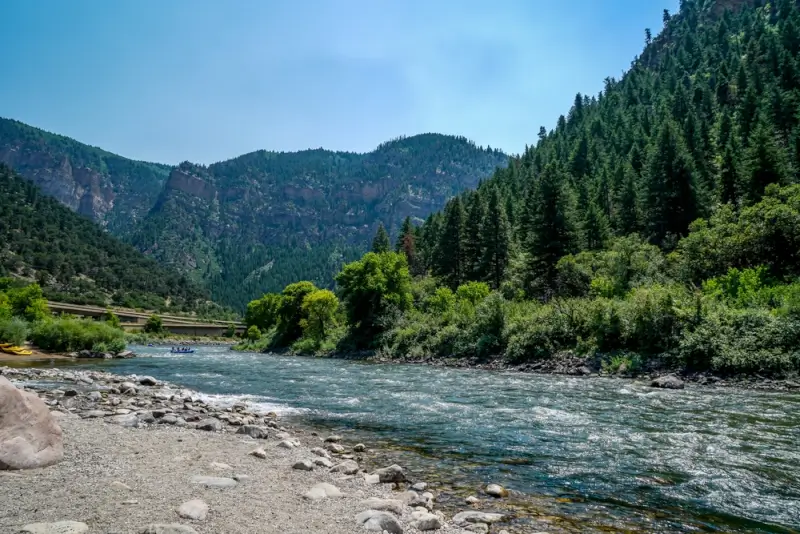
Upper Colorado near Kremmling and Glenwood Springs. This wide, mellow waterway links hot-spring towns with splashy Class II–III riffles; outfitters even offer stand-up-paddle segments for laid-back groups.
Clear Creek, Idaho Springs. A steep, technical creek only twenty-five miles west of downtown Denver; perfect for half-day runs when you want the afternoon free. Sections range from beginner Class II to adrenaline-pumping Class IV+.
If you can drive an extra hour, the reward often includes deeper canyons, bigger waves, and emptier trailheads. Check mileage, rapid class, and outfitter meeting times before you reserve.
Step 4: Decide on trip length
Start by asking two simple questions: “How many hours can we play today?” and “Do we plan to sleep riverside?”
Half-day (about 2–3 hours on the water, 6–10 river miles). A Numbers Half Day on the Arkansas covers roughly six miles of Class III–V action. Perfect when the afternoon remains open for zip-lining or a brewery visit.
Full-day (4–6 hours afloat, 12–18 miles). Trips such as the Browns Canyon “Sizzler” create a rhythm: paddle a rapid, drift through a canyon, pause for a riverside lunch, then attack another dozen Class III waves.
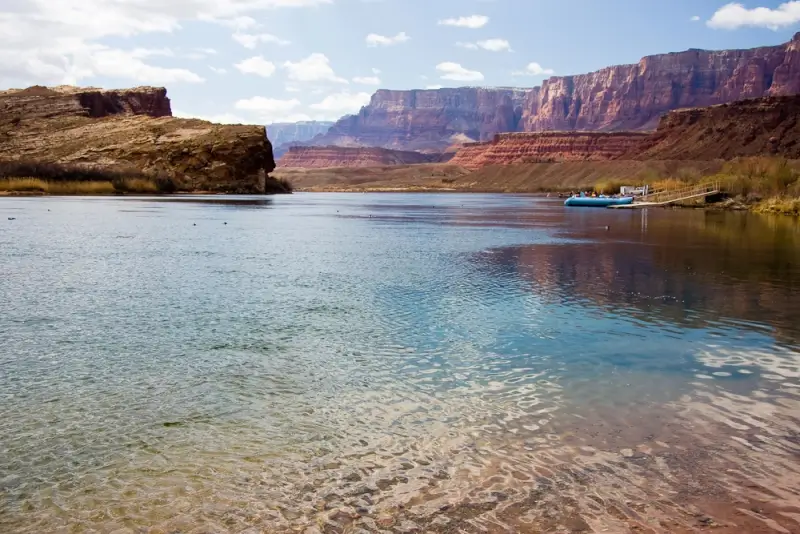
Multi-day (two to six nights, 25–100+ miles). Picture three days through Ruby–Horsethief and Westwater Canyons—41 river miles with star-filled camps and petroglyph hikes. Outfitters haul the kitchen, leaving you to paddle, swim, and watch the canyon walls glow at sunset.
For young crews or first-timers, a half or full day often strikes the right balance. The river waits patiently when you are ready to trade pillows for sleeping pads and add a night sky to the plan.
Step 5: Choose the type of experience
Source: Depositphotos.
Start with one camp-table question: “What moment do we want to remember on the drive home?”
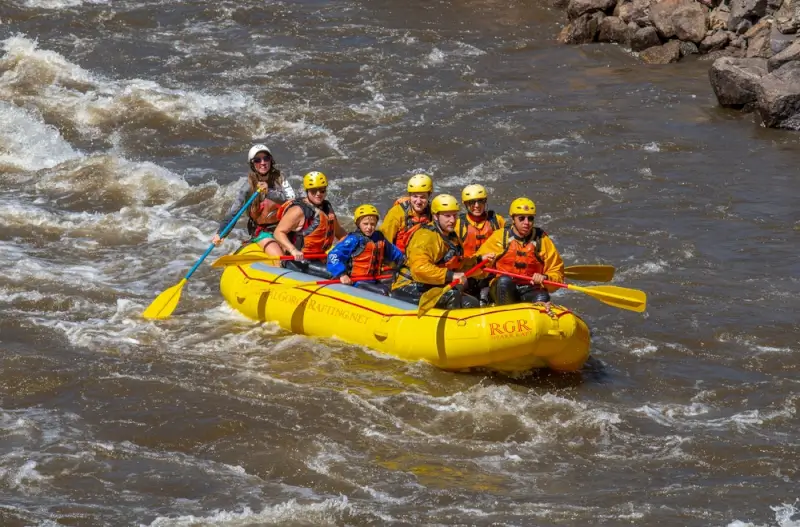
Heart-pounding drops. If the group answers “big thrills,” focus on advanced Class IV runs such as the Numbers on the Arkansas River or Clear Creek’s Upper Canyon. Waves crest three to four feet, and guides typically require guests to be at least fifteen years old and strong swimmers.
Just enough splash. When the vote is “fun, not terrifying,” consider Browns Canyon on the Arkansas or the San Miguel near Telluride. Each offers Class II–III wave trains that keep cameras dry while raising your heart rate.
Scenery first, whitewater second. For crews looking to float, swim, and scan canyon walls for bighorn sheep, the Upper Colorado between Pumphouse and Radium (Class I–II) is a reliable choice.
Most outfitters tag these tiers as “family,” “intermediate,” or “adventure.” Match the badge to your goal, then confirm the listed age and weight minimums before you click “Book.”
Step 6: Look at what’s included
Colorado law requires every rafter to carry a U.S. Coast Guard–approved life jacket.
Most outfitters insist you wear it on Class III water and above, and helmets on sections such as the Numbers and Royal Gorge, according to Colorado Parks & Wildlife. Inclusions beyond this core gear vary:
Thermal layers. Ask whether the quoted rate covers a 3 mm farmer-john wetsuit and splash jacket. Many outfitters include them when water drops below 55 degrees; others rent the bundle for about $15.
Shuttles. The Colorado norm is a company van from the office to the put-in, then back from the take-out. Confirm details if you book a meet-on-river launch.
Meals. Full-day trips nearly always provide a riverside deli lunch, and multi-day expeditions add a hot dinner and breakfast. Note any dietary needs in writing.
Knowing exactly what is covered, and what appears as an extra charge, helps you pack light, stay warm, and dodge last-minute surprises at the gear shed.
Step 7: Prioritize safety and professionalism
Source: Depositphotos.
Colorado Parks & Wildlife licenses every commercial river outfitter in the state and inspects them each year for guide training, gear, and insurance compliance. Before you pay a deposit, run through this checklist:
Credentials. Verify that the company appears on the CPW licensed-outfitter list and that every guide holds current CPR, first-aid, and Swiftwater Rescue cards. Colorado requires 50 on-river training hours before a guide can lead clients.
Effective briefings. A quality guide demonstrates self-rescue, paddle commands, and flip drills, then answers questions until every guest signals understanding.
Fit-for-purpose gear. Confirm Type V life jackets rated to 15.5 pounds of flotation and white-water helmets with no visible cracks.
Clear policies. Reputable outfitters publish water-level cutoffs (for example, Pine Creek closes above 1,250 cfs) and outline weather or smoke cancellations in writing.
Recent reviews. Read feedback from the current season to spot consistent praise or safety concerns.
Check all five boxes, and you can focus on paddle strokes and big grins while a solid safety net works in the background.
Step 8: Match the season to your comfort level
Colorado’s rafting calendar follows the snowmelt curve.
On the Arkansas River at Cañon City, flows often climb above 2,000 cubic feet per second (cfs) in late May and early June, then dip below 700 cfs by mid-August, according to USGS gauge 07096000. Here is what to expect:
Late spring / early summer (high water). Water sits around 45–50 °F, and rapids hit harder. Outfitters often raise minimum ages or close Class IV–V sections once flows exceed safety limits; Pine Creek closes above 1,250 cfs. Wetsuits become mandatory.
Mid- to late summer (low water). Air temperatures reach the 80s, water warms into the upper-50s, and waves soften, which suits first-timers and younger paddlers. Rocky creeks can run shallow by late August, yet larger rivers such as the Colorado still provide lively bounce.
Check a river gauge the week before launch and ask your outfitter which stretch balances thrills with comfort.
Conclusion
Source: Depositphotos.
From the glass-smooth eddies of the Upper Colorado to the frothy drops of the Numbers, Colorado rivers offer every flavor of whitewater.
The best outing is not the wildest; it is the one crafted for the people in your boat. Match rapid class, region, and trip length to your crew’s skill and excitement level, confirm the outfitter’s safety record, and step off the raft with stories tailored to your group.
Check the flow gauge, read this season’s reviews, and reserve the launch that feels “just right.”
Disclaimer:
This post may contain affiliate links. I receive a small commission at no cost to you when you make a purchase using my link.