A solo traveler in their 40s quickly learns that a luxury getaway is less about the port and more about who is sitting across the table—which is why the smart ones treat a week at sea less like a vacation and more like a social experiment with better food.
The difference between a quiet week with a tan and a genuine connection comes down to three variables: pricing, passenger mix, and the social architecture of the ship itself.
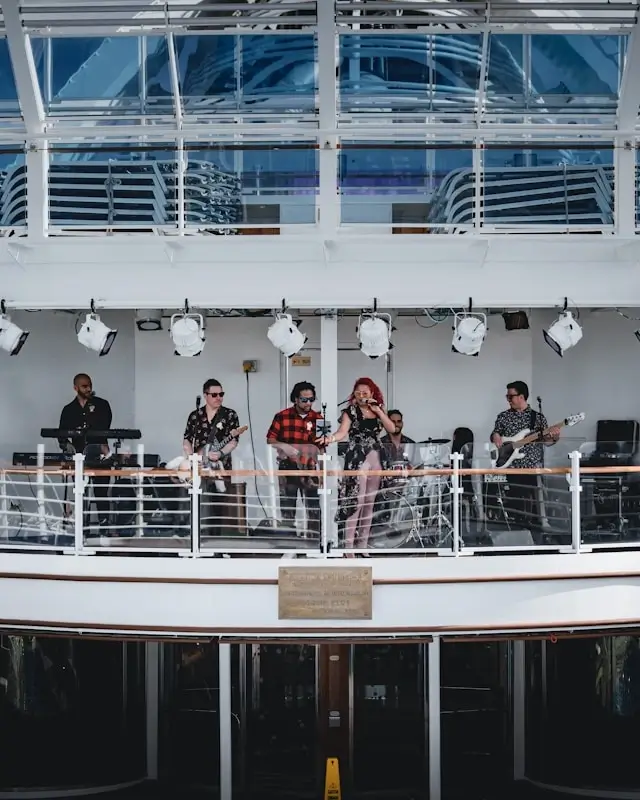
At 6pm on the second night of a Norwegian sailing, the Studio Lounge fills with people who booked a cabin built for 1. Most are between 40 and 60, and none of them has to explain why they came alone.
By the third night the same 8 or 9 are eating dinner together and no one arranged it. The room was manufactured to produce that outcome, and the cabins attached to it are priced accordingly.
What follows is a plain account of how that architecture works, what it costs to access it, and why a well-chosen itinerary beats a well-chisted sailing date every time. The destination is secondary; the format is everything.
The obstacle for a single traveler has always been the pricing model.
Cruise fares assume 2 people in a cabin, so a solo booking carries a surcharge that historically reached 100% of the second fare. A cabin advertised at $1,400 per person could cost a solo traveler $2,800 for the same room and the same dinner.
That has softened considerably. Norwegian built dedicated Studio cabins into most of its fleet and sells them with no surcharge attached.
Royal Caribbean added Studio cabins on its Quantum-class ships. Virgin Voyages, which is adults-only, removed the surcharge outright. Saga, which requires passengers to be over 50, built 20% of its accommodation as single occupancy from the start.
River lines run promotions instead of permanent inventory. AmaWaterways has waived the surcharge on selected 2027 Europe sailings and offered it at 10% on others.
Tauck has waived it on Category 1 cabins across its European river fleet. The result is that a solo traveler who books in the right window pays close to the per-person double rate, and one who books carelessly still pays nearly twice.
Source: Unsplash.
Format Before Destination
Most people pick the destination and work backwards. A single traveler in their 40s gets more out of picking the social format first and letting the destination follow.
Small ship expeditions, walking tours, cooking weeks in Italy, and luxurious getaways built around a shared table all produce conversation as a by-product of the itinerary.
The formats that fail are the ones designed around couples. A beach resort with 2 restaurants and a spa gives a solo guest nothing to do with anybody, and the week ends with a tan and no phone numbers.
Source: Depositphotos.
The Passenger Mix on a Modern Ship
Cruise Lines International Association reported a passenger record of 37.2 million for 2025, the largest figure the industry has recorded.
Around 31% were first-time cruisers, and close to 90% said they intended to sail again, which is the highest repeat intention CLIA has measured.
Survey work on who is cruising puts the average age at 46, with the population split roughly evenly above and below 50, and about a third of guests now under 40.
Roughly a third of sailings involve more than one generation traveling together. That matters for a single traveler, because a ship carrying a large family contingent behaves differently in the evening from one carrying couples and solos.
A mainstream 7-day Caribbean sailing in July is a family product, and the same ship on a 12-day transatlantic in October is a different passenger list entirely. Itinerary and season sort the passenger list far more reliably than the cruise line does.
Source: Unsplash.
Social Design on Ships and at Resorts
A ship is a closed environment with fixed mealtimes and a limited number of rooms, and those two facts do most of the social work.
The same 200 people cycle past each other 6 or 7 times a day. Acquaintances form out of exactly that kind of unavoidable repetition, and a ship manufactures it regardless of what anybody wants.
Lines aimed at solo travelers formalize the process. Cunard runs hosted tables and dance hosts. Norwegian's Studio Lounge is keyed to solo cabins only.
The published rankings of cruises for single seniors weight exactly these features, since a solo traveler is buying access to a social structure alongside the cabin.
Resorts operate on the opposite principle. Guests arrive as self-contained units, eat when they choose, and can pass a week without a repeated encounter with anybody.
An adults-only property with a single long communal table, a daily activity program, or a small guest count reproduces some of the shipboard effect. Most do not, and the ones that market themselves to couples actively work against it.
Source: Unsplash.
Limits of a Seven Day Timeline
A 7-day sailing produces an intensity that does not survive the airport.
Two people who spent 6 days in constant proximity have accumulated something closer to a month of ordinary dating contact, and both tend to overestimate what that means once they are back in Dallas and Manchester respectively.
A shipboard connection that continues usually does so because one or both parties were already flexible about geography, and the ones that end do so quietly within about 3 weeks.
The disembarkation exchange of numbers rarely converts, for a reason that has nothing to do with either person, since the conditions that produced the closeness were the ship itself, and the ship does not travel home with them.
Seasoned solo cruisers learn to ask the geography question on day 2. Raising it over dinner is unromantic, and it saves 4 days of investment in somebody who lives 5,000 miles away and has 3 children in school there.
Repeat sailings are how people manage this. Booking a second voyage on the same line within the year puts a traveler back among a similar crowd, though it runs into the single supplement all over again unless the solo cabin inventory is booked early.
Anyone treating this as a strategy rather than a holiday should be pricing 2 sailings a year and choosing lines with permanent solo cabins over lines running occasional promotions.
Source: Depositphotos.
Conclusion
A week at sea for a single person in their 40s is not a romance novel and it is not a loss. It is a controlled environment with known variables, and the outcome depends almost entirely on which variables a traveler bothers to check before booking.
The itinerary sorts the passenger list. The season sorts the energy. The cabin type sorts the cost. Get those three right and the ship does the rest, because enforced proximity and fixed mealtimes are more effective at producing conversation than any algorithm ever designed.
The ones who walk off with a genuine connection are rarely the ones who arrived hoping for one. They are the ones who understood that a boat date for singles in their 40s is a numbers game dressed up as a holiday, and they played the numbers—booking the right line, the right week, and the right social format before they ever looked at a deck plan.
The ones who walk off with only a tan booked the opposite. That is not a failure of the product; it is a failure of attention.
If you are going to do this, do it with intention. Price two sailings a year, book solo cabins early, and treat the geography question as the first date conversation it actually is. The ship provides the proximity. The rest is up to you.
Disclaimer:
This post may contain affiliate links. I receive a small commission at no cost to you when you make a purchase using my link.