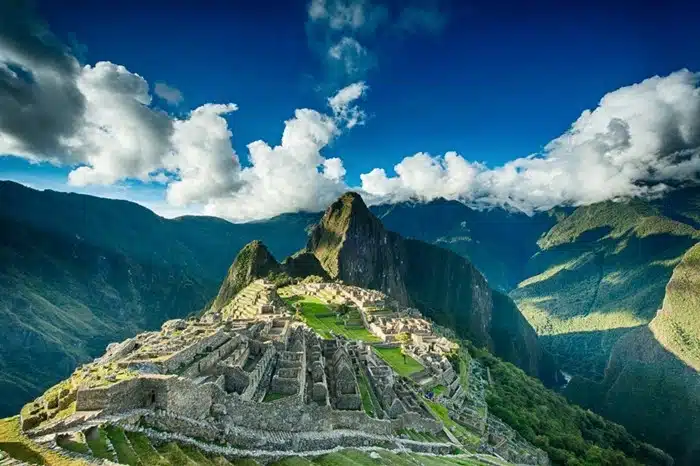
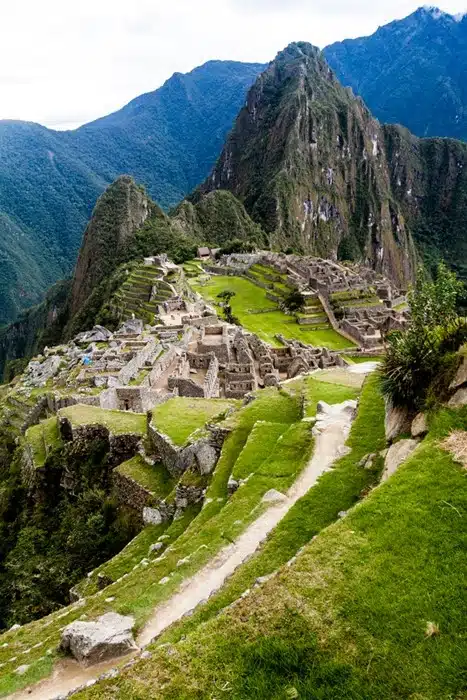
For a lot of people, Peru starts with one very specific image: Machu Picchu between mountains, clouds and stone walls. It's a hard image to avoid, and a valid reason to travel across the world. But the days before that moment matter just as much, and they usually unfold in Cusco and the Sacred Valley.
That's where biking near Machu Picchu comes in. Instead of ticking off stops from a minibus window, you move through rural roads, open slopes and valley terrain at your own pace, on your own wheels.
This isn't about replacing the citadel visit — bikes stay outside Machu Picchu itself, which is still explored on foot. It's about filling the days beforehand with something that gets you closer to the landscape than any scheduled tour stop ever could.
What follows is a closer look at the routes, the terrain and the practical details — altitude, gear, fitness level — that shape what a biking day in this part of the Andes actually looks like.
From Cusco, the roads drop toward the Sacred Valley of the Incas, a region the Urubamba River runs through.
Pisac, Urubamba and Ollantaytambo sit along the way, surrounded by farmland, markets, rural communities and archaeological sites that form part of the same geography ending at Machu Picchu.
Source: Depositphotos.
Many travelers cross the valley by minibus, ticking off a list of stops with little time between them. It is practical, especially when the itinerary is tight.
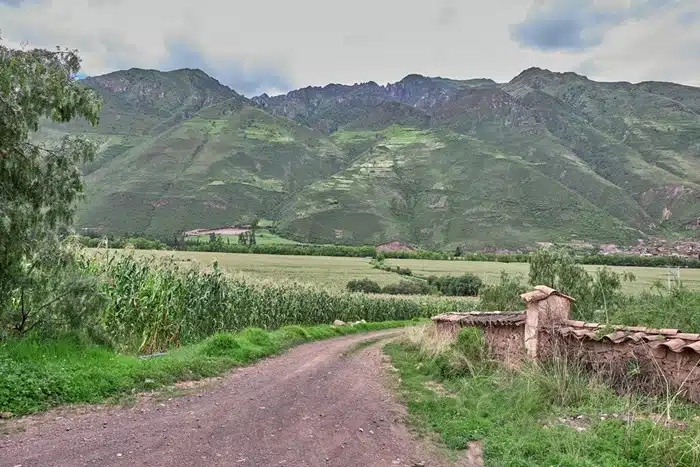
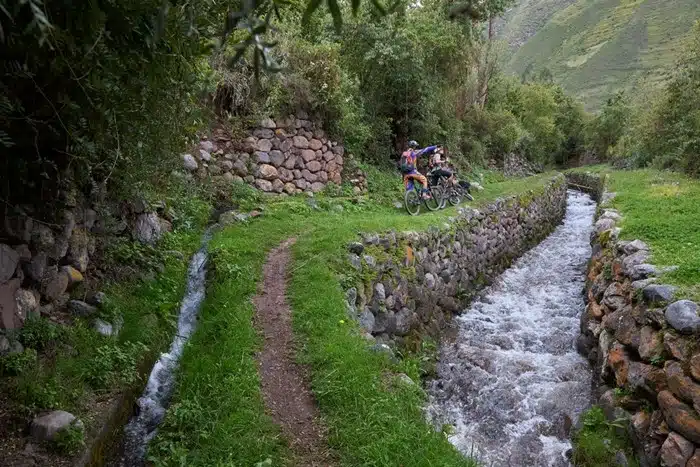
But it also leaves out a lot: the side roads, the hillsides still being farmed, the animals crossing the track and the villages appearing between one mountain and the next. There is more to this valley than what fits into a scheduled stop.
Source: Depositphotos.
The Andes on two wheels
Mountain biking for a day makes sense in Cusco because the routes start close to the city and the landscape shifts quickly.
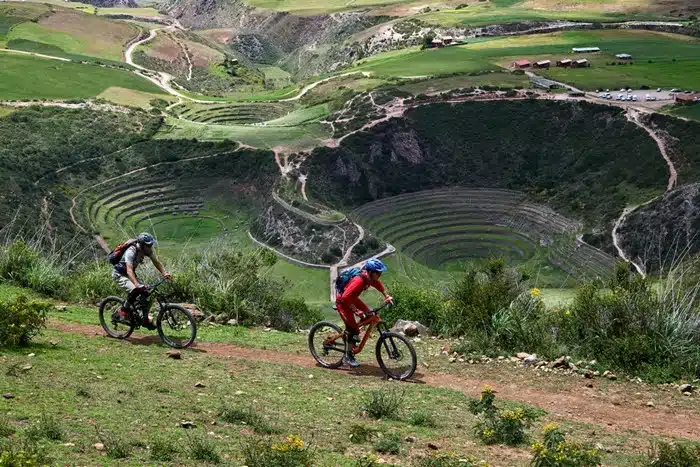
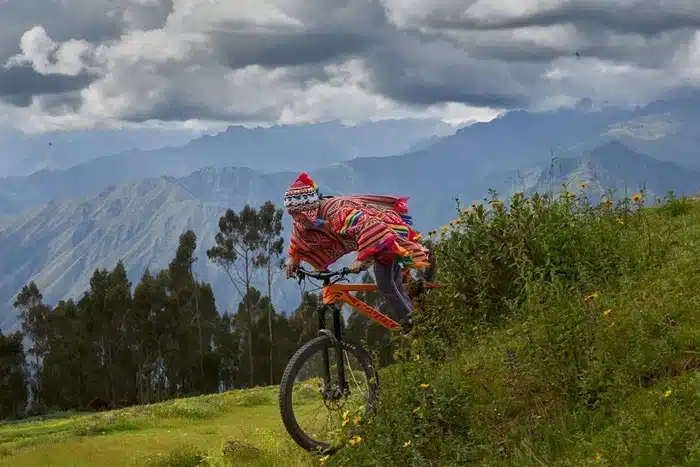
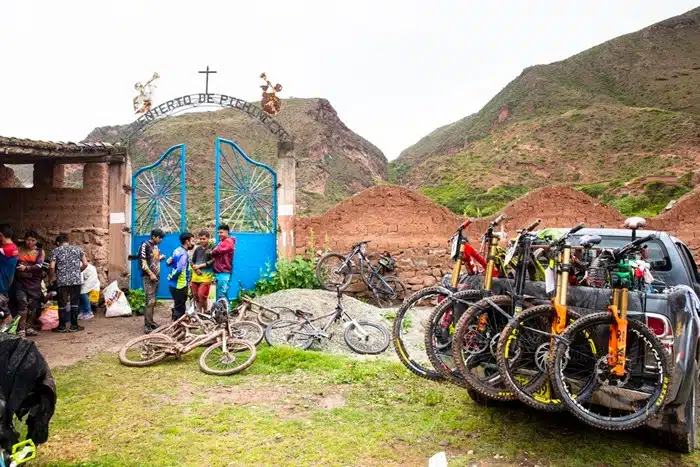
In a single day you can move through rural dirt roads, open slopes, gravel corners, narrow singletrack and descents that finish much lower down near the valley floor. It is a side of the Andes that does not appear on any standard itinerary.
Bicycles are not used inside Machu Picchu itself — the citadel is visited on foot. The riding happens in the days before, around Cusco and the Sacred Valley.
For some travelers that distinction matters: a bike day does not replace the famous visit, it fills one of those gaps in the itinerary that would otherwise be spent wandering the main square a second time.
It also gives you a physical sense of the region.
From a vehicle, the mountains can look like scenery. On a bike you feel how much a road climbs, how the air changes as you descend and why a village that looks close on the map can sit on the other side of an entire hillside.
Source: Depositphotos.
Routes for very different days
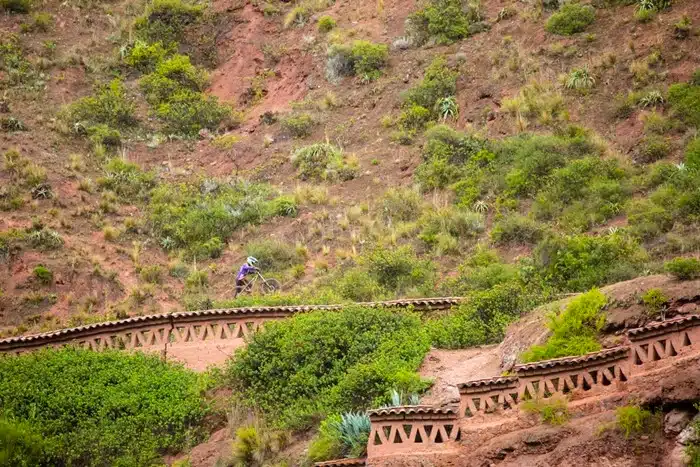
Riders who already handle mountain trails can look for more technical routes with loose rock, tight corners and long descents.
Lamay and Maras are two Sacred Valley areas known for that kind of terrain. Lamay combines high-altitude paths with narrow singletrack, rock, stone stairways and eucalyptus forest before dropping toward the Urubamba River. Maras has open descents with wide views over the valley near the famous salt pans.
You do not need to know these names before you travel. What helps is being honest with an operator about how you normally ride, what kind of bike you use and what you actually want from the day.
Someone used to mountain trails will be looking for something very different from a traveler who wants a few hours outdoors and to get back to Cusco with energy to spare.
Source: Depositphotos.
E-bikes expand the options considerably. The electric assist handles the climbs, which matters especially when Cusco already sits at 3,400 meters and some routes push beyond 4,000.
You are still pedaling and steering and making decisions about the path. The effort just spreads more evenly across the day. It works well for couples with different fitness levels, groups of friends or anyone who wants an active day outside without committing to a technical descent.
Pisac and the high-altitude lagoons
Source: Depositphotos.
An e-bike outing to the Pisac Lagoons gives you a good taste of that other side of the region.
The day starts with a transfer from Cusco to Qello Qello, a community situated above the town of Pisac. From there the route follows rural paths toward three Andean lagoons: Kinsacocha, Azulcocha and Pumacocha.
The circuit covers around 22 kilometres (13.6 miles) and reaches approximately 4,200 metres in altitude (13,779 feet).
Between lagoons you pass small fields, stone walls, grazing animals and open mountain views that do not appear on any standard Sacred Valley tour. At Kinsacocha there is a community textile centre worth stopping at before continuing the route.
It is a full day once you factor in the transfer, the stops, lunch and the return. The pace is relaxed enough that it never feels like rushing from one point to the next, which is exactly what you want when you are still adjusting to the altitude.
Altitude deserves a place in the plan
Source: Depositphotos.
How each person responds to altitude varies a lot and there is no reliable way to predict it before you land. Some travelers feel fine within hours; others need a couple of quiet days.
Booking a route that reaches 4,200 meters for the morning after a night arrival is the kind of decision that can ruin a day that was supposed to be enjoyable.
One or two easy days in Cusco help: walking without rushing, eating well, drinking water regularly and paying attention to how the body responds.
For any bike outing it is worth packing sunscreen, sunglasses, water and a couple of layers. Mornings can be cold, the midday sun catches you off guard at altitude and wind or rain arrive quickly once you are out on open terrain.
Seeing Machu Picchu with more context
Source: Depositphotos.
Machu Picchu keeps all its force when the day finally comes.
After spending real time in Cusco and the Sacred Valley, the citadel stops feeling like an isolated image from a travel magazine. It becomes part of a region of rivers, paths, farmland, communities and mountains that you have already started to understand from the inside.
For those curious about getting on a bike while in the area, there are options for every level, from scenic e-bike outings to technical descents and multi-day itineraries.
A good place to start is looking at what cycling tours in Peru look like across the Sacred Valley, where most of the routes are based.
The choice always comes down to fitness level, time available and how each person wants to experience the Andes — but there is almost certainly an option that fits.
Conclusion
Source: Depositphotos.
Machu Picchu keeps all its force when the day finally comes, but the days leading up to it shape how that moment lands. Cusco and the Sacred Valley aren't just a transit route — they're a region worth slowing down for.
Biking near Machu Picchu gives you that slower, closer version of the Andes. Whether it's a technical descent through Lamay, open views over the salt pans at Maras, or a relaxed e-bike day out to the Pisac Lagoons, there's a route that matches how you actually want to spend the day.
Altitude and pacing matter more than people expect, and a little planning around acclimatization goes a long way toward making the ride enjoyable rather than exhausting. Pack layers, water and sunscreen, and let the first day or two in Cusco set the tone before pushing higher.
By the time Machu Picchu appears between the mountains, it won't feel like an isolated postcard moment — it'll feel like the natural endpoint of a region you've already started to understand.
If you're planning a trip to Cusco and want to explore beyond the usual stops, save this post for later or share it with someone planning the same journey — and check out more Andes travel guides on the blog for additional route ideas.
Disclaimer:
This post may contain affiliate links. I receive a small commission at no cost to you when you make a purchase using my link.