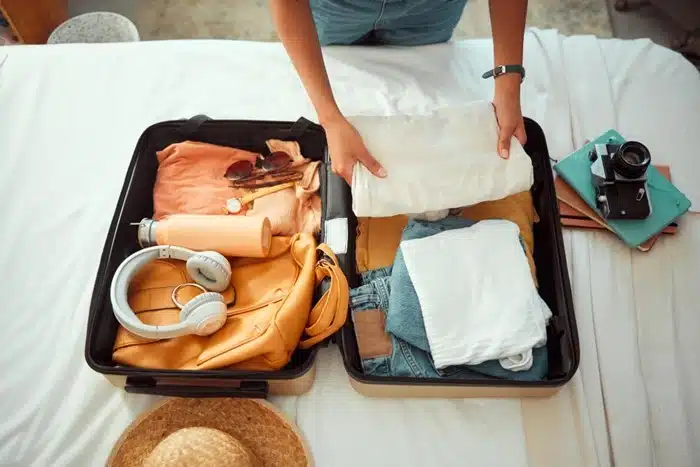
Packing light for a warm-weather trip is a skill, and the pieces that earn their place in a carry-on are the ones that work hardest across the most outfits.
Halter tops for warm-weather destinations have become one of those quiet workhorses — versatile enough to go from beach to dinner, packable enough to forget they're even there.
The right cut compresses flat, dries after a hand-wash, and layers under a linen shirt for cooler evenings without looking like an afterthought. The wrong one photographs well in the store and stays folded in the suitcase by day four.
This guide covers what actually matters before adding a halter top to the packing list — fabric weight, cut, climate, layering, and the undergarment audit most travelers skip. It's the kind of homework that pays back across every day of the trip.
A specific note for travelers building a halter-top packing list this season: the assortment of trendy halter tops and similar contemporary cuts available across the broader retail market has expanded considerably over the past few years, with cleaner construction, better fabric weights for travel, and a wider range of cuts than previously typical.
The travelers who do the homework on cut and fabric before the trip pack a wardrobe that earns its luggage allocation rather than producing pieces that go unworn for the duration.
The first thing to understand is that halter tops occupy a useful position in the warm-weather wardrobe.
They reveal the shoulders and upper back where most people genuinely run warm, they layer cleanly under a light cardigan or linen shirt for cooler evenings or air-conditioned interiors, and they suit the photo-and-video-heavy travel context modern travelers actually live in.
The factors that shape the travel-friendly halter-top decision:
Fabric weight matters more than silhouette. A heavy ribbed knit halter reads as transitional; a lightweight cotton, linen, or modal halter reads as summer regardless of cut. Travelers heading to warm climates should prioritise fabric weight first.
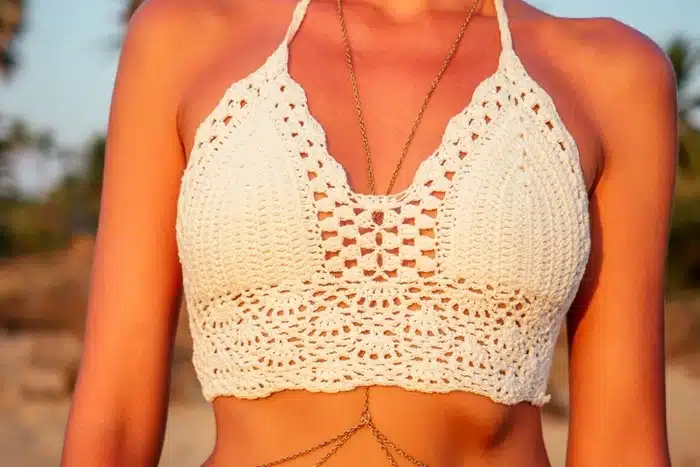
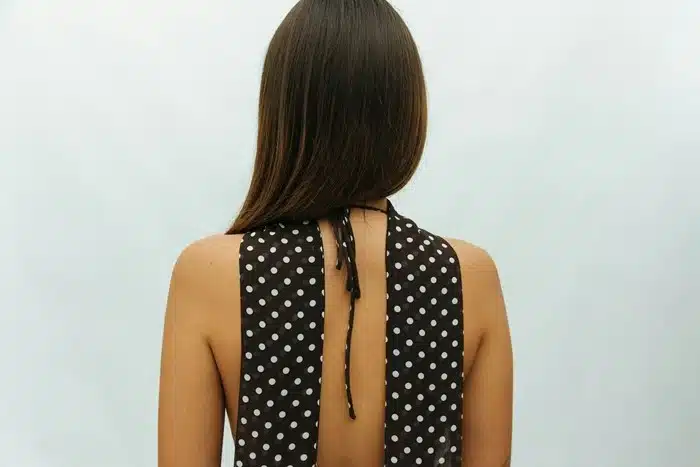
The cut matters for both climate and body line. Tied-back halters pack smallest and adjust most. Banded-back halters layer cleaner. Crossover halters give bust coverage without underwire.
The color palette shapes the wardrobe. Two or three halters in coordinating tones cycle through 7 to 10 days of outfits without repeating photographs.
Layering compatibility matters for air-conditioning gaps. A halter under a linen overshirt reads as evening; under a cardigan as casual. The halter that layers across contexts earns its packing slot.
A definition useful here: a halter top is a sleeveless garment with a strap, ties, or band running from the front bodice around the back of the neck, leaving the shoulders and upper back exposed.
The category includes the tied-back halter, the banded halter, the crossover halter, and the high-neck halter, each suiting different body lines and travel contexts.
The packing efficiency, climate fit, and photographic versatility that drive halter tops into a warm-weather travel capsule sit alongside the broader trip-planning that you can't miss when choosing your next vacation destination.
Source: Magnific.
What Should Travelers Look For When Choosing Halter Tops for a Trip?
A short checklist for evaluating halter tops before adding them to the packing list:
Fabric weight under 200 grams per square meter. Cotton voile, linen, modal, and lightweight rayon blends all sit in this range. Heavier knits push past 250 gsm and read as transitional rather than full summer.
Wash-and-dry care that survives a hotel sink. Hand-washable fabrics that air-dry in 4 to 6 hours are travel-essential. Most lightweight cottons and modals meet this standard; structured fabrics with built-in cups often do not.
Adjustable neck-tie or convertible halter strap. A fixed neck strap fits one body shape; an adjustable tie or convertible strap expands the fit envelope across the body shifts of a typical 2-week trip.
Sun-exposure-aware coverage. A halter exposes the shoulders and upper back, which are among the highest-skin-cancer-risk areas of the body. The Skin Cancer Foundation's sun-protection guidance recommends covering up where possible and pairing exposed-skin looks with broad-spectrum SPF 30+ reapplied every 2 hours.
Verifiable fiber content per the labelling rules. The FTC's textile labelling guidance requires accurate fiber disclosure on garments sold in the US; the fibre mix predicts how the piece performs in heat and humidity.
Reasonable cost-per-wear math. A 50-dollar halter at 30 wears costs less per wear than a 30-dollar halter at 5 wears. The packing decision and the buying decision are the same wardrobe-curation exercise.
Compatibility with at least three bottom pieces. A halter that only works with one pair of shorts is not earning its luggage allocation; the travel-versatile halter pairs with shorts, midi skirts, and linen trousers.
Source: Magnific.
How Do Halter Tops Layer Across Different Travel Climates?
The same halter top can read differently across destinations, and the layering plan is what makes a single piece work across multiple climates on the same trip.
The standard climate-to-layering pairings:
Tropical and sub-tropical destinations. Halter alone for daytime, halter under a thin linen overshirt for sun-protective walking, halter under a light cardigan for over-air-conditioned restaurants and museums.
Mediterranean coastal destinations. Halter alone for beach and harbor towns during the day, halter under a structured linen shirt or open-knit cardigan for cooler evenings on the piazza, halter under a blazer for the rare smart-casual dinner.
Cooler shoulder-season destinations. Halter under a fitted long-sleeve T-shirt as a layered top, halter under a cardigan as a casual evening layer, halter alone on the warmer afternoons that occasionally surface in spring or autumn.
High-UV destinations specifically. A halter alone for early morning or late afternoon outdoor time, but always with a sun-protective layer (rash guard, linen overshirt, light scarf draped across the shoulders) for the peak UV window between 10 AM and 4 PM.
The same halter top can therefore travel across 3 to 4 climate contexts with the right pairings, which is why packing 2 to 3 of them in coordinating tones produces a more flexible warm-weather wardrobe than packing 5 or 6 specialized pieces.
The layering plan is also what makes the halter respectable for restaurants, museums, and religious-site visits where shoulder coverage is required.
What Common Mistakes Do Travelers Make Around Halter Tops?
Source: Magnific.
A short list of recurring mistakes that surface in post-trip wardrobe reviews:
Packing on visual appeal alone. A halter that photographs well in the store does not automatically pack, wash, or layer well. Travelers who pick on photograph alone often leave the piece in the suitcase by day 4.
Underestimating the sun-exposure factor. In destinations with UV indices of 9 to 11+, a halter exposing 60 percent more skin than a piqué T-shirt matters for both immediate comfort and long-term skin-health planning.
Skipping the bra-and-undergarment audit. The halter that needs a strapless or sticky bra often gets packed without the supporting undergarment. Ten minutes on the foundation audit before the trip is the right discipline.
Buying for the trip without owning the rest of the look. A halter depends on the high-rise bottoms, layering pieces, and shoes. A halter bought for one trip without the supporting wardrobe rarely gets worn afterwards.
Choosing fabrics with poor packing characteristics. Heavy structured halters wrinkle and require ironing; lightweight cottons, modals, and linens fold flat and look ready to wear in 30 minutes.
Forgetting the climate-and-cut interaction. A high-neck halter in tropical humidity traps more heat than a classic tied-back halter; matching cut to destination climate is part of the packing decision.
FAQs
Source: Magnific.
How many halter tops should a 10-to-14 day warm-weather trip pack?
For most travelers, 2 to 3 halter tops in coordinating colors is the right count.
Three tops across 14 days produces enough rotation, allows a hand-wash cycle, and leaves room for the rest of the wardrobe.
Which halter top fabric travels best?
Lightweight cotton, modal, and linen blends consistently travel best.
Pure linen wrinkles substantially but reads as intentional in warm-weather contexts. Polyester blends dry fastest but feel less breathable in hot humidity.
Are halter tops appropriate for restaurants or religious sites in conservative destinations?
Sometimes, with layering. A halter under an open linen shirt or cardigan works for most casual restaurants and many museums.
Religious sites usually require shoulder coverage; a thin scarf converts the halter to compliant attire in 10 seconds.
What is the right cost-per-wear math for a travel halter top?
Divide the purchase price by expected wears across the next 12 months.
A 40-dollar halter worn 25 times costs 1.60 dollars per wear. The math usually favors the better-quality piece that survives multiple hand-washes over several trips.
Conclusion
Source: Unsplash.
Halter tops for warm weather vacation packing don't require a complicated strategy — they require the right decisions made before the trip rather than at the destination.
Fabric weight, cut, and layering compatibility are the three variables that determine whether a piece earns its place or stays folded until check-out.
Two or three halters in coordinating tones will outperform a suitcase full of options that don't work together. The math is simple: fewer pieces that pair with everything beat more pieces that pair with nothing.
The sun-exposure factor, the undergarment audit, and the climate-to-cut match are the details most travellers skip — and the same details that explain why some wardrobes photograph well across 14 days while others feel off by day three.
The pieces that travel best are usually the ones already owned, already worn at home, and already tested against the rest of the wardrobe before the bag is zipped.
If this guide has helped clarify the packing decision, the rest of the site covers warm-weather destinations, carry-on strategies, and style guides worth reading before the next trip gets planned.
Disclaimer:
This post may contain affiliate links. I receive a small commission at no cost to you when you make a purchase using my link.