Travel is hard on your eyes, yet most of us pack sunscreen and a sheet mask and leave the eye drops at home.
A few travel-friendly eye care tips—lubricating drops on the plane, UV-blocking sunglasses and clean hands for contact lenses—prevent most of the minor trouble that shows up on the road.
Even so, some eye conditions, such as glaucoma, cause no symptoms in their early stages. That is why a check with an eye specialist before a big trip makes sense if it has been a few years since your last one.
This guide covers why flights dry out your eyes, how to shield them from the sun, how to manage contact lenses and eye makeup while travelling, and why screens tire your eyes more when you're away.
In this article, we will cover why long-haul flights dry out your eyes, how to shield them from the sun, how to care for contact lenses, how to wear eye makeup on the road, and when to get an eye check before you fly.
The Ultimate Eye Health Tips to Stay Comfortable on Every Journey
Source: Pexels.
Why Do Your Eyes Feel So Dry on a Plane?
Your eyes feel dry on a plane because cabin air holds very little moisture, so the thin layer of tears that coats your eyes dries out faster than usual.
As that layer thins, your eyes can feel gritty, sting or look red. Some people's eyes water more instead, because the eye makes extra tears to make up for the dryness. Air vents and a late night before the flight can make it worse.
A few habits make a long flight easier on your eyes:
Drink water – sip it through the flight and go easy on alcohol and coffee, which can leave you more dehydrated.
Redirect the vent – turn the air vent away from your face.
Blink on purpose – especially during films, and close your eyes now and then.
Pack eye drops – lubricating drops ease dryness for many people, so ask a pharmacist which type suits you, particularly if you wear contact lenses.
If the dryness lasts well after you land, it is worth having your eyes checked, since dry eye is a common condition with several possible causes.
Source: Pexels.
How Do You Protect Your Eyes From the Sun on Holiday?
You protect your eyes from the sun on holiday with sunglasses that block UV light, a hat with a brim and some shade in the middle of the day.
Near the equator, UV levels stay high for most of the year, and sand and water reflect light back up at you, so a beach or boat day adds to the dose.
Over many years, UV exposure can raise the risk of cataract, a clouding of the eye's natural lens, and of growths on the surface of the eye.
When you choose sunglasses, look for a label that says they block 100% of UV rays, or “UV400”. But dark lenses alone do not mean UV protection.
Wraparound frames also cut the light that comes in at the sides. Polarized lenses reduce glare off water, so they suit beach days and driving, but the polarizing layer is about comfort, not UV protection.
Source: Pexels.
How Do You Manage Contact Lenses While Traveling?
You can manage contact lenses while traveling by keeping them clean, keeping them away from water and carrying your glasses as a backup.
Keep water away – never rinse lenses or their case with tap or bottled water, and take lenses out before swimming or snorkelling, because water can carry germs that cause serious eye infections.
Sleep without them – take lenses out before you sleep on an overnight flight, unless your eye doctor has said they are made for overnight wear. Dry cabin air and closed eyes can reduce the oxygen and moisture reaching the cornea, the clear front window of the eye.
Pack spares – bring spare lenses and a fresh case, as daily disposables make hygiene simpler on the move.
Carry your glasses – keep them in your cabin bag with a copy of your prescription.
Source: Pexels.
Can Eye Makeup Irritate Your Eyes on a Trip?
Eye makeup can irritate your eyes on a trip, mostly because heat, sweat and sunscreen carry product into the eyes.
Sunscreen that runs into your eyes stings, so a gentle stick or mineral formula for the eye area is worth a place in your travel skincare kit.
In humid weather, mascara and liner can also smudge into the eye. Waterproof versions hold up better, but they need a proper remover.
Taking makeup off before you sleep matters on the road too, because leftover product along the lash line can block the small oil glands that keep tears healthy.
Replacing mascara about every three months is commonly advised, and it is best not shared. And if your eyes are already sore, a makeup-free day gives them a rest.
Source: Pexels.
Why Do Screens Tire Your Eyes More When You Travel?
Screens tire your eyes because you blink less when you focus on a close screen, and travel adds plenty of extra screen time.
Boarding passes, maps, translation apps and in-flight films soon add up, and long stretches on a screen can leave your eyes dry, tired or slightly blurry.
That is why one simple screen habit helps: the 20-20-20 rule. Every 20 minutes, look at a point about 20 feet (6 meters) away for 20 seconds. On a trip, the view out of the window is usually far more interesting than your phone.
Source: Pexels.
Which Eye Symptoms Need a Doctor Straight Away?
Some eye symptoms need a doctor the same day, wherever you are. Get medical help quickly for any of these:
Sudden loss or blurring of vision in one or both eyes.
A sudden shower of new floaters (small specks that drift across your vision), flashes of light, or a shadow or curtain across part of your vision.
A painful red eye, especially with sensitivity to light or while wearing contact lenses.
Sudden severe eye pain with a headache, nausea or haloes around lights.
An injury, a chemical splash or a small object in the eye that does not wash out.
Your hotel, travel insurer or a local clinic can usually point you to the nearest eye doctor or emergency department. This article is general information and cannot replace advice from a doctor who has examined your eyes.
Source: Pexels.
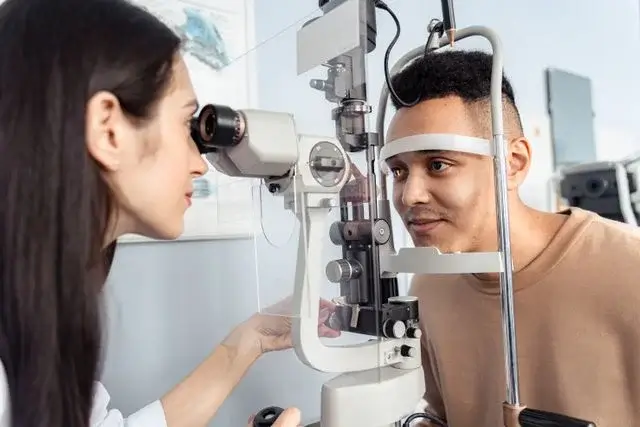
When Should You Have an Eye Check Before a Trip?
You should have an eye check before a trip if your last one was several years ago, or if your eyesight has changed.
Changes worth acting on include blurry or shifting vision, headaches when reading, eyes that feel dry most days and trouble seeing when driving at night.
People with diabetes, a strong glasses prescription or a family history of glaucoma (a group of conditions that damage the nerve linking the eye to the brain) usually need checks more often. A baseline eye check around the age of 40 is also widely recommended, as the eyes start to change with age.
An eye screening can usually fit into the weeks before you fly. Ask the clinic what the screening covers and whether to arrange a ride home, since some tests use drops that widen your pupils and blur your vision for a few hours.
Before You Go: Pack for Your Eye Care
Source: Freepik.
Most of what keeps your eyes comfortable on a trip is simple and fits in a cabin bag: UV-blocking sunglasses, eye drops, a clean lens case and a gentle makeup remover. And if your vision suddenly changes while you are away, see a doctor promptly.
An eye check before a long trip gives you a clear starting point and peace of mind about the health of your eyes. With those small habits in place, your eyes can stay comfortable from the first boarding pass to the last sunset of the trip.
Conclusion
Source: Unsplash.
Most of what keeps your eyes comfortable on a trip is simple and fits in a cabin bag: UV-blocking sunglasses, lubricating eye drops, a clean lens case and a gentle makeup remover. Add the 20-20-20 rule for screen time and a pair of glasses as backup for your contacts, and you've covered the essentials.
The habits behind these travel-friendly eye care tips are small, but they add up over every flight, beach day and long stretch of screen time. They also make it easier to notice when something isn't right.
Know the warning signs that need same-day medical help—sudden vision loss, a shower of floaters or flashes, a painful red eye, or an injury that won't wash out. Your hotel, travel insurer or a local clinic can point you to the nearest eye doctor.
If your last eye check was several years ago, or your vision has changed, book a screening in the weeks before you fly. It gives you a clear starting point and peace of mind about the health of your eyes.
Pack for your eyes alongside everything else, and book that pre-trip check today—so your eyes stay comfortable from the first boarding pass to the last sunset.
Disclaimer:
This post may contain affiliate links. I receive a small commission at no cost to you when you make a purchase using my link.