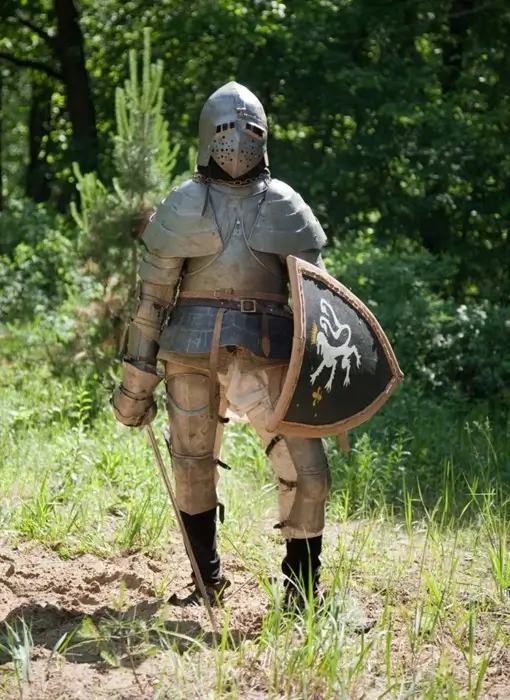
The buhurt helmets stand as the fighter's most essential protective gear for full-contact medieval combat. Buhurt matches involve repeated strikes with steel weapons, shield collisions, and close-range grappling, which makes the head the most vulnerable target area.
Because of this, tournament regulations across major organizations, including Buhurt International and the International Medieval Combat Federation (IMCF), mandate strict helmet construction standards, which include minimum steel thickness and full facial protection requirements.
Historical precedent reinforces this emphasis on head protection. Studies conducted by the Royal Armouries Museum show that surviving medieval helmets from the late 14th-15th century demonstrate thicker steel use in their bascinets which protected the crown area, the point most likely to receive downward strikes.
Modern buhurt helmets follow the same logic but incorporate contemporary engineering practices which include reinforced locking systems and interior padding and optimized ventilation.
Protection Standards in Full-Contact Medieval Combat
Modern armored combat helmets need to endure high-energy impacts while blocking all weapon penetration attempts.
The regulations demand that critical areas must have hardened steel domes which need to reach a thickness between 2.5 to 3 millimeters. Helmets need to deliver complete facial protection and neck defense by using steel plates or riveted chainmail.
The Tournament Bascinet shows all required safety standards. Its dome combines a 3 mm crown with a 2 mm lower section which uses hardened 30HGSA steel for its construction.
The alloy provides high strength which enables it to withstand multiple stress cycles. The helmet combines a visor locking system which provides secure attachment with neck protection plates which maintain stability during grappling.
Current testing techniques assess total stress accumulation throughout testing. Buhurt helmets need to withstand multiple training and tournament matches because they function differently from historical armor which could only resist rare combat events.
The requirement leads to the creation of heavier bascinets which professional fighters use because they need 8 kg weight to achieve durability while maintaining combat efficiency.
Visibility, Breathing, and Mobility
Source: Depositphotos.
The effectiveness of a buhurt helmet depends on more than its ability to provide protection to fighters who need to battle while maintaining their combat awareness and body temperature control and their ability to move freely. Helmet design therefore requires careful balance between safety and functionality.
The ROA Helmet “Guardian” shows this balance through its design which takes inspiration from the Romance of Alexander bascinet found in medieval manuscripts.
The helmet uses 20 mm eye slots which meet historical battle requirements while giving soldiers a practical sight range during present-day combat. The helmet's anatomical dome shape enables better strike deflection which keeps users comfortable during extended periods of use.
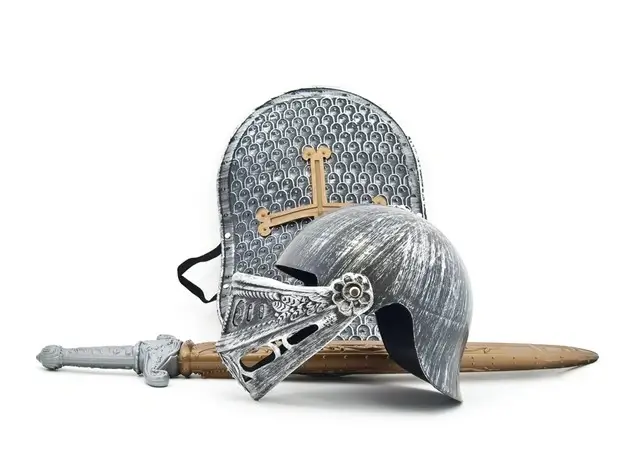
The Bascinet Clapvisor “Cross” uses ventilation-friendly visor slots which create airflow pathways while maintaining face protection against weapon attacks. These design elements directly affect a fighter's endurance and reaction time during high-intensity matches.
Key design factors include:
Visibility: Eye-slot dimensions and visor structure determine peripheral vision and reaction speed. Helmets like the ROA Guardian maintain a 20 mm slot height to balance visibility and safety.
Breathing: Ventilation openings such as the cross-shaped slots in the Clapvisor Cross improve airflow, reducing heat buildup and fatigue during prolonged melees.
Mobility: Weight distribution and interior padding influence neck strain and head movement. Foam liners and padded aventails help stabilize the helmet during sudden impacts or grappling exchanges.
Correct sizing of these factors would allow the competition to be a race of untiring efforts and keen attention without sacrifice to safety provisions.
How Buhurt Helmets Balance Safety and Historical Design
Source: Freepik.
Modern buhurt helmets operate at the intersection of historical inspiration and engineering practicality. Designers start their work by using existing documentation of medieval helmet designs which includes the bascinet as their base model to create helmets that function in modern combat situations.
Many historical helmets did not include internal padding systems which function to protect users from multiple instances of blunt-force impacts.
Medieval Extreme addresses this gap by integrating foam liners and padded aventails and secure chin strap systems into historically inspired shell designs.
The Tournament Bascinet uses dual chin straps and a Simon strap to prevent helmet displacement during grappling. The lower part of the body remains protected by riveted chainmail which connects to the lower edge of the costume while providing the wearer with freedom to move.
Another critical adaptation involves visor mechanics. Medieval visors often used simple hinge systems that could fail under repeated stress. Modern buhurt helmets use reinforced locking systems which keep the visor securely closed during situations that involve sudden forceful contact.
What Fighters Should Consider When Choosing a Helmet
Source: Depositphotos.
The Tournament Bascinet, ROA Helmet Guardian, and Bascinet Clapvisor Cross helmet models provide different advantages which both beginners and advanced fighters can use according to their fighting methods.
Fighters who want to see everything use open-slot visor designs which provide complete vision but fighters who need to breathe better choose cross-vented structures. The key is balancing three factors which include comfort and protection and tournament regulation requirements.
The helmet determines how well a fighter can fight during a buhurt melee battle. A well-designed helmet provides head protection which improves a fighter's ability to see and endure and react during competitions.
The battle-tested helmet designs from Medieval Extreme deliver modern armored combat protection which competitors use to prepare themselves for tournaments and equipment upgrades. Choose professional-grade bascinets which provide durability and visibility and comfort to wear at the lists.
Disclaimer:
This post may contain affiliate links. I receive a small commission at no cost to you when you make a purchase using my link.