Few souvenirs capture a destination's spirit quite like a bottle of local wine. Whether it's a crisp white from a Portuguese family winery or a bold red from Paso Robles' famous vineyards, that bottle carries the memory of a place.
But knowing how to bring wine from holiday without losing a single drop — or worse, returning home to a shattered, stained suitcase — is a skill worth learning. It's not as simple as tossing a bottle between your clothes and hoping for the best.
From airline rules and customs allowances to smart packing strategies and protective gear, there's more to wine travel than most people realize. The good news is that with a little preparation, it's entirely manageable.
This guide walks you through everything you need to know to bring your favorite bottles home safely — and actually enjoy them when you get there.
How to Bring Wine in Checked Luggage Without Breaking a Bottle
Source: Magnific.
Check Airlines and Customs Rules Before You Buy
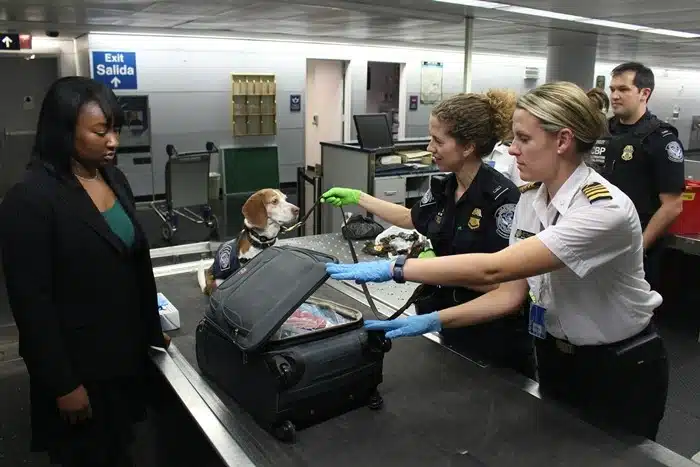
Whether a bottle of wine will make it home with you may depend on the airline's and customs' rules. Wine travel is as much about allowances and weight limits as it is about packing.
Most airlines allow alcohol in checked baggage, but there may be restrictions on the percentage, quantity, and packaging.
As per the latest guidelines of the Federal Aviation Administration, alcoholic beverages with 24% or less alcohol (including wine and beer) are allowed without quantity limits. This means that under these conditions, only the airlines’ weight rules for checked baggage will apply.
If the alcohol by volume (ABV) exceeds 24%, the quantity is limited to 5 liters per passenger up to 70%. Alcohol above 70% ABV is prohibited. Similarly, customs rules are important. Even if your airline allows it, your destination country may restrict the quantity of alcohol you can bring in duty-free.
This may indeed seem a bit complicated. To keep things simple, here's a checklist of what to be careful of:
Start with the airline baggage policy, whether wine is allowed in checked baggage, along with limits on quantity and weight.
Confirm if there are restrictions on the ABV of alcoholic beverages you can carry.
Look up your country’s duty-free alcohol limits before buying.
Understand whether you must declare alcohol on arrival forms.
Note the packaging conditions that your airline requires.
Check the rules for every country you transit through in case of any layovers.
Source: Unsplash.
Choose Bottles That Are Travel-Friendly
Not all wine bottles are equally easy to handle or safe to travel with.
It may be tempting to pick the most unique-looking bottle from the winery shelf. However, the shape, weight, and packaging of the bottle can make a difference once it's inside your suitcase.
As the All American Mail Center notes, glass bottles are not designed to withstand turbulence and baggage handling without proper packing. Travel-friendly choices reduce the risk of breakage from the very start. So, wine bottles with the classic straight shape are the safest option.
They fit more easily into luggage, are easier to cushion, and are less likely to shift around during transit. On the other hand, unusually shaped bottles or decorative packaging may look good but are more vulnerable to pressure and impact.
If you're bringing home a few special bottles from your vacation, learning how to properly store and transport wine in luggage can help prevent leaks, broken bottles, and disappointment when you unpack. Hence, here's what to look for to ensure the bottles are travel-friendly:
Look for bottles that are standard and uniform in shape for easy and safe packing.
If possible, go for bottles with sturdier glass that can handle impact better.
Ensure the seal is tight to avoid any leakage during pressure changes.
Opt for minimal packaging that does not add too much bulk.
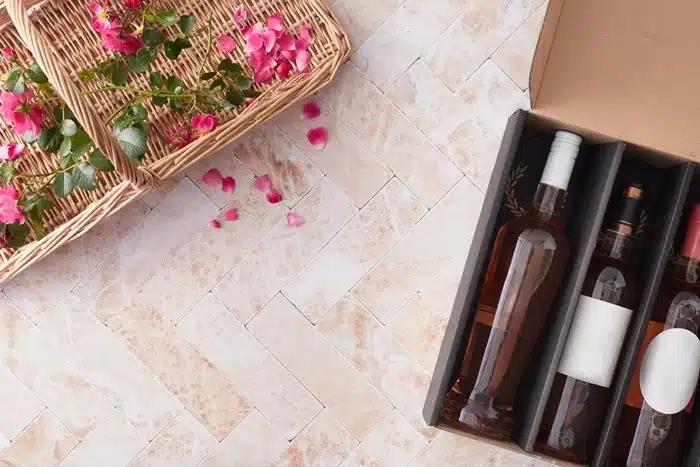
Get protective sleeves or shipping boxes designed exclusively for travelers.
Source: Unsplash.
Wrap and Cushion Each Bottle Properly
Done with choosing the most travel-friendly option? Now the steps to proper packing begin, which start with cushioning.
Air travel puts wine bottles through repeated impact and rough handling during baggage transfers. That way, even a short flight can cause cracks or leaks.
This is why professional shipping services and even airlines are paying more attention to how fragile items are handled. After all, wine has become a significant part of travel.
Interestingly, Southwest Airlines recently introduced a ‘Sip and Ship’ style perk that allows passengers to check in a full case of wine for free from select wine-country routes.
Despite such trends, your suitcase still needs to do the heavy lifting in terms of protection. The goal is to eliminate movement, absorb shock, and create multiple layers between the glass and any impact. Here's how to do it properly:
Wrap each bottle in a soft fabric, such as a T-shirt, scarf, or sweater, to create a base cushion.
Add thick padding in the form of jeans, hoodies, or towels around the bottle for shock absorption.
Pay extra attention to the neck and base of the bottle, where breakage most often occurs.
Place the wrapped bottle inside a Ziploc bag in case of any leaks or condensation.
Double up the process for thinner bottles for extra protection.
To upgrade your packing further, consider using inflatable wine sleeves or padded bottle protectors. The cushioning these offer is often more structured, thereby making them the best option for frequent travelers.
Source: Unsplash.
Use Travel Gear or Shipping for High-Value Bottles
If we are being honest, there can be a hierarchy even when it comes to wine bottles. Some are casual souvenirs, whereas others are more expensive and limited-production wines. When the value of the wine goes up, so does the need for protection.
This becomes particularly relevant in regions like Sonoma County, where things are changing on a large scale.
For instance, tasting room traffic has dipped about 8% here, even as wineries continue to adjust prices, experiences, and visitor strategies in response to the changing demand.
The owner of a Sonoma Plaza tasting room called Caddis Wines, Chris Sorensen, said that it was all a “wild ride.” He further explained that “Even when we were open, there wasn’t much tourism to speak of.” However, the 1000-case label is holding steady nearly six years later.
Taken together, one can see that the wine region is still active but increasingly selective in how visitors engage with it.
For travelers, this often translates into more intentional purchases, which means each bottle is a meaningful takeaway. That’s exactly why the way those bottles are transported home matters more than ever.
If you prefer to carry home the wine by yourself, specialized equipment can considerably reduce the risk of damage during transit. These include:
Inflatable wine sleeves, as mentioned earlier, that can absorb shocks during baggage handling
Hard-shell protective cases for maximum stability
Neoprene wraps for lightweight cushioning inside luggage
Bottle stabilizers designed to prevent movement during travel
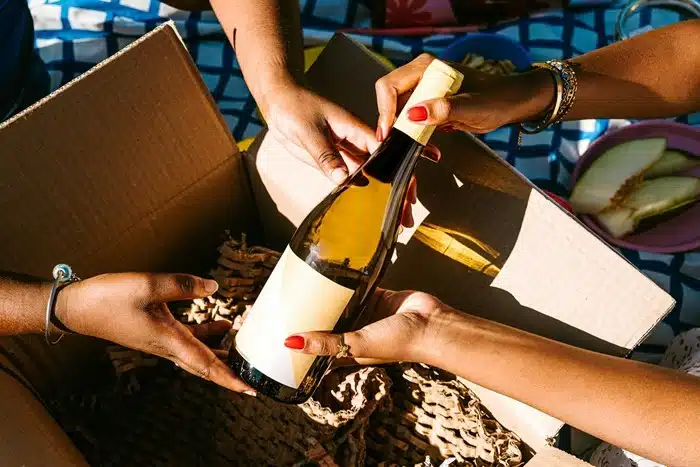
In case of higher-value or more than two bottles, it’s best to avail of shipping services. Professionals use industry-grade protective materials and also provide customs or documentation support for international delivery. You can even split between your luggage and shipping services depending on the number of bottles or cases you wish to carry home.
FAQs
Source: Unsplash.
Is it possible to carry wine in luggage during international travel?
Yes, in most cases, you can carry wine in your checked luggage. However, there may be quantity and weight limits depending on airline rules and customs regulations.
It's important to always check both the airline policy and destination customs rules (including layovers) before buying wine abroad.
What is the safest way to pack wine in a suitcase to avoid breakage?
The safest method is to combine strategies like cushioning, stabilization, and smart placement.
Each bottle should be wrapped in soft items like clothing, placed inside a sealed plastic bag, and positioned in the center of the suitcase.
Ideally, the bottle should be surrounded by soft layers on all sides.
When is it wiser to ship wine instead of carrying it home yourself?
Shipping is a better option when you need to ship more than two bottles or they are fragile, limited-edition pieces. This removes the risk of breakage during rough baggage handling.
Travelers with multiple bottles can even split between carrying one or two in their luggage and having others shipped.
Wine Travel By the Numbers
Source: Unsplash.
Federal Aviation Administration restrictions for traveling with alcoholic beverages
Beverages with 24% or less ABV are allowed without quantity limits For ABV between 24% and 70%, only 5 liters per passenger is allowedBeverages above 70% ABV are prohibited
Dip in tasting room traffic in the Sonoma County region
8% in 2025
2025 report on the profitability of wine tourism
Two out of three wineries now describe wine tourism as profitable or very profitableA quarter of the total winery revenue comes from tourism alone
Bringing home a bottle of wine is not just about the wine itself. It's often about the moment it represents.
Perhaps the taste itself sparked nostalgia, or the relaxed vineyard conversations motivated the decision to return with a piece of that place.
As a whole, wine tourism is no longer a side experience. It has become a core part of the worldwide wine economy. As per a 2025 report, around two out of three wineries now describe wine tourism as profitable or very profitable.
Roughly a quarter of total winery revenue comes from tourism alone. This means every bottle you purchase is more than just an individual investment. Yet, the only way to cherish your personal investment is to ensure you bring home wine from your travels without breaking a bottle.
Conclusion
Source: Unsplash.
Bringing home a bottle of wine is one of the most personal souvenirs you can carry — it's a taste of a place, a moment, and a memory all in one. The effort to protect it is absolutely worth it.
Knowing how to bring wine from holiday safely comes down to a few key steps: checking airline and customs rules, choosing travel-friendly bottles, and packing them with proper cushioning. For higher-value bottles, investing in protective gear or a shipping service is always a smart move.
The good news is that none of this has to be complicated. A little preparation before you travel makes all the difference between a triumphant unboxing and a disappointing mess.
Wine tourism is growing for a reason — every bottle tells a story about the place it came from. Make sure yours makes it home to be enjoyed the way it was meant to be.
Ready to start planning your next wine-inspired trip? Browse our travel guides for inspiration on the best wine destinations around the world.
Disclaimer:
This post may contain affiliate links. I receive a small commission at no cost to you when you make a purchase using my link.