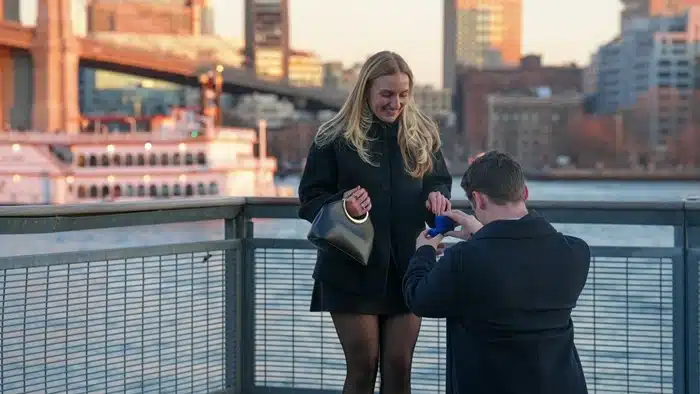
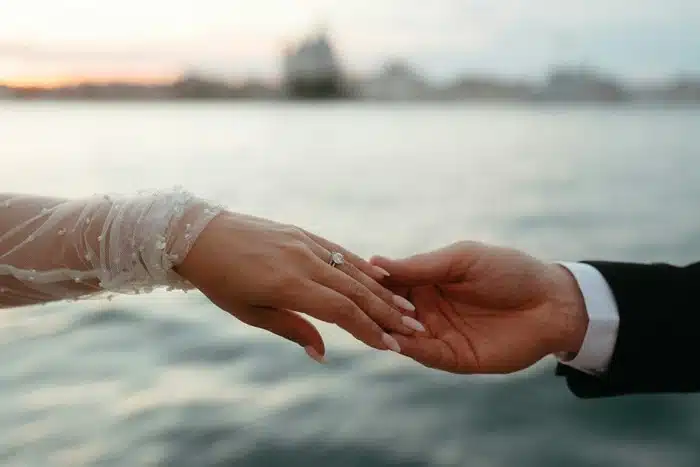
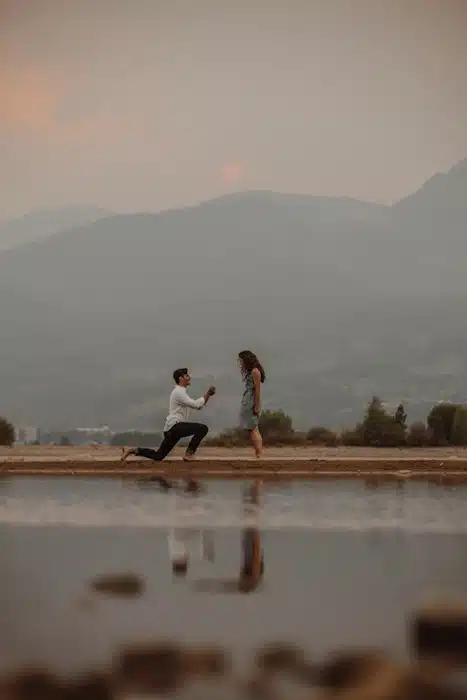
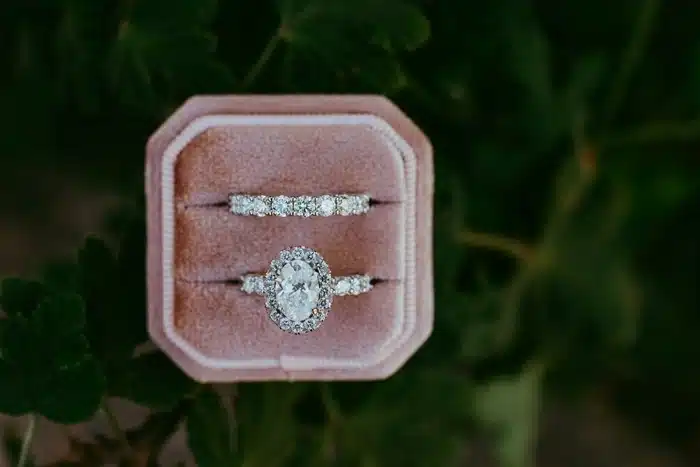
A destination proposal turns a place into a permanent part of your story — the light, the landscape, the exact moment you asked. Getting the setting right takes planning, but so does getting the ring right.
Most people think about the ring in isolation: how it looks in a jewelry store, whether it fits the budget, whether it's the right style. Choosing the right ring for a destination proposal means thinking a few steps further than that.
How will the stone behave in natural light? Will the setting survive the journey? Does the design actually belong in the landscape you're planning to propose in?
This guide covers all of it — from stone choice and setting style to practical travel tips most people don't think about until it's too late.
Proposal Tips: Choosing the Best Ring for Your Dream Proposal
Source: Unsplash.
How light changes everything
Jewelry store lighting is designed to make every ring look incredible. It's warm, controlled, and very forgiving.
Outdoor light — especially in the kinds of places that make for stunning proposal photos — is none of those things.
Golden hour sun turns warm metals into something almost liquid. Midday light can wash out stones that looked brilliant indoors.
Ocean light is cool and diffused. Forest light comes in green-tinted and dappled. Mountain light at altitude is almost supernaturally clear, which photographs beautifully but doesn't flatter everything equally.
If you're planning to document the moment — and let's be honest, most people are — it's worth thinking about how your chosen stone actually behaves outside.
Stones with strong light performance, high brilliance, and good fire tend to hold their own regardless of what the sky is doing. Passive stones that rely on perfect lighting can look flat when conditions change.
Moissanite is genuinely one of the best outdoor performers. Its refractive index is higher than diamond, so it throws light back in more directions — including the scattered, directional light you get in open settings.
Oval and pear cuts in particular have a way of looking elongated and striking on camera, which suits wide outdoor backdrops better than a lot of people expect.
Source: Unsplash.
The setting matters as much as the stone
How the ring is actually built matters for travel, more than most people think about when they're choosing one.
Bezel settings — where a band of metal wraps around the stone's edge instead of holding it up with prongs — are the most travel-friendly option by a long way.
Nothing to snag on a jacket lining, on luggage zippers, or on the edge of a rock face. The stone sits low and protected.
If the proposal involves a hike, a beach, or anywhere that requires actually moving through the world, bezel is worth a serious look.
Prong settings are more classic and often more dramatic — the stone sits up higher and catches light from more angles, which looks beautiful in photos.
If the proposal is somewhere elegant rather than somewhere rugged, that tradeoff makes more sense. A four-prong solitaire in an open landscape can be genuinely stunning on camera.
The one thing worth thinking about regardless of setting style: how much the ring protrudes when it's sitting in your pocket or bag during transit.
The lower the profile, the less chance of bending a prong against something before the moment actually happens.
Source: Unsplash.
Nature-inspired designs for nature-inspired proposals
If the backdrop is forests, coastline, mountains, or open meadows, rings with organic design details tend to photograph particularly well.
Leaf motifs, vine-shaped bands, and settings that feel botanical create a quiet harmony with the environment around them — the kind of thing that makes proposal photos look deliberate rather than accidental.
Moss agate is worth a specific mention here. The stone has green, forest-like inclusions suspended inside a translucent base, and against a natural backdrop it looks almost like the landscape found its way inside the ring.
It's also completely unique from stone to stone, which means nobody else will have one exactly like it — something that feels especially right when the proposal itself is tied to a specific place.
For couples who want the nature connection without going full botanical, an oval moissanite or oval lab-grown diamond in an organic setting does the job beautifully.
It works across very different outdoor environments — beach light, mountain light, forest shade — without looking out of place in any of them.
Source: Unsplash.
Practical things worth thinking about before you travel
Planning a destination proposal involves enough logistics already. The ring shouldn't add to the stress.
The non-negotiable: carry it on your person, always. Never in checked luggage, not even if you think it'll be fine.
Luggage gets lost, delayed, and occasionally opened by strangers. Your ring stays in a carry-on or an inside jacket pocket where you have eyes on it the whole time.
If you're traveling internationally, photograph the ring before you leave — or keep the receipt somewhere accessible. Some countries flag jewelry at customs on the way home if there's no proof it was purchased before you left. It's a rare issue but an avoidable one.
Travel insurance that covers jewelry is worth looking into. Rings can slip off in cold water, get locked in hotel safes and forgotten, or fall somewhere irretrievable in the kind of dramatic outdoor setting that makes for beautiful photos.
It's cheaper than most people expect and gives you one less thing to think about.
And here's one that catches most people off guard: propose earlier in the trip, not at the end. It sounds counterintuitive but carrying a ring while pretending everything is normal is genuinely exhausting.
Proposing on day one or two means the rest of the trip is celebration rather than carefully managed suspense — and honestly, the photos of the days after are often just as good as the proposal itself.
Source: Unsplash.
Choosing a ring that feels like them
Travel context aside, the thing that matters most is that the ring feels right for the person wearing it — not what's popular right now, not what tradition says it should look like, not what someone else's engagement ring looked like.
The range of engagement rings available from independent jewelers today is genuinely wide.
Gemstones that aren't diamonds, designs that pull from nature, settings built for active wear and formal occasions alike, metals in everything from cool platinum to warm rose gold.
Source: Unsplash.
Romalar Jewelry, for instance, works across 18 different gemstone types — moissanite, lab-grown diamonds, moss agate, black onyx, and more — with customizable settings that let the ring feel specific to one person rather than pulled from a catalogue.
If the person you're proposing to loves the natural world, stones with character, or jewelry that's genuinely unusual, it's worth spending some time looking through moss agate rings.
Every stone is different, which means the ring is already one of a kind before anyone has even done anything custom. That kind of uniqueness feels particularly fitting when the proposal itself is happening somewhere that matters.
Conclusion
Source: Unsplash.
A destination proposal is a memory with geography attached to it. The place becomes part of the story — the light on the water, the view from the overlook, the specific angle of the afternoon sun.
The ring travels everywhere after that. It goes to grocery stores and work meetings and ordinary Tuesday afternoons and all the places that have nothing to do with wherever you were when you asked.
So choose one that's beautiful in the extraordinary setting you're planning — but more importantly, choose one that looks right in the ordinary moments that make up most of a life together.
Those are the ones that matter most, in the end.
Disclaimer:
This post may contain affiliate links. I receive a small commission at no cost to you when you make a purchase using my link.