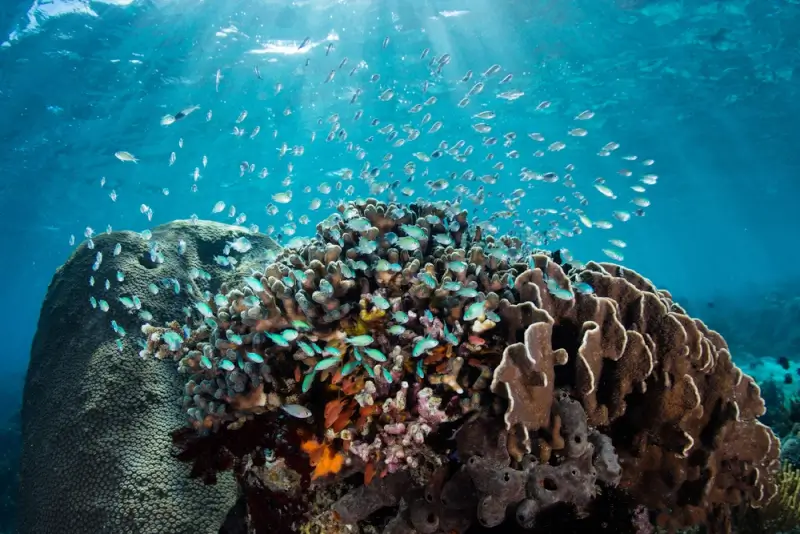
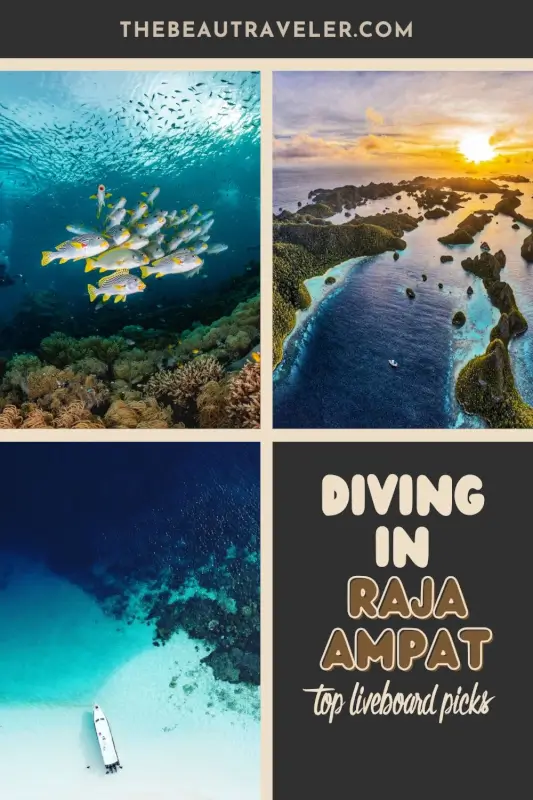
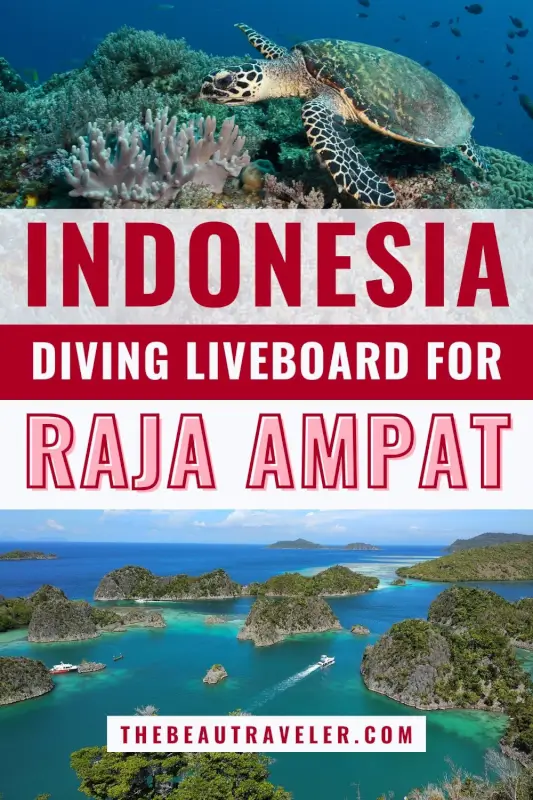
Raja Ampat is one of those places that makes other reef destinations feel slightly muted. It sits in the Coral Triangle, and the diving reflects that—dense fish life, complex coral structure, and enough tiny creatures to keep macro fans busy for weeks.
For a first-time visitor for Raja Ampat dives, the biggest decision is not “should I go,” but “how do I cover enough ground without wasting days on transfers?”
That’s where an Indonesia liveaboard trip earns its reputation. It’s also, in practical terms, an Indonesia diving liveaboard plan: you sleep close to the sites, you wake up ready to dive, and you reach areas that resorts can’t touch.
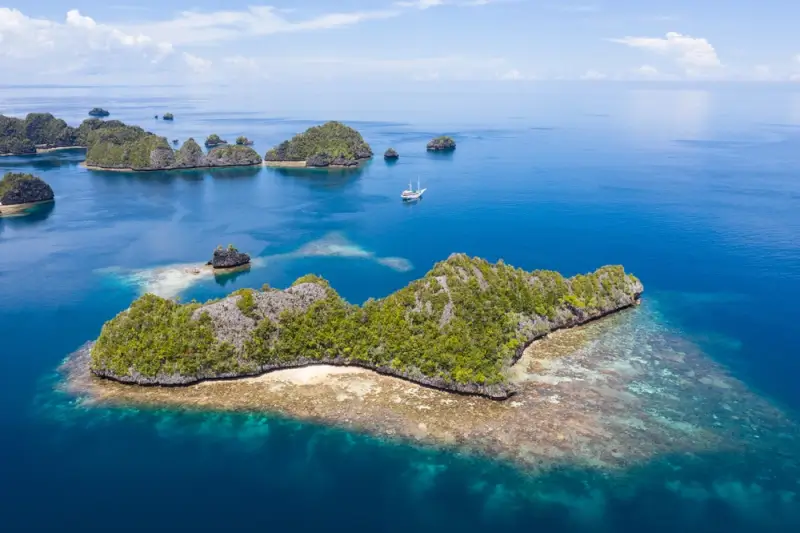
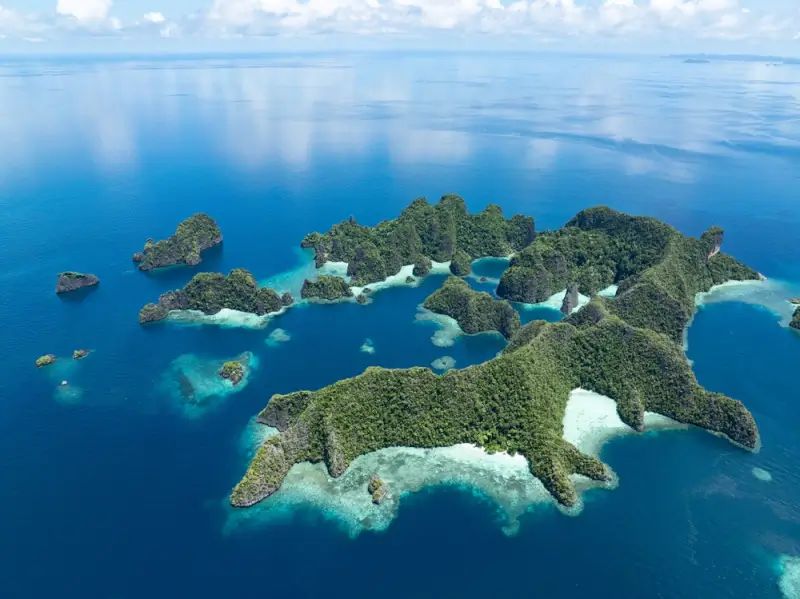
This archipelago is huge, and the best parts aren’t clustered around one easy base. The south, especially Misool, offers dramatic limestone scenery and reefs with serious color. The north, around Wayag, adds iconic landscapes and remote sites that feel properly wild.
Getting between these zones takes time, and time is your real currency on a trip like this. A well-run boat turns that time into rest instead of stress, which matters when you’re doing multiple dives a day.
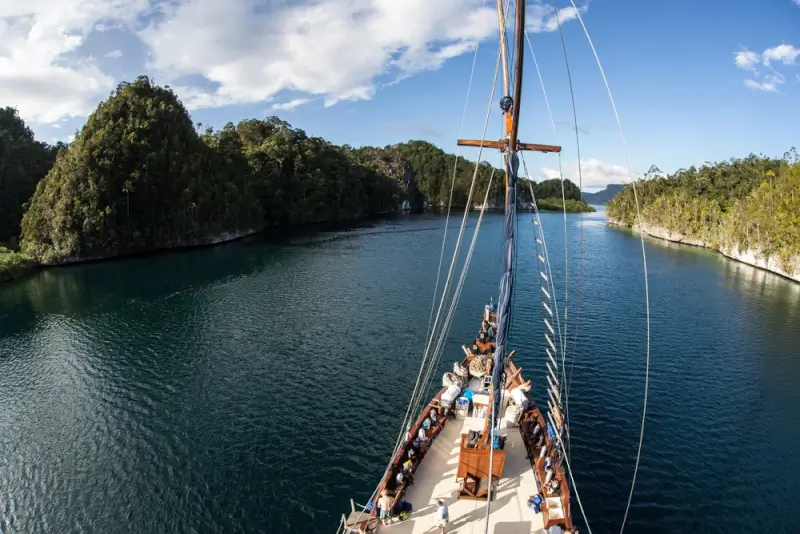
These days, the fleet is broad. You’ll see modern steel yachts that feel stable on crossings, and classic wooden Phinisi vessels that lean into the Indonesian sailing tradition.
Budget, comfort, and style vary, but the core question stays the same: does the boat have the dive team, boating safety habits, and route plan to handle Raja Ampat on Raja Ampat’s terms?
The Ultimate Guide for Indonesia Diving Liveaboard in Raja Ampat
Source: Depositphotos.
The Top 5 Liveaboard Vessels For Your Expedition
A good Raja Ampat safari boat does three things consistently: it briefs clearly, it runs a disciplined tender system, and it adapts when conditions shift.
You’re not here for a lazy drift every day; currents can change fast, and the best diving often happens where water movement feeds the reef.
The five vessels below are strong candidates because they have a track record of solid operations, experienced guides, and realistic itineraries. Use this list as a shortlist, then confirm your exact route and inclusions for your departure date.
Source: Depositphotos.
Mermaid I: A steel liveaboard with a spacious dive deck and an efficient routine. It’s known for smooth logistics on “Best of Raja Ampat” style routes, which helps when you’re covering both central sites and longer repositioning legs.
Dewi Nusantara: A large schooner with the feel of a floating boutique hotel. It offers space, comfort, and a calm pace between dives, plus strong support for photographers who want rinsing, charging, and storage done properly.
Emperor Harmoni: A modern, traditional-styled boat backed by experienced management. It suits divers who like structured briefings, consistent safety standards, and a crew that keeps the program running on time.
La Galigo: A popular mid-range option that focuses on the dive program more than flashy extras. It’s often chosen for itineraries that spend meaningful time in Misool, with guides who know how to time sites to the currents.
Solitude Adventurer: A fast, stable platform with a layout that differs from classic monohulls. It’s efficient for seeing both north and south zones, and it tends to attract divers who want a disciplined schedule and good camera support.
Diving Itineraries: From Dampier Strait To Misool
Source: Depositphotos.
Most itineraries fall into three buckets: North, Central, and South. If you’re doing a standard 7-night trip, expect a heavy focus on the central region and the Dampier Strait.
This area is popular for a reason. It can deliver high-action drifts, big schools of fish, and reef scenes that feel almost overloaded with life.
When the tide is right, you park behind a bommie and watch the show: fusiliers streaming past, trevallies hunting, and reef sharks sliding through like they own the place.
Longer trips (10–12 nights) usually add the south. Misool is often the turning point of the safari, where the reef color ramps up, and the scenery becomes more dramatic.
Many divers describe it as “softer” in appearance—more soft corals, more sweeping walls, more wide-angle opportunities—but it can still deliver current-driven dives that demand attention. The main difference is the sense of remoteness. You’re far from towns, far from day boats, and you feel it.
Northern additions, especially around Wayag, bring a different kind of payoff.
The above-water limestone and lagoons are famous, but the diving can be excellent too—less about famous names and more about variety and isolation. Not every boat includes Wayag on every trip, so treat it as a checkbox you confirm, not a promise you assume.
Marketing language can blur details. You’ll see phrases like liveaboard dive trips in Indonesia on sales pages, and that’s fine, but drill deeper.
Ask how many nights are in each region, what the crew does if wind limits crossings, and whether the plan still delivers quality diving when the “perfect route” isn’t possible.
How To Choose An “Indonesia Diving Liveaboard” Without Regrets
Source: Depositphotos.
Hidden mistakes usually happen before you even board.
People pick a boat because the cabin looks good, then realize later that the diving operation is cramped, the briefings are vague, or the group ratios feel too tight in the current. You can avoid most of that by asking direct questions early and getting the answers in writing.
Ask about guide-to-diver ratios, the tender pickup system, and whether the crew expects every buddy team to carry and deploy an SMB.
Then ask how they handle current-prone sites: do they run drift procedures, do they brief exit plans clearly, and do they skip a site when conditions are wrong? A responsible operator will say “yes, we skip sometimes,” without making it sound like a failure.
Finally, check the route logic. Does the trip match your goals—central fish action, southern color, northern landscapes—or is it a vague “best of” label that could mean almost anything?
Clarity up front makes the entire week calmer.
Technical Requirements And Diver Experience Levels
Source: Depositphotos.
Raja Ampat can be forgiving one day and spicy the next. Currents in channels and around seamounts can produce fast drifts, and some sites carry a real downcurrent risk if divers slip out of the protected zone.
Because of that, many boats in 2026 still ask for an Advanced Open Water certification and a solid number of logged dives, especially if the itinerary targets more current-driven sites in the Dampier area.
You don’t need to be a technical diver, but you do need to be comfortable with movement and simple procedures.
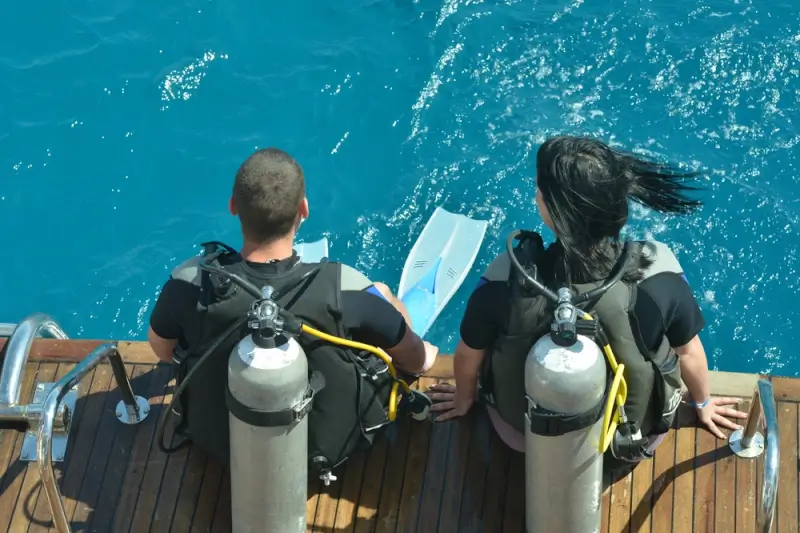
Guides may call for a negative entry when surface drift could cause the group to separate. Done properly, it’s controlled: you enter, you descend with intent, you meet the guide, and you settle in.
A reliable surface marker buoy is non-negotiable. Boats want buddy teams to be able to signal the tender if they surface away from the main group.
Practice deployment before your trip. It’s one of those skills that’s easy in calm water and suddenly clumsy when you’re tired, and the sea is choppy.
If you have access to Nitrox, use it. Many boats include it or offer it at a reasonable weekly fee, and it’s a practical way to manage repetitive diving. It can also help you feel less drained by the end of the week, especially if you’re not used to multi-dive days.
If you’re comparing options under liveaboard diving in Indonesia, don’t just accept the label. Ask how they group divers by experience, how many guides are in the water, and whether the schedule is flexible enough to keep newer divers comfortable without holding back the entire trip.
Life Onboard: Comfort And Culinary Excellence
Source: Depositphotos.
Life onboard is simple and repetitive in the best way.
Most days follow a rhythm: coffee, dive, breakfast, dive, lunch, dive, snacks, and a fourth dive if conditions and schedules allow. That routine is why people love safaris. You spend less time planning and more time diving.
On many boats, the dives run from a separate tender, so the main vessel stays quiet and uncluttered. That setup also keeps the dive deck functional.
When a boat does this well, your gear stays organized, and you’re not stepping over other people’s fins to get to your station.
Food tends to be generous and practical. Expect Indonesian staples—rice, noodles, fish, sambal—plus familiar options for divers who want something mild after a big day.
The social atmosphere is a bonus. People swap sightings, review photos, and compare notes on currents and critters. It’s communal without being forced.
If you’re reading reviews for liveaboard boats in Indonesia, pay attention to the small operational details people mention: timing, briefings, tender pickups, and safety discipline.
Those details are what you’ll remember after the “nice cabin” feeling fades.
Best Time To Visit And Logistics
Source: iStock.
Raja Ampat’s main season generally runs from October to May, with many operators preferring the November to April window for southern coverage.
That timing can matter if your trip aims for Misool. The central region, including the Dampier Strait, can still be excellent across a broader range, but crossings and comfort can change with the wind.
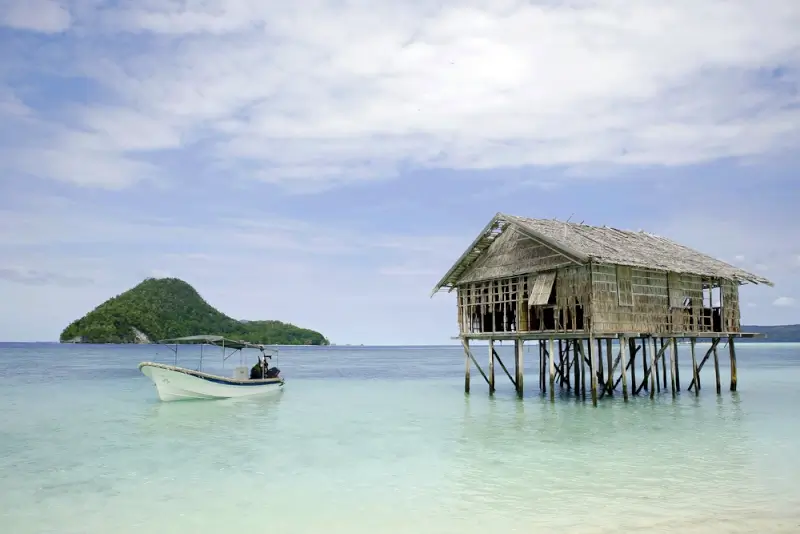
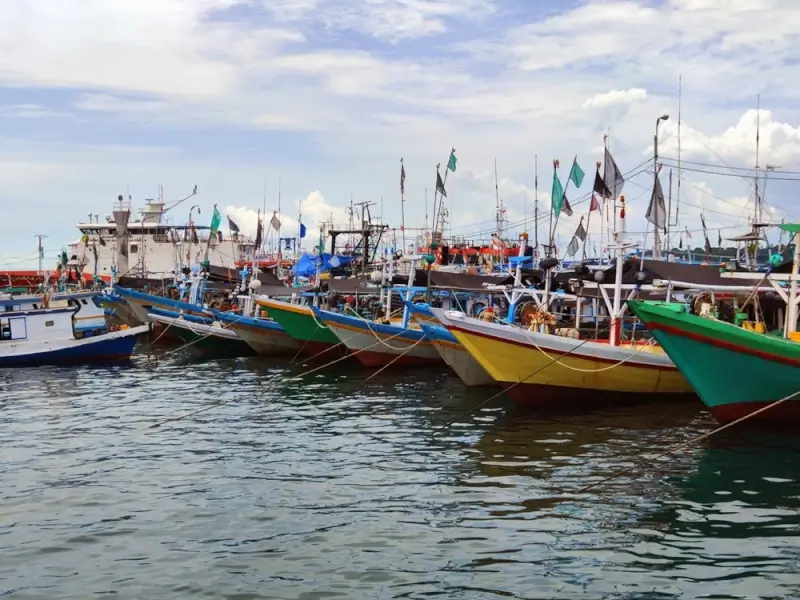
Logistics are mostly about getting to Sorong. Most guests connect through major Indonesian hubs and arrive the day before boarding to avoid stress.
Transfers to the harbor are usually handled by the operator, but keeping a buffer day is a smart move. Flights in remote regions don’t always behave like clockwork.
Budget for permits and local costs. The Raja Ampat Marine Park fee supports conservation and local management, and it’s treated as a normal part of diving here.
Some boats include it, and some collect it as an extra, so confirm it early.
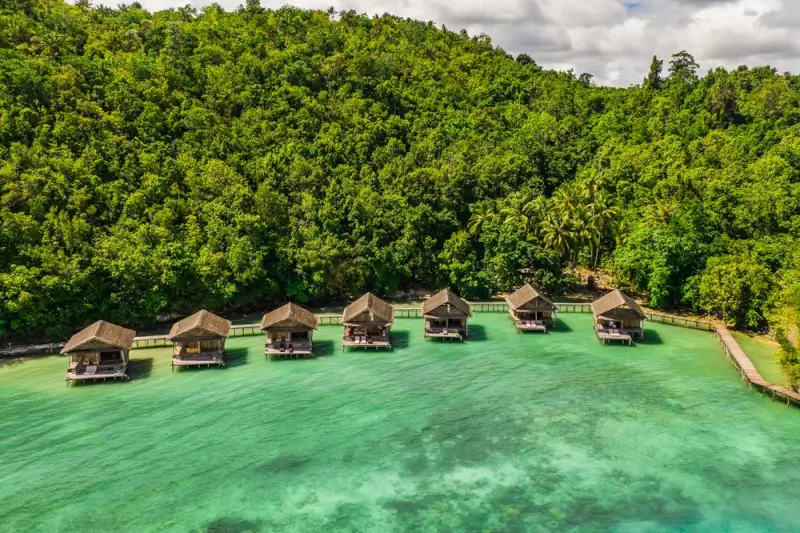
If you’re weighing a resort stay against a boat, remember what a liveaboard in Indonesia setup buys you: reach.
It’s hard to replicate remote sites from land, especially when you want both central fish action and southern reefs. That’s why people book diving liveaboards in Indonesia and accept the travel time as part of the deal.
One more practical point for first-timers: trip pricing isn’t just about the cabin. Check whether gear rental, park fees, and extra services add up. That’s also why comparing Indonesia liveaboards by headline price alone can be misleading.
And if you want the phrase “Indonesia liveaboard diving” to mean something, make sure the itinerary actually includes the dive count, site variety, and regional coverage to justify it.
Conclusion
Source: Depositphotos.
Raja Ampat earns its reputation the honest way: by delivering reefs that look alive, not merely pretty.
The diving can be fast, calm, technical, simple, and surprising—sometimes all in the same day. That variety is exactly why the right boat matters.
If you pick one of the five vessels listed here and match it to a route you actually want (central, south, north, or a mix), you’ll get more than a highlight reel.
You’ll get the kind of week that improves your diving habits: better buoyancy in current, more comfort with drift procedures, and a stronger sense of how to dive responsibly in a protected ecosystem.
Plan your logistics through Sorong, respect the permits, and pack the basics you’ll rely on—especially an SMB you know how to use. Then relax into the routine. The best safaris don’t feel rushed; they feel steady, and that steadiness lets the diving shine.
Disclaimer:
This post may contain affiliate links. I receive a small commission at no cost to you when you make a purchase using my link.