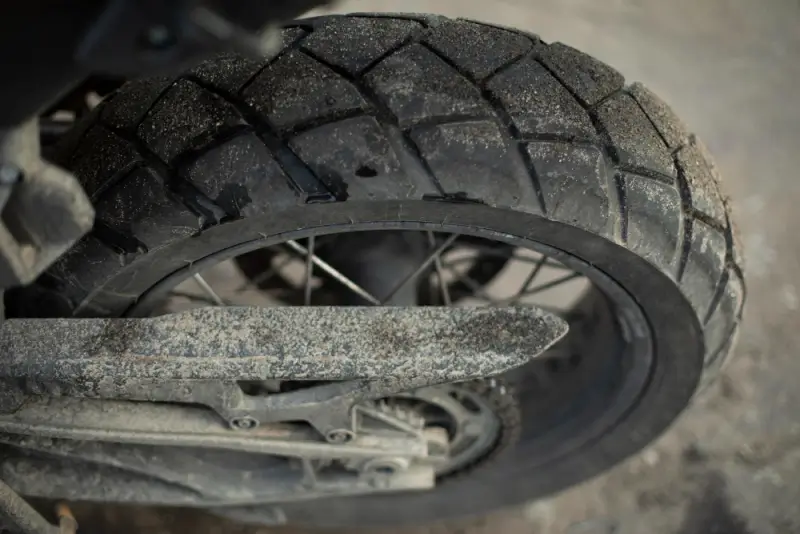
Your tires are more than just rubber meeting the road—they’re some of the best diagnostic tools your vehicle has. Before a suspension component fails, before an alignment drifts too far out of spec, before a brake problem turns serious, your tires will usually show the first warning signs.
Strange or uneven tire wear isn’t just a cosmetic issue; it’s a signal that something deeper is happening within your vehicle’s steering, brake, or suspension systems.
If you’re also noticing signs of leaking grease or brake fluid near a wheel, checking your rear wheel seal can help determine whether contamination is contributing to abnormal wear.
Tire wear doesn’t happen randomly. Every unusual pattern corresponds to a specific mechanical imbalance or failure. Understanding these tire wear patterns helps you diagnose issues early, improve driving safety, and save money on premature tire replacements.
The Ultimate Guide to Vehicle Tire Issues You Should Spot Early
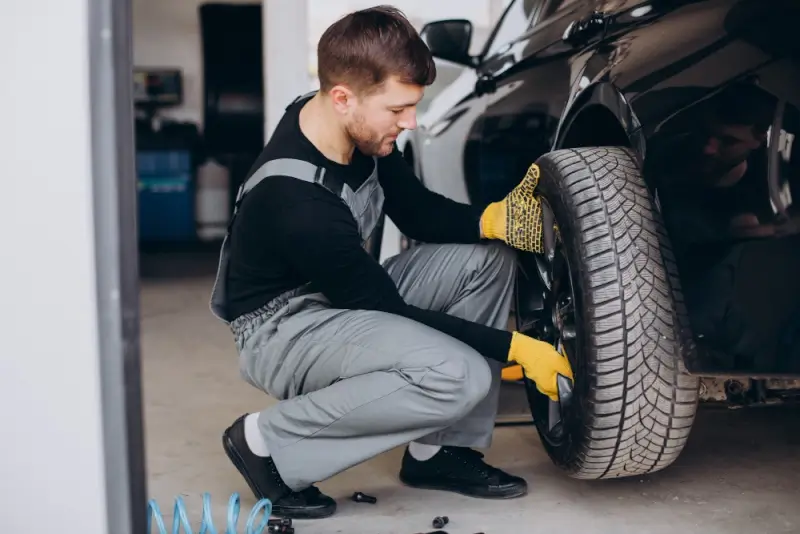
Source: Freepik.
The Connection Between Alignment and Safety
Wheel alignment is one of the biggest influences on tire wear, and even slight misalignments can create noticeable tread irregularities.
Alignment determines how your tires contact the road, how weight is distributed, and how effectively your vehicle handles steering input.
1. Toe Wear (Feathering or Stepped Tread Edges)
Toe alignment determines whether your wheels point slightly in or slightly out. When toe is incorrect, tread blocks become “feathered”—smooth on one side and sharp on the other.
Drivers often feel this as vibration or instability at higher speeds. Feathering reduces braking traction and increases stopping distance.
2. Camber Wear (Inside or Outside Edge Wear)
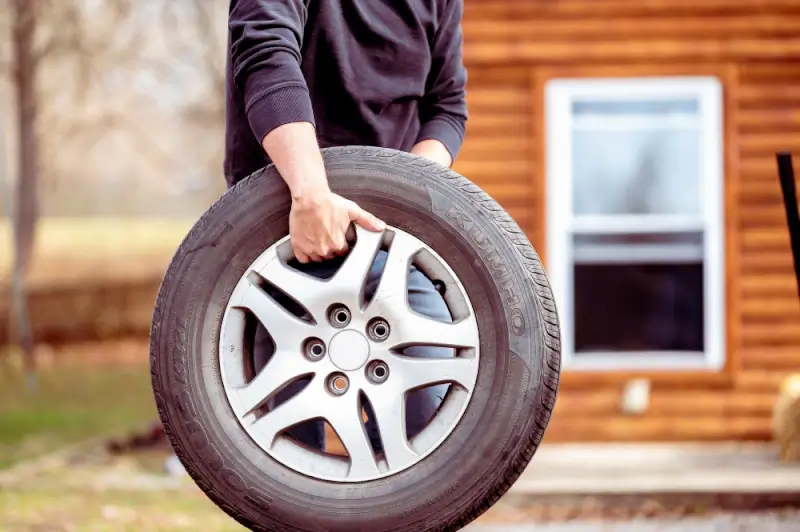
Source: Freepik.
Camber wear appears as heavy wear on one side of the tire.
Excessive negative camber causes inner-edge wear.
Excessive positive camber wears the outer edge.
Camber issues affect cornering stability and make the steering feel either too loose or too twitchy.
3. Cupping or Scalloping
This pattern appears as repeated dips across the tread’s surface.
Cupping almost always points to suspension trouble: worn shocks, weak struts, or loose components causing the tire to bounce while driving. Because the tire loses consistent road contact, the wear pattern becomes patchy and uneven.
4. Center Wear
If the center of the tread wears faster than the shoulders, the tires are overinflated. Too much pressure pushes the center outward, reducing the contact patch and decreasing traction.
5. Edge Wear
Wear on both edges with good tread in the middle indicates underinflation.
Underinflated tires flex too much, generating excess heat and accelerating shoulder wear. This condition also worsens fuel economy due to increased rolling resistance.
If you need to remove locking lug nuts to inspect wheels, brakes, or suspension parts, using the correct tool to take off wheel locks ensures safe removal without damaging the lugs or wheels.
When Uneven Tread Signals Bigger Issues
Source: Freepik.
Not all tire wear patterns come from alignment or inflation problems. Sometimes, the wear is a sign of deeper mechanical issues that require immediate attention.
1. Worn Ball Joints, Control Arms, or Tie Rods
Steering and suspension components directly influence tire angle. When ball joints loosen or tie rods start to wear, tire alignment changes dynamically as you drive.
This results in unpredictable wear patterns—a mix of feathering, cupping, and shoulder wear depending on the component failing.
2. Failing Wheel Bearings
A worn wheel bearing creates wobble, causing the tire to scrub the pavement unevenly. You may notice:
rumbling noises
steering vibration
heat around the wheel hub
Because the wheel isn’t rotating smoothly, one side of the tread wears rapidly.
3. Brake System Imbalances
If one wheel’s brake drags while the others release normally, the tire experiences extra resistance. This generates heat and wears down the tread unevenly.
A leaking or sticking rear wheel cylinder is a common cause in vehicles with rear drum brakes.
4. Damaged Springs or Sagging Suspension
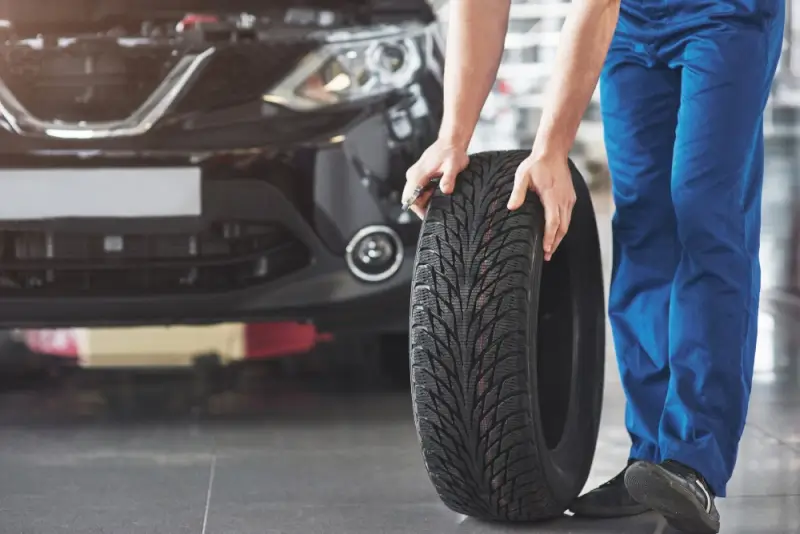
Source: Freepik.
If your vehicle sits lower on one corner, that tire bears more weight and wears faster. Sagging springs or a broken coil significantly change how the tire contacts the road.
5. Bent Wheels or Axles
Hitting a curb or pothole at high speed can bend wheels, control arms, or the axle. Even slight bends cause chronic uneven wear that won’t correct with a simple alignment.
6. Tire and Rim Mismatch
Installing tires that don’t match the wheel size, load rating, or recommended pressure can also cause irregular wear patterns.
Why Ignoring Uneven Wear Is Dangerous
Uneven wear isn’t just a tire problem—it’s a safety issue. Tires with abnormal wear patterns:
lose traction in wet conditions
increase braking distance
cause vibrations
reduce vehicle stability
weaken sidewalls and increase blowout risk
Even worse, the component causing the wear—such as a loose ball joint or worn bearing—may fail unexpectedly, creating a dangerous driving situation.
How to Prevent Strange Wear Patterns
Source: Freepik.
Prevention starts with routine checks and maintenance. Here’s how to keep your tire wear even and predictable:
Check tire pressure monthly using recommended PSI.
Get alignment checked annually or anytime the vehicle pulls, drifts, or the steering wheel isn’t centered.
Inspect suspension components during each oil change.
Replace worn shocks/struts before they cause cupping.
Check wheel bearings for looseness or noise at each brake inspection.
The earlier you identify the cause, the more money you save in the long run.
Conclusion
Strange tire wear patterns aren’t random—they’re important clues that point directly to alignment problems, suspension wear, brake imbalances, or failing components.
By learning to recognize these patterns early, you can prevent unsafe driving conditions, extend the life of your tires, and address hidden mechanical issues before they become costly repairs.
Regular tire checks, proper inflation, timely rotations, and thorough alignment services keep your vehicle safe, stable, and efficient mile after mile.
Disclaimer:
This post may contain affiliate links. I receive a small commission at no cost to you when you make a purchase using my link.