Every Tuscany trip eventually hits the same fork in the road. You have the dates, a rough idea of the towns you want to see, and then you open a booking site and freeze.
Hotel in the historic center, or a house in the hills with a pool and a kitchen? The villa vs. hotel in Tuscany decision looks simple until you actually break down the numbers, and then the two options turn out to be completely different products solving completely different problems.
I've watched friends agonize over this for weeks and then pick badly, usually because they compared the wrong numbers against the wrong trip. So here's the full breakdown: what each option actually gives you, what it costs once you include the parts nobody advertises, and how to tell in about five minutes which one fits your group.
By the end, you'll have a five-minute framework that makes the decision for you — no more tab-hoarding, no more second-guessing at checkout.
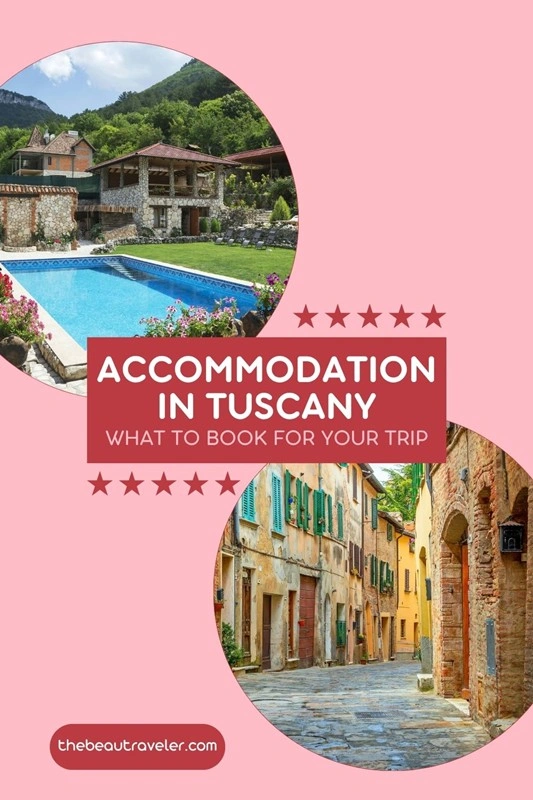
Accommodation in Tuscany: What to Book for Your Trip
Source: Depositphotos.
What Actually Separates a Villa From a Hotel
Forget the marketing language for a second. The real difference is not about thread count or how nice the lobby smells. It comes down to four structural things.
A hotel sells you a bedroom and outsources everything else. Meals happen in restaurants. Your day is shaped around breakfast hours, housekeeping, and a check-in window. You get service without effort, and you get very little control.
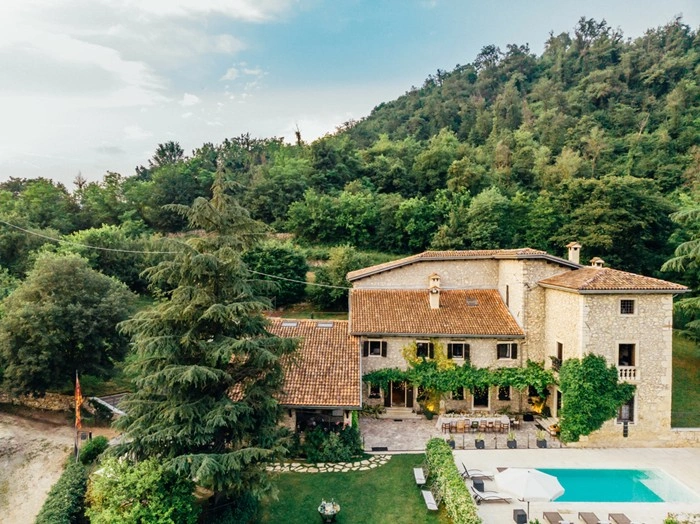
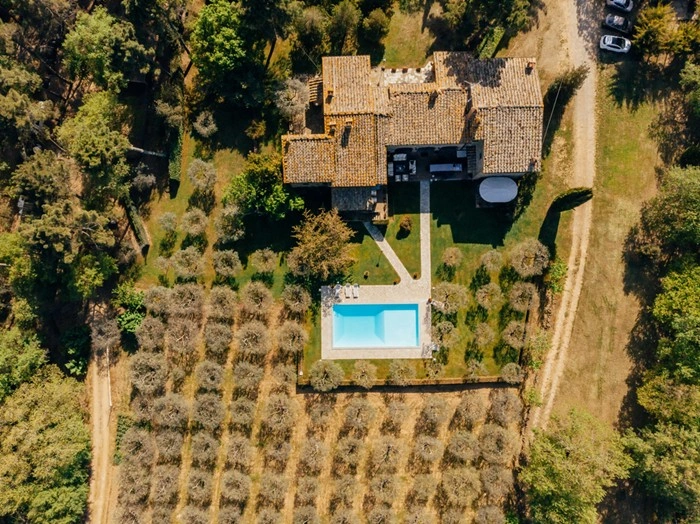
A villa sells you a household. You get a kitchen, a table, outdoor space, and usually a washing machine. Your day is shaped around whatever you decide. You get control, and any service you want has to be arranged in advance rather than summoned at the front desk.
Neither is better in the abstract. They are better for different trips, and the deciding factors are group size, trip length, and how much you care about eating dinner at 10pm because the good restaurant had no earlier table.
Source: Depositphotos.
Running the Numbers: Cost Per Person, Not Per Night
Here is where most people get it wrong. They see a nightly rate for a whole villa, compare it to one hotel room, and conclude that villas are for other people. That comparison is meaningless.
Do the Division First
A villa rate covers the entire property. Divide it by the number of bedrooms, then by the number of travelers, and compare that figure to what your group would spend on separate hotel rooms for the same nights.
For two people, a hotel almost always wins. For four, it gets close. For six or more, the villa usually pulls ahead, and the gap widens with every extra person.
The math flips once you pass roughly six travelers.
A group of ten splitting a house in the Tuscan countryside often lands somewhere near the price of two mid-range hotel rooms per couple, and sometimes below it. This is why places with a strong villa tradition tend to be better value than people expect.
Around Lucca, for instance, the countryside is dotted with historic estates that were built as summer residences for merchant families in the 1500s and 1600s, and a good number of the luxury villa rentals in Lucca sit on those same hillsides today, within half an hour of the city walls.
Supply is healthy, which keeps pricing more competitive than in the Chianti corridor between Florence and Siena.
The Costs That Do Not Appear in the Nightly Rate
Source: Depositphotos.
A fair comparison includes the spending that each option forces on you.
Hotels push you toward three restaurant meals a day, plus coffee, plus drinks. In a tourist-heavy Tuscan town, that adds up fast for a family.
A villa lets you convert one trip to a local market into breakfast for six days, lunch on the terrace, and an aperitivo that costs the price of a bottle rather than the price of a round.
The reverse applies too. A villa in the countryside means a rental car, fuel, and parking. If you were planning to travel entirely by train, that is a real expense you need to add to the villa column before you decide.
The Location Question: City Walls or Country Hills
Source: Depositphotos.
This is the part that changes your trip the most, and it gets the least attention.
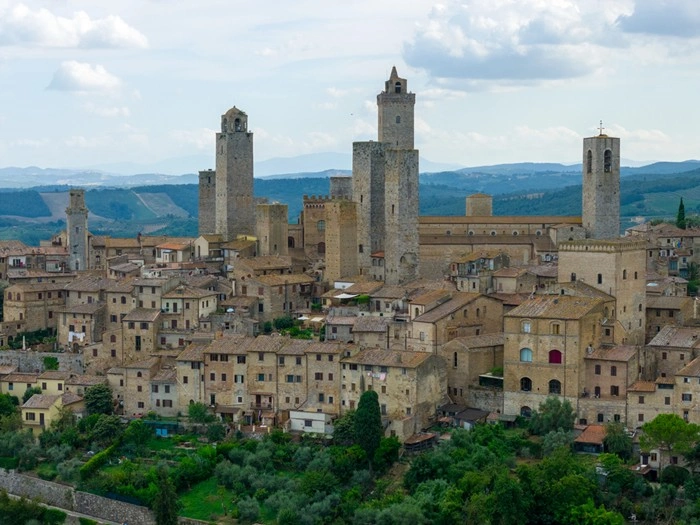
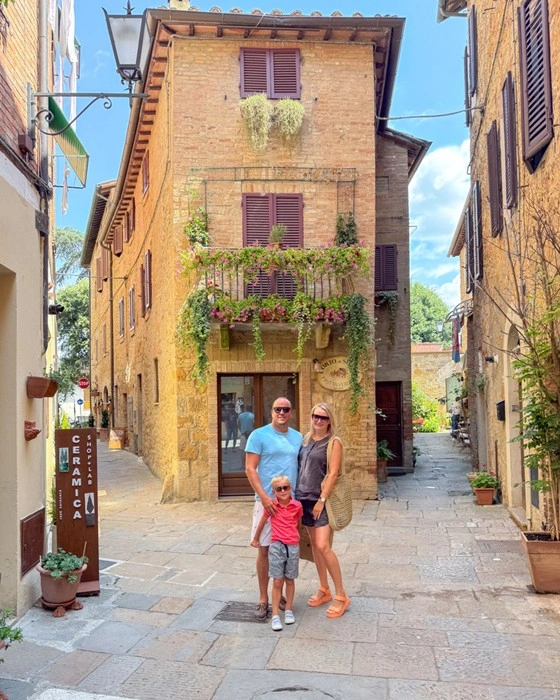
Staying inside a historic center puts you within walking distance of everything, which is genuinely wonderful for a two or three night stop.
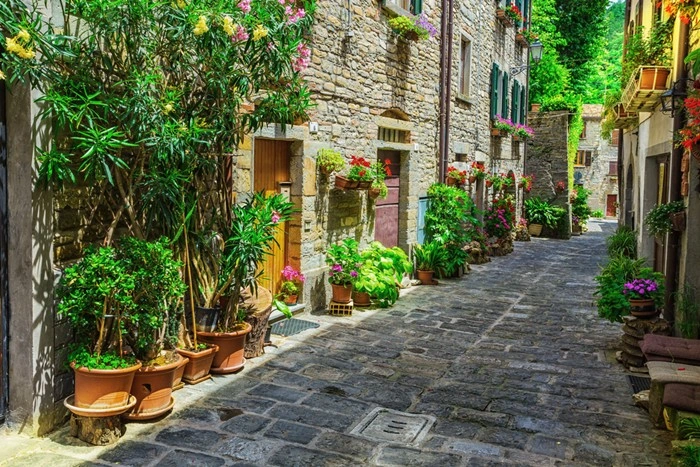
It also means restricted traffic zones, camera enforcement, parking garages outside the walls, and street noise until well past midnight in summer. Italian historic centers are regulated driving environments, and rental cars pick up fines there with remarkable efficiency.
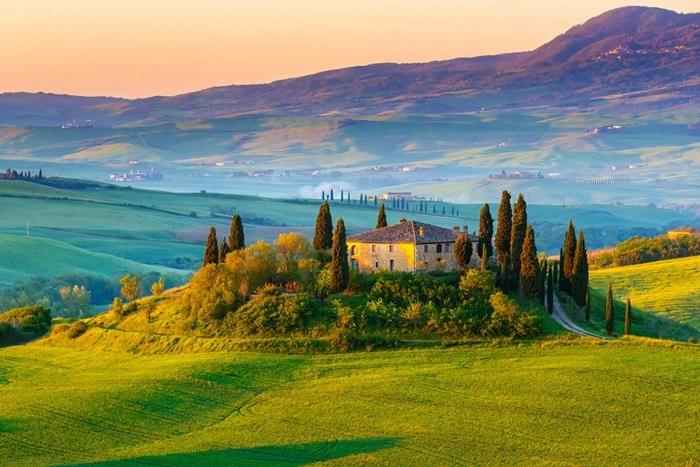
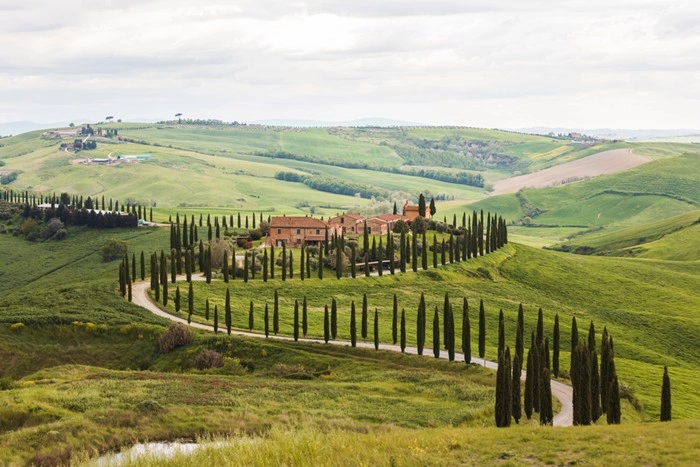
Staying in the countryside means a fifteen to thirty minute drive to dinner and a car you actually need. It also means silence, a pool you are not sharing with forty strangers, and the strange luxury of watching the light change over olive trees while everyone else is queuing for a table.
The middle path is worth knowing about. Certain towns sit close enough to their surrounding countryside that you can have both.
Lucca is a good example: the walls enclose a compact center you can cross on foot in twenty minutes, and the hills with the historic villas begin barely ten minutes past the gates. Pisa airport is about half an hour away, Florence around ninety minutes, and the Versilia coast roughly thirty.
Matching the Stay to Your Group
Source: Depositphotos.
Couples and Solo Travelers
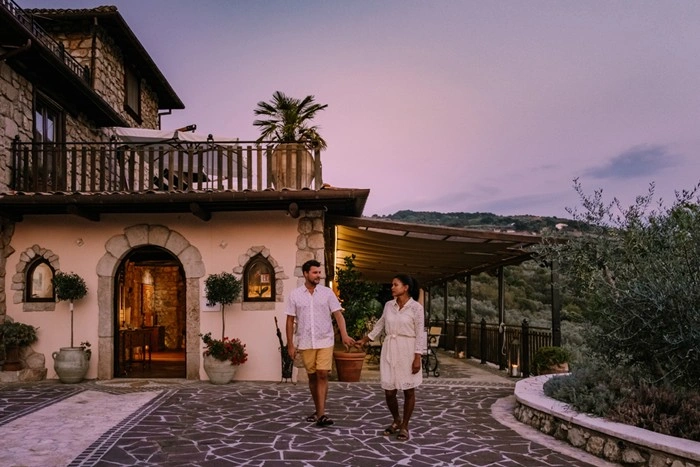
Book the hotel, or a small apartment inside the walls.
A five-bedroom house for two people is money spent on rooms you will never enter, and the logistics of a countryside base start to feel like work when there is no one to share the driving.
The exception is a long stay. If you are settling in for two weeks or more, the kitchen and the washing machine stop being nice extras and become the reason the trip is sustainable.
Families With Young Children
The villa wins on almost every axis. Nap schedules survive. Food is on your terms instead of the restaurant’s.
Nobody has to keep a toddler quiet because of the guests next door. A fenced garden and a pool buy you entire afternoons that would otherwise be spent dragging tired kids through churches.
Source: Depositphotos.
Groups of Friends and Multigenerational Trips
This is the scenario villas were built for. Everyone gets a private room and bathroom, which matters far more on day nine than it does on day one.
There is a shared space for the evening that is not a hotel bar. Costs are easy to split. And if the group includes grandparents who tire early and twenty-somethings who want to stay out, the house absorbs both rhythms without anyone having to negotiate.
What to Check Before You Book a Villa in Italy
Source: Depositphotos.
Villa listings vary enormously in quality and honesty. These are the questions that separate a great stay from an expensive disappointment:
Tourist tax: Italian municipalities charge a small per person, per night levy that is almost never included in the advertised rate. It is usually collected on arrival and often capped after a set number of nights.
Registration code: Short-term rentals in Italy are required to display a national identification code on their listings. A property that cannot produce one is a property worth skipping.
Pool season: Many pools are only open from roughly May through September, and heating is frequently an optional extra. Ask for exact dates rather than assuming.
Air conditioning: Older stone buildings stay cool in June and struggle in August. Confirm whether every bedroom has it, not just the living areas.
What the cleaning fee covers: Some rates include a mid-stay clean and linen change, others charge separately, and the difference over a two week booking is significant.
Real driving distance to the nearest town: A listing that says “minutes from the center” may mean twenty-five of them on a gravel road. Check the address on a map yourself.
Add-on services: Private chefs, in-villa breakfast, grocery pre-stocking, and airport transfers are often available but need booking weeks ahead, especially in July and August.
How to Decide in Five Minutes
Run your trip through these four questions and the answer usually appears on its own.
How many of you are there? Six or more points strongly to a villa. Two points to a hotel.
How many nights in one place? Fewer than four favors a hotel. Seven or more favors a villa, because the cost of settling in gets amortized.
Are you renting a car anyway? If yes, the countryside opens up at no extra cost. If no, stay where the trains stop.
Is the trip about covering ground or about being somewhere? Moving every second night is hotel territory. Using one base and taking day trips is villa territory.
Source: Depositphotos.
Conclusion
You are not required to pick one for the whole trip, and the best Tuscany itineraries I know do not.
Two nights in a small hotel inside a city center at the start, while jet lag is at its worst and you want dinner to be a thirty second walk away. Then a week in a house in the hills, using it as a base for Florence, the coast, the mountains, and the wine towns. Then one final night near the airport if your flight leaves early.
That structure gets you the walkable romance of the historic center and the space and pace of the countryside, and it costs less than either option stretched across the full trip.
The honest summary is that the villa versus hotel question is really a question about how you want to spend your days.
If your ideal Tuscan evening involves a reservation, a short walk, and someone else clearing the plates, book the room. If it involves a long table outside, a bottle from a vineyard you drove past that afternoon, and nobody looking at a watch, book the house. Both are correct.
Just make sure you are comparing the right numbers before you commit.
Disclaimer:
This post may contain affiliate links. I receive a small commission at no cost to you when you make a purchase using my link.